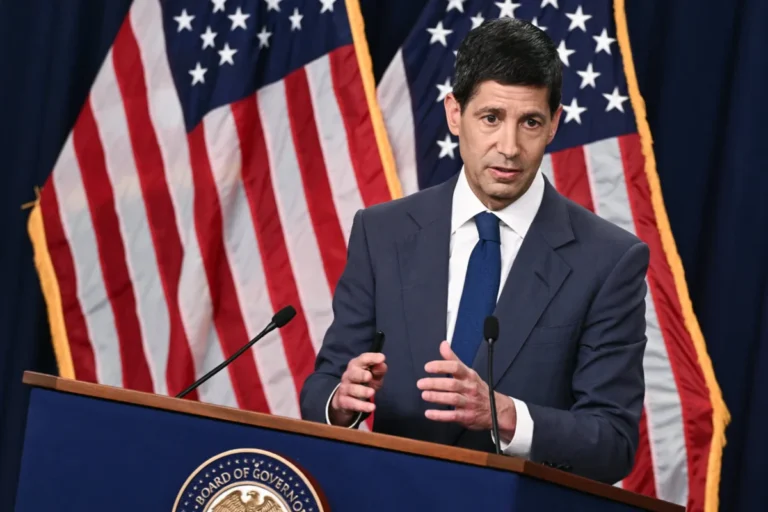
The global financial landscape is currently grappling with a sudden and aggressive shift in monetary policy expectations, as a potent combination of surging energy prices and an exceptionally tight labor market forces investors to recalibrate their outlook for the U.S. Federal Reserve. For months, the prevailing narrative among market participants was one of a "plateau," where interest rates would remain steady before eventually descending. However, that composure has been shattered by a "perfect storm" of economic indicators that suggest the battle against inflation is far from over, potentially necessitating further tightening from the central bank.
Market sentiment, often measured through the lens of Fed funds futures, has undergone a dramatic transformation in a remarkably short window. According to the CME FedWatch tool, the probability of the Federal Reserve raising borrowing costs at its September policy meeting has surged to approximately 82%. This represents a staggering jump from just one week ago, when the odds of a hike were pegged at less than 53%. While the central bank is still widely expected to maintain the status quo at its immediate gathering next week—keeping the federal funds rate within the 3.50% to 3.75% range—the "higher for longer" narrative is gaining significant traction. Even for the upcoming week’s meeting, a growing minority of traders are positioning for a surprise; the probability of a quarter-percentage-point increase has climbed to nearly 38%, up from a mere 12% in the previous week.
The primary catalyst for this hawkish repricing is the volatile energy sector. Brent crude, the international benchmark for oil, breached the psychologically and economically significant $100-per-barrel mark on Thursday, hitting its highest level since late May. This price spike is largely attributed to escalating geopolitical friction, specifically a series of retaliatory attacks between the United States and Iran that have reignited fears of supply disruptions in the Middle East. The ripple effects of expensive crude are already being felt at the pump, with the average price for a gallon of gasoline in the U.S. hitting $4 this week—the highest level in over a month.
For the Federal Reserve, rising energy costs present a dual challenge. First, energy is a primary driver of headline inflation, affecting everything from transportation costs to the price of manufactured goods. Second, sustained high energy prices can lead to "inflationary expectations" becoming entrenched among consumers and businesses, a scenario the Fed is desperate to avoid. When energy prices "rip higher," as they have in recent days, the central bank’s mission to return inflation to its 2% target becomes exponentially more difficult, often leaving them with little choice but to dampen demand through higher interest rates.
Adding fuel to the fire is a domestic labor market that refuses to cool down. New data from the Labor Department revealed that initial jobless claims fell to 187,000 for the week ending July 18. To put this figure into perspective, it represents the lowest level of unemployment filings since 1969—a period when the U.S. population was roughly 40% smaller than it is today. This level of labor market resilience is a double-edged sword for the economy. While low unemployment is generally a sign of health, in an inflationary environment, it suggests an economy that is "overheating."
Economists note that the strength of the labor market provides the Federal Reserve with the "permission" it needs to focus almost exclusively on price stability. With the job market showing no signs of a meaningful slowdown, the Fed does not currently face the immediate pressure of a rising unemployment rate, which might otherwise force them to pause or cut rates to support growth. Instead, they can maintain a laser focus on the consumer price index, which is increasingly threatened by the upward spiral of energy costs. However, the sustainability of this growth remains a point of contention. If energy prices continue their vertical trajectory, the resulting tax on consumer discretionary spending could eventually lead to the very economic slowdown the Fed is trying to navigate through a "soft landing."
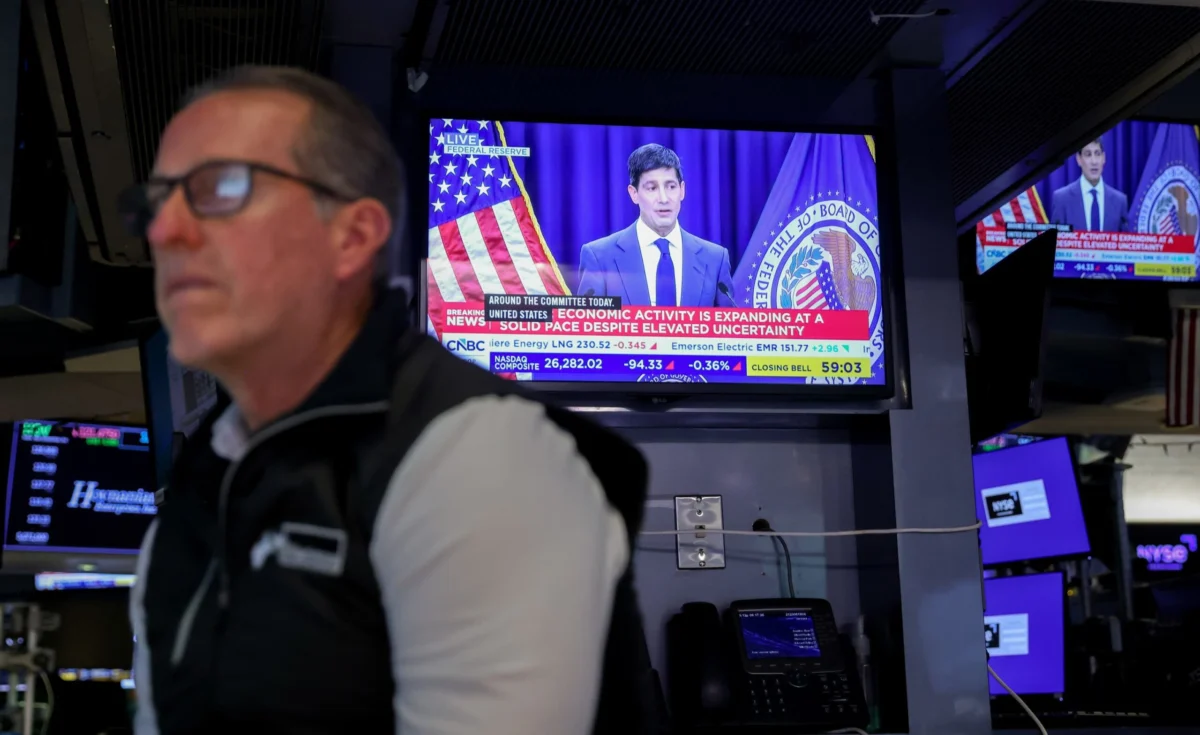
The reaction across Wall Street has been swift and unforgiving. Equity markets tumbled on Thursday as the reality of potential rate hikes set in. The Dow Jones Industrial Average, a barometer for blue-chip industrial strength, shed approximately 500 points. The Nasdaq Composite, which is heavily populated by growth and technology stocks, experienced an even more pronounced decline, falling by more than 2%. Technology companies are particularly sensitive to interest rate fluctuations because their valuations are often based on the present value of future earnings. When the "discount rate"—driven by Fed policy—rises, the current value of those future profits diminishes, leading to sharp sell-offs in the sector.
The downturn in equities was further exacerbated by a disappointing post-earnings performance from Alphabet, Google’s parent company, and a general breakout in Treasury yields. Market analysts describe the current environment as a "perfect storm" of headwinds, where geopolitical risk, energy inflation, and robust labor data are all converging simultaneously. In such a climate, the traditional "buy the dip" mentality is being replaced by a more cautious, "wait-and-see" approach. Many strategists are advising investors to remain patient, suggesting that with a Fed meeting looming in less than a week, there is little incentive to take on new risk until the central bank provides clearer guidance on its path through the end of the year.
In the fixed-income market, the 2-year U.S. Treasury yield has become the focal point for those seeking to divine the Fed’s next move. This specific maturity is highly sensitive to changes in federal funds rate expectations. On Thursday, the 2-year yield climbed by roughly 5 basis points, serving as a real-time "readthrough" of the market’s growing conviction that the Fed is not yet finished with its tightening cycle. While long-term yields also rose, the movement in the shorter end of the curve underscores the immediacy of the perceived threat to price stability.
Despite the current market turbulence and the surge in hike probabilities, a notable divergence remains between short-term traders and long-term economic forecasters. Consensus forecasts among institutional economists, as tracked by FactSet, still suggest that the Federal Reserve may refrain from further hikes for the remainder of 2026. Looking even further ahead to 2027, many economists anticipate that the central bank will eventually be forced to lower borrowing costs by as much as half a percentage point as the cumulative effects of previous tightening finally take hold.
However, the "consensus" has been frequently wrong over the past two years, consistently underestimating the persistence of inflation and the resilience of the American consumer. The "live" nature of the September meeting, as indicated by both Fed funds futures and prediction markets like Kalshi—where traders have increased their bets on a hike to 48%—suggests that the window for a policy pivot is closing.
As the Federal Reserve prepares for its upcoming deliberations, the global community is watching closely. The implications of a continued rate-hiking cycle extend far beyond U.S. borders. A more aggressive Fed typically leads to a stronger U.S. dollar, which can export inflation to other nations by making dollar-denominated commodities, like the very oil causing the current problem, even more expensive for foreign buyers. Furthermore, higher U.S. rates increase the debt-servicing costs for emerging markets, potentially triggering broader global financial instability.
Ultimately, the Federal Reserve finds itself in a precarious position. If it pauses now, it risks allowing energy-driven inflation to spiral out of control. If it hikes further, it risks over-tightening and plunging a historically strong labor market into a recession. For now, the data—and the markets—are pointing toward a more restrictive path. As crude oil hovers near triple digits and jobless claims remain at historic lows, the era of easy money and predictable policy seems a distant memory, replaced by a volatile new reality where every economic report can fundamentally shift the trajectory of the world’s most influential central bank.