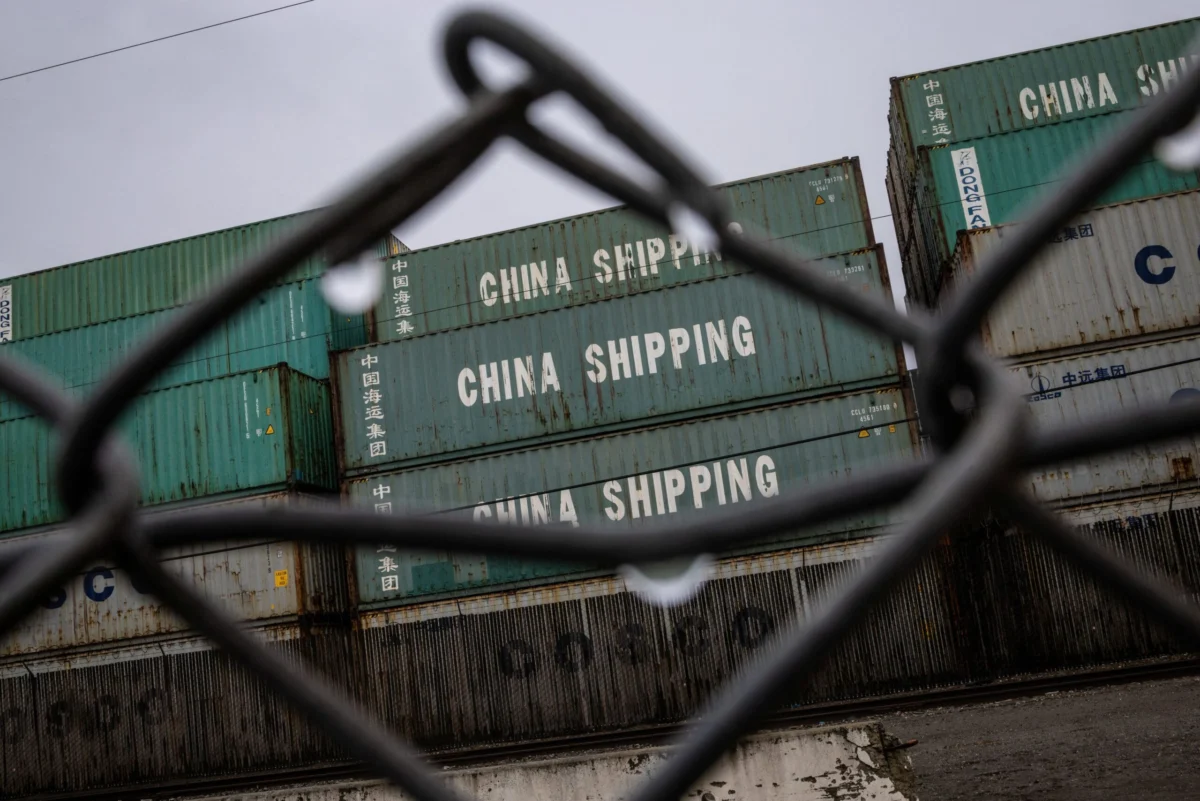
The fragile recovery of the Chinese export machine, which had provided a rare glimmer of hope for the world’s second-largest economy earlier this summer, appears to have hit a significant roadblock. New data from private sector surveys indicate that shipments destined for the United States fell sharply in July, signaling that the "frontloading" effect seen in previous months has exhausted its potential. As trade tensions between Beijing and Washington continue to simmer, the cooling of outbound shipments suggests that the external tailwinds China relied upon to offset internal stagnation are beginning to dissipate.
According to the latest findings from the China Beige Book, a prominent U.S.-based research firm that monitors the health of the Chinese economy through independent channels, U.S.-bound shipments experienced an outright contraction in July. This reversal follows a period of volatile trade activity and marks the first such decline in several months. The survey, which gathered data from 1,436 Chinese businesses between July 20 and July 28, paints a sobering picture of a manufacturing sector struggling to maintain its footing amidst a shifting global landscape and intensifying protectionist measures from Western capitals.
The July slump stands in stark contrast to the performance recorded in June, when Chinese exports to the United States surged by 14%. That spike helped propel China’s overall export growth to a 27% year-on-year increase—the most robust performance in nearly five years. However, analysts have long cautioned that the June boom was likely an artificial peak. Much of that growth was attributed to "frontloading," a practice where importers accelerate their orders to ensure goods arrive before the implementation of new, higher tariffs. With the U.S. administration signaling a more aggressive stance on Chinese-made electric vehicles, semiconductors, and green energy components, businesses rushed to stock up, creating a temporary surge that is now being met with an inevitable correction.
Historically, China’s trade relationship with the U.S. has been the bedrock of its economic expansion, but that foundation has been increasingly fractured. The last major downturn occurred in March, when shipments to the U.S. plummeted by more than 26% compared to the previous year. This volatility has become a hallmark of the post-2025 trade environment, characterized by double-digit fluctuations and a general trend toward decoupling in high-tech and strategic sectors. While the rapid expansion of global data centers and the artificial intelligence revolution have provided a niche demand for China-produced hardware and components, these specialized gains are currently insufficient to balance out the broader cooling in consumer goods and traditional manufacturing.
The implications of this export slowdown extend far beyond the docks and shipping lanes. The China Beige Book’s study revealed a broader deceleration in factory activity across the mainland. Perhaps most concerning for Beijing is the deteriorating state of the labor market. Manufacturing, once the primary engine of job creation, recorded its worst employment performance in the July survey. Across all sectors surveyed, job growth metrics worsened compared to the same period last year, suggesting that the "long tail" of the manufacturing slowdown is beginning to impact household stability and consumer confidence.
This labor market weakness is feeding into a vicious cycle of tepid domestic consumption. Retail sales, which policymakers had hoped would take the baton from the export sector to drive growth, also faltered in July. The report noted a contraction in retail activity both on a month-on-month and year-on-year basis. Particularly hard-hit were the travel and restaurant industries—sectors that usually thrive during the summer months. This downturn in "experiential" spending suggests that Chinese consumers are tightening their belts, wary of an uncertain economic future and a property market that remains in a protracted state of crisis.
The divergence between government aspirations and economic reality was highlighted during a recent meeting of China’s top policymakers. In a readout released through state media, Beijing emphasized the urgent need to expand domestic demand and strengthen international trade cooperation. The statement underscored a strategic priority: achieving "technological breakthroughs" to reduce reliance on foreign components. This shift toward "technocratic self-reliance" is a direct response to the trade barriers erected by the U.S. and its allies, but it is a long-term play that offers little immediate relief for the current cyclical downturn.
The global context of China’s trade woes cannot be ignored. While China remains the world’s largest exporter, it is facing stiff competition from emerging manufacturing hubs in Southeast Asia and Mexico. The "China Plus One" strategy, adopted by many multinational corporations to diversify their supply chains away from the mainland, is beginning to manifest in trade data. As U.S. importers look toward Vietnam, India, and Mexico to mitigate the risks of geopolitical friction, China’s share of the U.S. import market continues to face structural pressure. The July data may be the first sign that the ceiling for Chinese exports under the current tariff regime has been reached.
Economists are now looking toward upcoming official data releases to confirm the depth of the July slowdown. Trade figures from the General Administration of Customs are expected in early August, followed by retail sales and fixed-asset investment data later in the month. If the official numbers mirror the China Beige Book’s findings, it will likely increase the pressure on the People’s Bank of China and the central government to provide more aggressive stimulus measures. To date, Beijing has favored targeted support for high-tech manufacturing and infrastructure over direct cash transfers to consumers, a strategy that critics argue does little to address the fundamental problem of weak domestic demand.
Furthermore, the AI-driven demand for Chinese parts, which provided a buffer in the second quarter, is facing its own set of challenges. As the U.S. tightens export controls on sophisticated chips and the equipment needed to make them, the "AI connection" between Shenzhen and Silicon Valley is under threat. While Chinese firms have been adept at pivoting toward less-regulated components and legacy chips, the long-term viability of this export channel is clouded by the prospect of further regulatory tightening in Washington.
The current economic landscape leaves China in a precarious position. The "three-legged stool" of the Chinese economy—exports, investment, and consumption—is currently wobbly. Property investment remains a drag on growth, domestic consumption is retreating, and now, the export leg is showing signs of fatigue. Without a significant rebound in external demand or a dramatic shift in domestic consumer sentiment, the growth targets for the remainder of the year may be difficult to achieve.
The cooling of U.S.-bound shipments in July serves as a reminder that in the modern global economy, trade is as much about politics as it is about price. The "frontloading" of the spring and early summer provided a temporary illusion of health, masking the underlying vulnerabilities of an economy that is still searching for a sustainable post-pandemic growth model. As the summer turns to autumn, the focus will shift to whether Beijing can successfully pivot toward its goal of "high-quality development" while managing the immediate fallout of a cooling export market and a cautious domestic populace.
For international investors and trade partners, the July survey results are a signal to prepare for a more volatile and potentially leaner period of Chinese economic activity. The days of predictable, double-digit export growth appear to be a thing of the past, replaced by a new era of strategic maneuvering, tariff-driven fluctuations, and a deepening focus on internal resilience. Whether China can successfully navigate this transition without a major hard landing remains the most critical question for the global economy in the second half of the decade.