The Federal Open Market Committee (FOMC) concluded its latest policy meeting on Wednesday with a decision to maintain the federal funds rate at its current range of 3.5% to 3.75%, yet the move masked a deepening ideological schism within the world’s most influential central bank. In a rare display of public discord, three regional Fed presidents broke ranks with the majority, voting instead for an immediate quarter-percentage-point increase. This 9-3 split represents the most significant internal challenge to a Chairman’s consensus in nearly a decade, signaling a growing "hawkish" impatience with inflation that has remained stubbornly above the 2% target for more than five years.
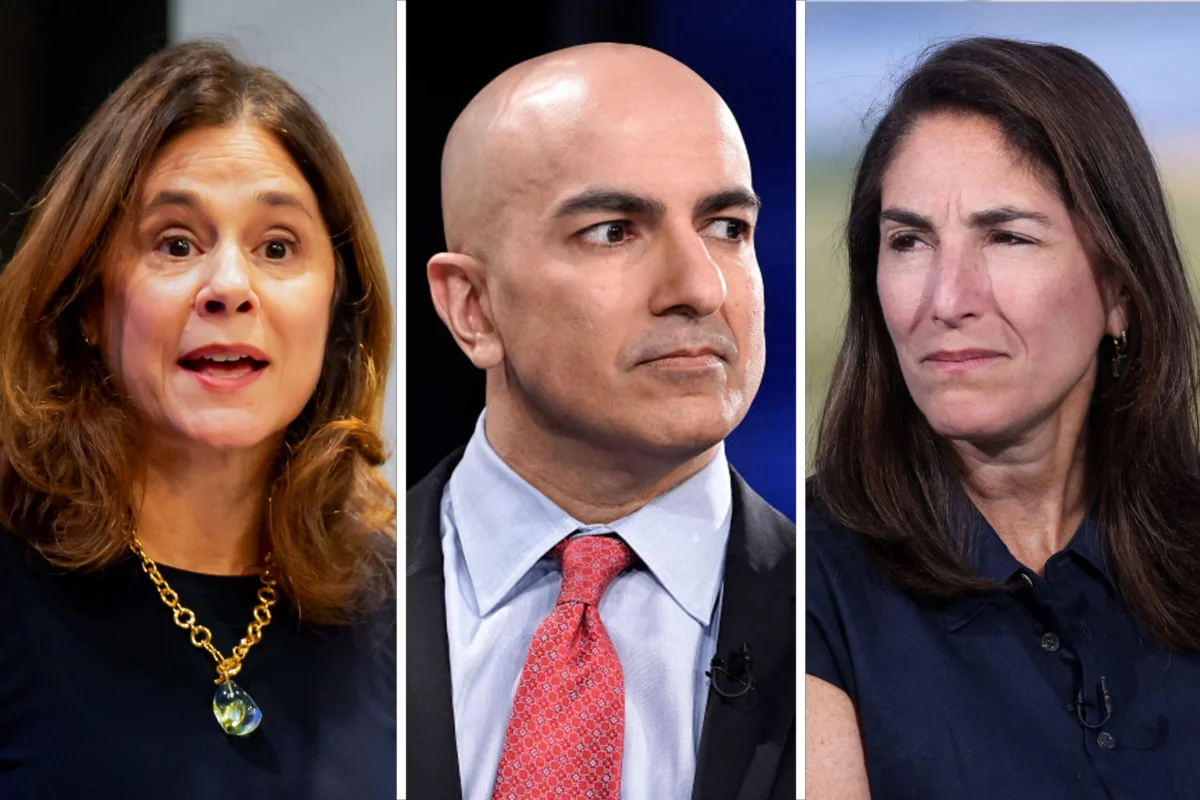
The dissenters—Beth Hammack of the Cleveland Fed, Neel Kashkari of the Minneapolis Fed, and Lorie Logan of the Dallas Fed—formed a unified front in their opposition. Their collective push for tighter monetary policy underscores a burgeoning concern that the central bank is risking its credibility by not acting more decisively against persistent price pressures. Not since September 2016 has the FOMC seen three members dissent in favor of a move in the same direction, a statistic that highlights the gravity of the current internal debate.
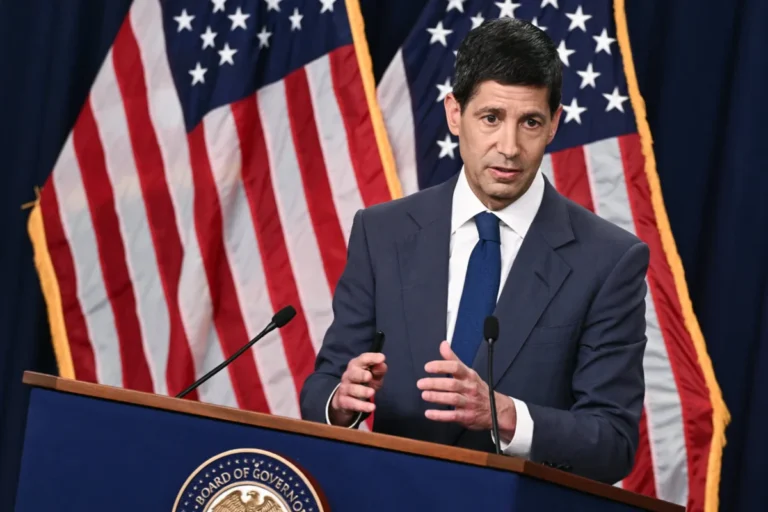
For Chairman Kevin Warsh, the meeting served as a trial by fire. Having recently taken the helm with a mandate to overhaul the Fed’s communication strategy, Warsh is steering the institution away from the era of "forward guidance"—the practice of providing markets with a roadmap of future interest rate moves. Instead, Warsh has advocated for a more "data-dependent" and "conditions-based" approach, arguing that the Fed should spend less time managing market expectations and more time reacting to the raw realities of the economic landscape. However, this shift toward opacity has introduced a level of market uncertainty not seen in years.
Heading into Wednesday’s announcement, investors were grappling with a landscape defined by "intentional ambiguity." While the majority of market participants expected a hold, the CME Group’s FedWatch tool indicated a roughly 33% chance of a surprise hike. Prediction markets showed slightly more confidence in a pause, but the underlying anxiety was palpable across trading floors in New York and London. By refusing to provide "clear road signs," Warsh has effectively forced markets to re-evaluate the Fed’s reaction function, a move that some analysts believe could lead to increased volatility in the bond markets.
The rationale behind the dissent is rooted in a sobering assessment of the American consumer’s reality. Inflation has become a structural burden rather than a transitory spike. The dissenting trio argued that the "cold" data seen in recent months is insufficient evidence of a sustained downward trend toward the 2% goal. They pointed to a confluence of inflationary tailwinds that are largely outside the Fed’s direct control but remain within its mandate to mitigate. Chief among these are the escalating hostilities in the Middle East, particularly involving Iran, which have sent tremors through global energy markets and threatened to reignite supply-chain disruptions.
Furthermore, the domestic policy environment is complicating the Fed’s mission. The imposition of tariffs by the Trump administration has introduced a protectionist element to the economy that many economists view as inherently inflationary. By raising the cost of imported goods and raw materials, these trade barriers create a "floor" for prices that monetary policy struggles to penetrate. In this context, the dissenters view a higher interest rate not just as a tool to cool demand, but as a necessary defense against a new era of structurally higher costs.

The post-meeting statement, which was notably brief—a hallmark of the new Warsh doctrine—acknowledged these pressures with clinical efficiency. It noted that while economic activity continues to expand at a "solid pace," there is "elevated uncertainty" stemming from geopolitical conflict. Perhaps most interestingly, the statement highlighted a paradox in the American labor market: job growth remains steady even as the total labor force has begun to contract. This tightening of the labor supply could lead to wage-push inflation, where companies raise prices to cover the rising costs of attracting a dwindling pool of workers.
Despite the internal rift, the majority of the Committee appears content to wait, following a series of three rate cuts in late 2025 that were intended to provide a "soft landing" for the economy. The current "hold" reflects a desire to see if those previous cuts have finished working their way through the financial system. However, the patience of the FOMC is clearly wearing thin. Goldman Sachs Asset Management’s global head of fixed income, Kay Haigh, noted that the growing hawkish sentiment suggests the Committee is "running out of patience," even in the face of some cooling data points.
The ideological divide also extends to the very philosophy of inflation management. Chairman Warsh has famously characterized inflation as "a choice," a phrase that suggests a moral and institutional responsibility to maintain price stability at almost any cost. During recent testimony on Capitol Hill, Warsh emphasized that the Fed’s primary duty is to protect the purchasing power of the dollar. Yet, his disdain for forward guidance means he is unwilling to promise the markets a specific path to achieve that goal. This creates a friction between his rhetoric—which is staunchly anti-inflation—and his policy actions, which in this instance favored a pause.
The political dimension cannot be ignored. Former President Donald Trump has recently offered vocal support for Warsh, describing him as "fantastic" while casting aspersions on other Fed officials whom he suggested might have "bad intentions" or political motivations. Such comments put the Fed in an uncomfortable position, as the institution prides itself on its independence from the executive branch. The 9-3 vote, featuring three regional presidents who are not presidential appointees in the same way as the Board of Governors, serves as a reminder of the Fed’s decentralized power structure and its built-in checks and balances.
Within the broader Committee, other influential voices are also signaling a shift. Governor Christopher Waller, often seen as a bellwether for the Board’s consensus, recently voiced his own anxieties regarding inflation, suggesting that higher rates could be back on the table if progress stalls. Although Waller ultimately voted for the hold, his public comments align him more closely with the dissenters than the current policy stance might suggest. Meanwhile, New York Fed President John Williams remains the primary defender of the status quo, arguing that the current policy is "well positioned" to return inflation to the 2% target over time.
As the Fed looks toward its September meeting, the "Warsh Doctrine" will face its next major test. The Committee’s "dot plot" from June had previously suggested only one more quarter-point hike by the end of 2026, but the intensity of the current dissent suggests that timeline may be accelerated. If energy prices continue to climb due to Middle Eastern instability, or if the contraction in the labor force begins to drive significant wage growth, the 9-3 split could easily shift toward a majority in favor of tightening.
The conclusion of the Wednesday meeting was a simple, four-word declaration that has become the Fed’s new mantra: "The Committee will deliver price stability." While the phrase is intended to project confidence and resolve, the reality inside the Eccles Building is one of deep debate and diverging paths. For global markets, the message is clear: the era of predictable, telegraphed monetary policy is over. In its place is a more reactive, divided, and hawkish Federal Reserve that is no longer willing to ignore the persistent shadow of inflation, even at the risk of internal discord.