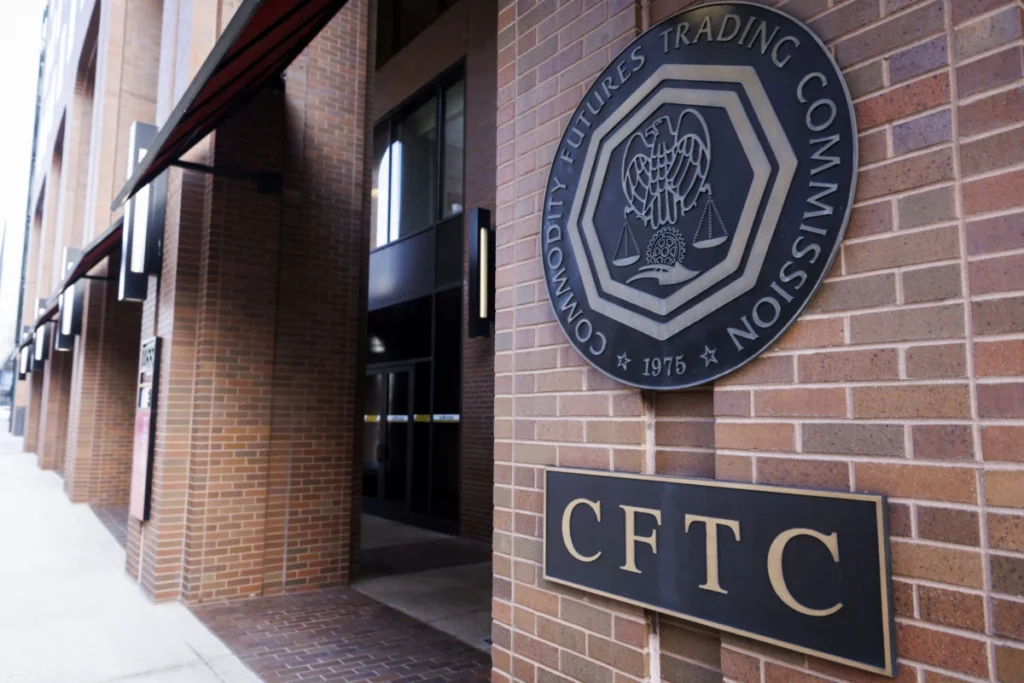


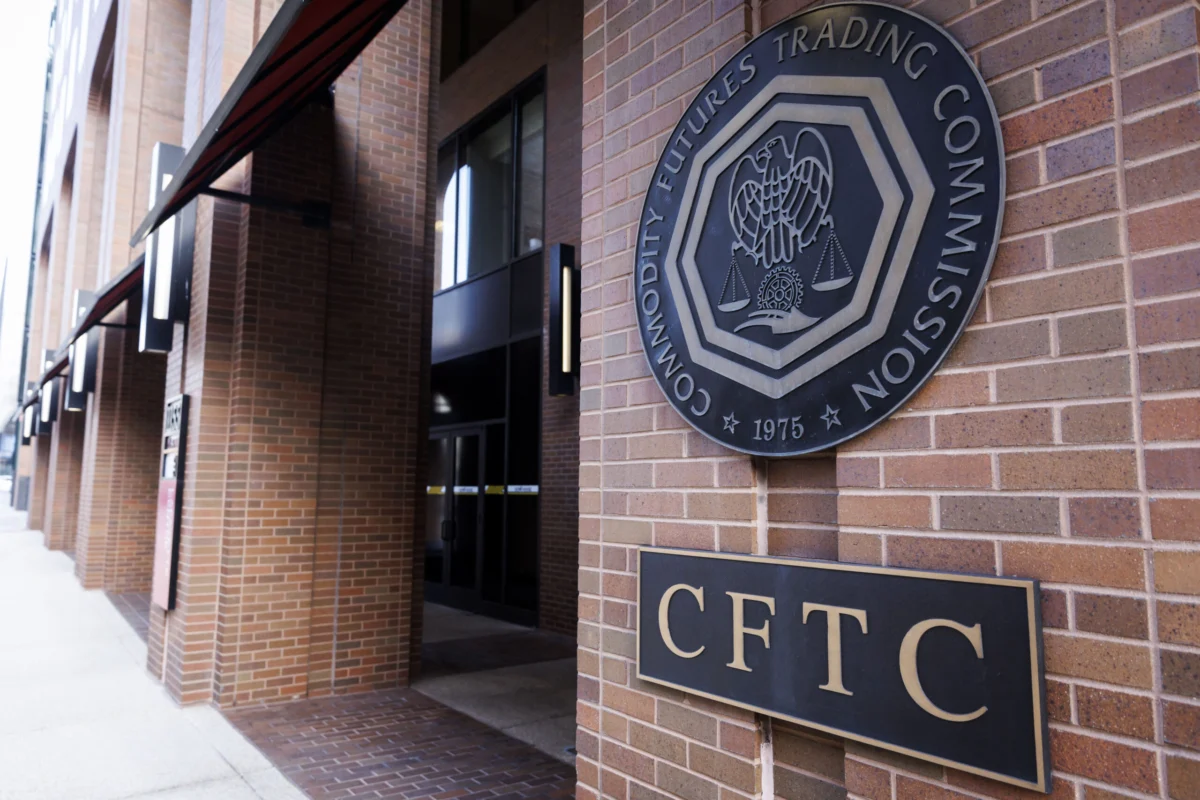
A coalition of 44 state attorneys general has launched a formal challenge against the Commodity Futures Trading Commission (CFTC), arguing that the federal regulator is overstepping its statutory authority in a bid to oversee sports-related event contracts on prediction market platforms. In a strongly worded letter submitted as the public comment period for a new proposed rule expired, the bipartisan group of state officials contended that the agency is attempting to bypass the constitutional rights of states to regulate gambling and sports wagering within their own borders. Led by Ohio Attorney General Andy Wilson, the coalition warned that the CFTC’s current trajectory is “arbitrary and capricious,” potentially setting the stage for a high-stakes showdown in the federal court system.
The friction centers on the rapidly evolving world of prediction markets—exchanges where participants trade "event contracts" based on the outcome of future occurrences, ranging from political elections and economic indicators to professional sports matches. While the CFTC views these contracts as derivatives or "swaps" falling under its federal mandate, the state attorneys general argue that when the underlying event is a sports game, the contract is indistinguishable from a bet. Consequently, they assert such activity should be governed by the patchwork of state laws that have emerged since the 2018 Supreme Court decision in Murphy v. National Collegiate Athletic Association, which struck down the federal ban on sports betting.
The timing of this jurisdictional clash is no coincidence. Prediction markets have transitioned from niche academic interests to high-volume financial hubs, spurred by a global appetite for alternative asset classes. The 2026 FIFA World Cup served as a watershed moment for the industry, driving trading volumes to record heights and attracting millions of new retail participants. As these platforms grow, they increasingly blur the lines between traditional financial hedging and recreational gambling. For the states, the issue is not merely one of legal philosophy but of significant fiscal impact. Legalized sports betting has become a multi-billion-dollar revenue stream for state coffers; any federal move that reclassifies sports wagering as a "financial swap" could potentially divert tax revenue away from state treasuries and toward federal oversight structures.
At the heart of the dispute is the CFTC’s proposed definition of “gaming.” Under the commission’s draft rule, gaming is defined as an activity performed for recreation or entertainment, governed by specific rules, and based on outcomes determined by skilled activity. By focusing the definition on the nature of the underlying event—the sport itself—the CFTC seeks to establish a framework where the financial instrument built on top of that event remains under federal jurisdiction. However, this interpretation has drawn fire from both public officials and established financial institutions.
CME Group, one of the world’s largest derivatives marketplaces, has voiced significant opposition to the CFTC’s nomenclature. In its own filing, CME argued that the commission’s definition of gaming suggests an intent to preempt state sports regulations, which the exchange characterized as a "striking overreach." The tension is particularly nuanced for CME, which maintains a dual role in the ecosystem. On one hand, it operates as a traditional, highly regulated exchange; on the other, it has partnered with sportsbooks like FanDuel to facilitate CFTC-regulated prediction markets. This dual identity highlights the complexity of the modern financial landscape, where traditional gambling operators and commodities exchanges are increasingly converging.
Conversely, some newer entrants in the prediction market space, such as the platform Rothera, have signaled support for the CFTC’s approach. These firms argue that a definition based on "wagering" or "risking something of value" would be too broad, potentially capturing every type of event contract, including those used for legitimate corporate hedging. From their perspective, a clear federal standard provides the regulatory certainty needed to attract institutional capital and scale operations globally. For these platforms, the goal is to be seen as a sophisticated financial venue rather than a digital sportsbook.

The legal battle is already playing out in various jurisdictions, with nine states currently involved in litigation against the CFTC. These cases are producing a fragmented legal landscape that creates uncertainty for investors and operators alike. For example, a Michigan judge recently moved to block the platform Kalshi from offering sports-related contracts to residents, siding with the state’s view that such offerings constitute unlicensed gambling. Conversely, a federal judge in Minnesota recently issued a temporary stay against a statewide ban on prediction markets, allowing platforms to continue operating while the broader legal questions are litigated.
This "regulatory arbitrage"—where the legality of a trade depends entirely on the geography of the trader—is exactly what the CFTC claims it wants to avoid. The commission argues that as a federal body, it is uniquely positioned to ensure market integrity, prevent manipulation, and protect consumers on a national scale. Without a unified federal framework, the CFTC warns, the market could become a "Wild West" of inconsistent protections and systemic risks.
From an economic perspective, the stakes are massive. The U.S. sports betting handle exceeded $120 billion in 2023, and prediction markets are viewed as the next logical extension of this growth. If these markets are classified as derivatives, they could theoretically be integrated into broader financial portfolios, allowing for sophisticated hedging strategies. For instance, a local business in a host city for the World Cup might use a prediction market to hedge against the economic loss of a home team being eliminated early in the tournament. If classified strictly as gambling, however, such instruments would remain siloed within the recreational betting industry, subject to different tax treatments and participation limits.
The international community is watching the U.S. conflict with interest, as other regions have taken divergent paths. In the United Kingdom, the Financial Conduct Authority (FCA) and the Gambling Commission share a co-regulatory framework that distinguishes between "spread betting" for financial purposes and traditional wagering. In contrast, many European jurisdictions maintain strict separations, often treating any event-based contract as a gambling product unless it is tied to a traditional financial index like interest rates or currency fluctuations. The U.S. outcome will likely set a global precedent for how "hybrid" financial products are treated in the 21st century.
Legal scholars suggest that the dispute is destined for the U.S. Supreme Court, particularly in light of the Court’s recent "major questions doctrine" rulings. This doctrine posits that if a federal agency seeks to regulate an issue of vast economic and political significance, it must have clear and specific authorization from Congress. The 44 attorneys general are essentially arguing that the Commodity Exchange Act does not give the CFTC a "blank check" to move into the sports wagering space—a domain historically and legally reserved for the states.
As the CFTC reviews the mountain of public comments, including the dissenting voices of the 44 states, the future of the industry hangs in the balance. The five states that did not sign the letter—Florida, Georgia, New Hampshire, Missouri, and Texas—represent a notable minority, suggesting that even among state regulators, there is not a total consensus on the best path forward. Some of these states may be waiting to see if a federal partnership offers a more stable long-term revenue model than independent state regulation.
For now, the prediction market industry remains in a state of flux. Platforms continue to innovate and launch new contracts, while state and federal regulators sharpen their legal arguments. Whether these markets are ultimately defined as a new frontier of democratic finance or simply a high-tech version of the local sportsbook will depend on how the courts balance the scales between federal oversight and state sovereignty. Until a definitive ruling is reached, the only thing that is certain is that the "prediction" of who wins this regulatory war remains the most traded contract of all.