

For decades, India carved out its identity as the "pharmacy of the world," a global leader in generic drug manufacturing, synonymous with affordable medicines that mirrored foreign discoveries. This narrative, while vital for global health access, often overshadowed any ambition for original pharmaceutical innovation. Yet, beneath the surface of high-volume, low-margin generics, a quiet revolution has been brewing, championed by a handful of determined individuals and companies who poured billions into a seemingly quixotic quest: to invent entirely new chemical entities (NCEs) from scratch. Their unwavering commitment, spanning over two decades and requiring immense personal and corporate sacrifice, is now beginning to yield tangible results, fundamentally redefining India’s position on the global drug development map.
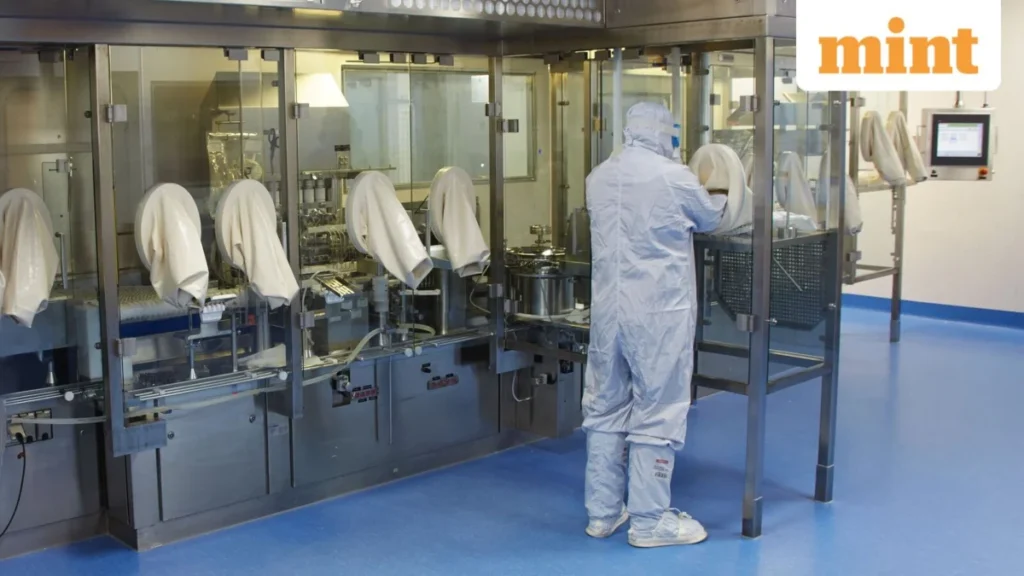
One of the most compelling sagas belongs to Habil Khorakiwala, the patriarch behind Wockhardt Ltd. In the challenging spring of 2009, his company was on the brink, grappling with a significant ₹581 crore loss (approximately $70 million at current exchange rates) from disastrous derivative bets and a staggering ₹3,800 crore (around $450 million) in debt. The company’s stock plummeted from ₹419 to a mere ₹68 per share, forcing a corporate debt restructuring and the formal handover of operational reins to his sons, Murtaza and Huzaifa. What followed was a painful decade of strategic divestments. Khorakiwala liquidated prized assets, including 10 profitable hospitals to Fortis for over ₹900 crore, the nutrition business (Farex and Protinex) to Danone for approximately ₹1,280 crore, and its veterinary division to France’s Vetoquinol. Years later, even a significant portion of its domestic formulation brands and manufacturing plants were sold to Dr. Reddy’s Laboratories for ₹1,850 crore. Simultaneously, the US Food and Drug Administration (USFDA) was issuing warning letters and shutting down Wockhardt’s manufacturing facilities over quality control lapses, adding further pressure.
Through it all, one line item remained sacrosanct: the research laboratory dedicated to new chemical entity discovery. Initiated in the late 1990s, this program was an expensive, often unproductive venture, defying conventional financial logic. Khorakiwala’s philosophy was stark: "If you enter new chemical entity research, you must commit for 25 to 30 years." This steadfast refusal to abandon the R&D engine, even as other profitable segments were shed, underscores the profound conviction that fueled Wockhardt’s journey. This deep-seated commitment bore fruit on June 1, 2026, when the USFDA approved Zaynich, an intravenous combination of cefepime and zidebactam, for treating complicated urinary tract infections, including kidney infections. This landmark approval, preceded by India’s own regulator five days earlier, signified not just a commercial win for Wockhardt but a profound breakthrough for Indian pharmaceutical science. Zaynich’s late-stage trial demonstrated superior efficacy, curing or clearing infection in 89% of patients compared to 68.4% for meropenem, a powerful last-resort antibiotic. While not a "blockbuster" in the traditional sense, Zaynich addresses a critical unmet need for patients battling multidrug-resistant gram-negative bacteria, a growing global health crisis. Wockhardt’s strategic decision to partner with an external entity for US marketing and sales further highlights a pragmatic approach to commercialization. Critically, Zaynich marks the first new chemical entity discovered, developed, and brought to full regulatory approval by an Indian company, breaking into an exclusive club historically dominated by Western and Japanese pharmaceutical giants. Khorakiwala’s assertion of Wockhardt being "the most successful antibiotic drug discovery company in the world today," backed by six USFDA Qualified Infectious Disease Product (QIDP) tags – a designation fast-tracking antibiotics for hard-to-treat infections – speaks volumes about the scale of this achievement.
Wockhardt’s success is not an isolated incident but rather the leading edge of a broader, nascent movement among mid-sized Indian drugmakers striving to transition from imitation to innovation. Glenmark Pharmaceuticals Ltd., under the leadership of Glenn Saldanha, also faced skepticism for nearly two decades as its research arm, Ichnos Glenmark Innovation (IGI), burned approximately $70 million annually. This "drag on the parent’s profit-and-loss account" turned into a significant asset in July 2025 when IGI licensed its lead molecule, ISB 2001—a tri-specific antibody targeting multiple myeloma—to American pharmaceutical giant AbbVie Inc. The deal, valued at $700 million upfront and up to $1.225 billion in milestone payments, along with tiered royalties, injected a substantial ₹6,000 crore into Glenmark, dramatically improving its balance sheet and validating Saldanha’s long-term vision. Early trial data, showing responses in four out of five patients who had exhausted other treatment options, underscored the drug’s potential.
Similarly, Hyderabad-based Suven Life Sciences, led by Venkat Jasti, has invested approximately ₹4,000 crore since 2003 into a focused pipeline for central nervous system (CNS) disorders. Its compound, masupirdine, is currently in global Phase 3 trials across 80 sites in North America and Europe for agitation in Alzheimer’s dementia, with results expected in 2027. While Jasti acknowledges the binary nature of drug development outcomes, four other Suven molecules for depression, narcolepsy, and Parkinson’s disease are also in late-stage development, representing a significant bet on a high-risk, high-reward therapeutic area. Biocon Ltd. has also strategically advanced its oncology research by transferring a dual-acting protein program to US-based Bicara Therapeutics in exchange for a 10.1% stake, facilitating Bicara’s successful $315 million Nasdaq IPO in September 2024. Even smaller entities like Chennai’s Orchid Pharma have demonstrated ingenuity; after discovering its antibiotic enmetazobactam in-house and out-licensing it to Germany’s Allecra due to financial constraints, Orchid reacquired the global rights following Allecra’s insolvency, bringing a USFDA-approved asset back into its fold. The burgeoning life sciences ecosystem in cities like Hyderabad, with startups like Tulsi Therapeutics and Utopia Therapeutics developing novel preclinical molecules, further signifies a growing shift. Industry observers like Priyanka Aggarwal, managing director at BCG India, note the emergence of "at least 10 novel assets discovered out of India," signaling a crucial inflection point.

The common thread uniting these pioneers is not their size, but an almost defiant perseverance. They shared a willingness to divest profitable businesses to fund the uncertain path of drug discovery. Khorakiwala sacrificed hospitals and beloved domestic brands; Saldanha sold Glenmark Life Sciences; and Jasti divested 50.1% of his highly profitable contract-manufacturing business, Suven Pharmaceuticals, to private equity firm Advent for ₹6,313 crore. These were not easy decisions, effectively trading reliable cash flows for the speculative promise of future innovation. Furthermore, these companies strategically targeted neglected niches. Wockhardt ventured into antibiotics, a field largely abandoned by global giants due to challenging economics. Jasti concentrated on a specific family of brain receptors, an area known for its brutal failure rates. Saldanha focused on multi-target antibodies in oncology, a segment now attracting some of the largest licensing deals globally. This strategic focus, coupled with a long-term commitment, allowed them to cultivate expertise and proprietary assets where competition was less intense.
The landscape for drug discovery has also evolved dramatically. The era when Indian companies like Dr. Reddy’s Laboratories could out-license early-stage experimental molecules based on laboratory work and a compelling story in the late 1990s is long gone. Today, candidates must address significant unmet medical needs or demonstrate truly novel mechanisms of action to attract partners early. This means discovering companies must bear the increasing financial burden of safety testing, pharmacokinetic studies, extensive clinical trials, and regulatory filings themselves. Jasti notes that global pharmaceutical companies are now so cautious in brain disorders that they only engage when a drug is nearing market readiness. This shift has compelled Indian innovators to push their discoveries further along the development pipeline, often to approval, on their own.
Historically, India’s first wave of drug discovery ambition in the late 1990s largely faltered. Companies like Ranbaxy Laboratories, Dr. Reddy’s, and Lupin eventually wound down or scaled back their NCE programs. The primary reason was a compelling economic reality: the burgeoning market for generic drug exports to the US offered rapid, substantial returns, making the long, expensive, and risky path of original discovery seem financially irrational. Industry stalwarts like Dilip Shanghvi of Sun Pharmaceutical Industries, G.V. Prasad of Dr. Reddy’s, and Desh Bandhu Gupta of Lupin made the pragmatic choice to focus on generics, while Yusuf Hamied of Cipla even argued that Indian companies simply lacked the necessary scale for original research. The current successes, therefore, represent not just a change in strategy but a testament to the concentrated conviction of a few individuals willing to defy this established wisdom and commit "thousands of crores" over decades.
Today, even the larger Indian pharmaceutical players are cautiously re-entering the innovation space, albeit with a more selective approach. Dr. Reddy’s is rebuilding its pipeline and biotech platform, emphasizing deep dives into a few chosen areas. Natco Pharma’s managing director, Rajeev Nannapaneni, highlights the industry’s challenge of finding new growth drivers beyond generics, arguing that innovation is the inevitable answer. Sun Pharma is investing in US-based innovation, and Biocon is leveraging its US-listed affiliate, Bicara. This broader pivot from plain generics towards branded and patented products has gained fresh urgency amidst global geopolitical shifts, such as US pressure under President Donald Trump for drugmakers to manufacture generics on American soil, threatening the very cost advantage that underpinned India’s generics dominance.
The ecosystem for drug discovery in India is undergoing fundamental changes. Indian scientists who previously pursued careers in Western laboratories are increasingly returning home, enriching the domestic talent pool. Crucially, the Indian government is now providing significant financial backing, with schemes like the ₹5,000 crore Promotion of Research and Innovation in Pharma MedTech (PRIP) and a far larger ₹1 trillion Research, Development and Innovation (RDI) fund cleared in 2025. These initiatives, coupled with regulatory reforms aimed at streamlining clinical trial approvals, are creating a more conducive environment for innovation. Private capital, including family offices, is also starting to flow into these long-gestation ventures, though HealthKois co-founder Ajay Mahipal notes the need for "much more patient capital." However, challenges remain, particularly in how intellectual property (IP) is valued within India. Jasti laments that "Here IP has no value. It has no value until it becomes a product," contrasting it with the far higher valuations in Western markets. The global shift towards biologics and advanced therapies (cell and gene therapies), where China has quietly become a significant force while India perfected small-molecule generics, also presents a strategic hurdle.
Indeed, four approved drugs from a handful of mid-sized companies do not an entire innovation ecosystem make. Yet, a clear, repeatable template has emerged: identify a neglected niche, commit deeply to research, strategically fund the endeavor through divestments, and persist for decades. After three decades as the world’s pharmacy for cheap copies, India now possesses something genuinely original to offer the world, marking a pivotal new chapter in its pharmaceutical journey.