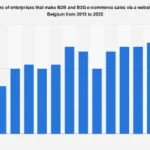
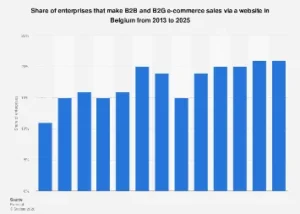


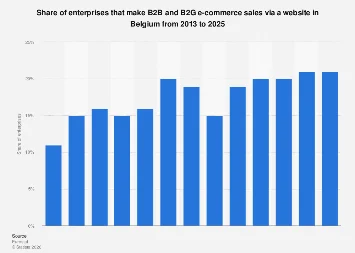
Belgium’s business landscape is on the cusp of a significant digital transformation, with projections indicating a substantial increase in the proportion of B2B enterprises leveraging online platforms for sales by 2025. This evolving trend underscores a broader global shift towards digital commerce, where the efficiency, reach, and data-driven insights offered by e-commerce are becoming indispensable for competitive advantage. While specific granular data points are often proprietary, industry analyses and forward-looking economic indicators paint a clear picture of accelerating adoption.
The anticipated growth in B2B e-commerce within Belgium is not an isolated phenomenon but rather a reflection of evolving customer expectations and technological advancements. Businesses are increasingly seeking streamlined procurement processes, greater transparency in pricing and product information, and the ability to transact at their convenience. For Belgian enterprises, this translates into a strategic imperative to invest in and optimize their online sales channels. The transition from traditional sales models to integrated digital strategies promises to unlock new revenue streams, enhance customer relationships, and improve operational efficiencies.
Several factors are fueling this digital surge. Firstly, the widespread availability of robust internet infrastructure and the increasing digital literacy among business professionals create a fertile ground for e-commerce adoption. Secondly, the ongoing development of sophisticated e-commerce platforms and payment gateways makes it easier and more cost-effective for businesses of all sizes to establish and manage their online presences. These platforms offer functionalities ranging from product catalogs and secure payment processing to order management and customer analytics, empowering businesses to compete effectively in the digital marketplace.
Furthermore, the competitive pressure from both domestic and international players is a significant driver. Businesses that fail to adapt to the digital shift risk being outmaneuvered by more agile, digitally-enabled competitors. This necessitates a proactive approach, where companies are not only establishing a web presence but also actively integrating e-commerce into their core sales and marketing strategies. This includes investing in search engine optimization (SEO), digital advertising, and content marketing to drive traffic to their online storefronts.
The impact of this digital acceleration on the Belgian economy is expected to be multifaceted. For businesses, it offers the potential for increased sales volumes and market penetration. By expanding their reach beyond geographical limitations, Belgian companies can tap into new customer segments and markets, both within the European Union and globally. This enhanced market access can lead to significant revenue growth and job creation. The ability to automate many aspects of the sales process, from order placement to invoicing, also contributes to cost savings and improved productivity.
Economically, a stronger B2B e-commerce sector can lead to increased overall economic activity. More efficient transactions and wider market reach can boost exports and contribute to a more dynamic and resilient economy. The development of supporting industries, such as logistics, digital marketing agencies, and software providers, will also see a commensurate growth, further stimulating economic development.
However, this transition is not without its challenges. Small and medium-sized enterprises (SMEs) in Belgium may face hurdles in terms of initial investment, technical expertise, and the integration of new systems with existing legacy infrastructure. Ensuring cybersecurity and data privacy remains a paramount concern for businesses operating online, requiring ongoing investment in robust security measures and employee training. Moreover, adapting sales and customer service strategies to suit the online environment requires a cultural shift within organizations.
To navigate these challenges effectively, government support and industry initiatives play a crucial role. Programs that offer subsidies for digital transformation, provide training in digital skills, and foster collaboration among businesses can significantly ease the adoption process. Belgian policymakers are increasingly recognizing the importance of digital infrastructure and e-commerce for economic competitiveness, and efforts are underway to create a supportive ecosystem for digital businesses.
Globally, Belgium’s trajectory aligns with broader trends. European Union countries, in particular, have been actively promoting digital single markets and encouraging cross-border e-commerce. Countries like Germany, France, and the Netherlands are already witnessing high levels of B2B e-commerce adoption, setting benchmarks for other nations. Belgium’s projected growth suggests it is on track to strengthen its position within this competitive European digital economy.
The data, when available, will likely highlight a widening gap between businesses that have embraced digital sales channels and those that have not. This divergence could lead to a stratification of the market, where digitally mature companies gain a significant competitive advantage. The ability to analyze customer behavior, personalize offers, and optimize pricing in real-time through e-commerce platforms provides an invaluable edge.
Looking ahead, the refinement of B2B e-commerce in Belgium will likely involve a greater emphasis on personalized customer experiences, the integration of artificial intelligence (AI) for sales forecasting and customer service, and the adoption of advanced analytics to derive deeper insights from transactional data. The development of robust supply chain integration and the use of blockchain technology for enhanced transparency and security are also potential future developments that could further revolutionize B2B online transactions.
The commitment to digital transformation is no longer optional but a strategic imperative for Belgian businesses aiming to thrive in the coming years. The projected increase in B2B enterprises selling via websites by 2025 signifies a fundamental shift in how business is conducted, promising greater efficiency, expanded reach, and enhanced competitiveness in the global marketplace. As the digital landscape continues to evolve, continuous adaptation and investment in technology will be key to unlocking the full potential of e-commerce for Belgium’s economic future.