


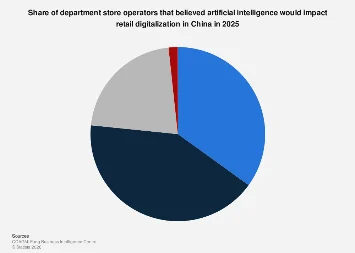
The retail sector in China is on the cusp of a profound digital metamorphosis, with artificial intelligence (AI) poised to be a central architect of this transformation, particularly for traditional department stores. By 2025, the integration of AI is not merely an option but an imperative for these established retail players to remain competitive and relevant in an increasingly dynamic and technology-driven market. This shift signals a move away from conventional brick-and-mortar models towards sophisticated, data-informed, and customer-centric omnichannel experiences.
The strategic imperative for Chinese department stores to embrace AI stems from a confluence of evolving consumer behaviors, intensifying online competition, and the inherent limitations of outdated operational models. For decades, department stores have been pillars of urban retail, offering a wide array of goods under one roof. However, the rapid rise of e-commerce giants like Alibaba and JD.com, coupled with the ubiquity of mobile payments and sophisticated logistics, has fundamentally altered the retail paradigm. Consumers now expect personalization, seamless transactions, and engaging experiences that transcend the physical space. AI offers the tools to meet these burgeoning demands.
At its core, AI’s impact will be felt across multiple operational facets of department stores. One of the most significant areas is customer relationship management (CRM) and personalization. AI-powered analytics can sift through vast datasets of customer purchase history, browsing behavior, and demographic information to create highly individualized shopping experiences. This translates into targeted product recommendations, personalized promotions, and tailored marketing campaigns, all delivered through various touchpoints, both online and in-store. Imagine a shopper receiving a notification on their mobile app about a new collection that perfectly matches their past preferences, or a smart mirror in a fitting room suggesting complementary accessories based on the garment they are trying on. Such applications are no longer futuristic fantasies but are rapidly becoming achievable realities.
Inventory management and supply chain optimization represent another critical domain where AI will drive efficiency and profitability. Traditional forecasting methods can be prone to inaccuracies, leading to overstocking of slow-moving items or stockouts of popular products. AI algorithms, by analyzing real-time sales data, market trends, and even external factors like weather patterns and local events, can predict demand with far greater precision. This allows for more agile inventory replenishment, reduced waste, and improved cash flow. Furthermore, AI can optimize store layouts and product placement based on predicted traffic flow and purchasing patterns, enhancing the in-store customer journey and maximizing sales opportunities.
The in-store experience itself is set for a significant AI-driven upgrade. From AI-powered chatbots and virtual assistants that can answer customer queries and guide them through the store, to sophisticated surveillance systems that monitor foot traffic and identify potential security risks, AI is set to enhance both customer service and operational safety. Smart fitting rooms that can recommend sizes and styles, or automated checkout systems that reduce waiting times, are examples of how AI can elevate the physical retail environment. This is particularly important for department stores aiming to leverage their physical presence as a key differentiator against pure-play online retailers.
The drive towards digitalization by 2025 is not just about adopting new technologies; it’s about fundamentally rethinking the retail business model. For department stores, this means integrating their online and offline channels into a cohesive omnichannel strategy. AI is the connective tissue that enables this integration. By providing a unified view of the customer across all channels, AI ensures that marketing efforts are consistent, promotions are synchronized, and customer service is seamless, regardless of how a customer chooses to interact with the brand. This integrated approach is crucial for fostering customer loyalty and maximizing lifetime value.
The economic implications of this AI-driven transformation are substantial. For department stores that successfully adapt, the benefits could include increased sales, improved profit margins through reduced operational costs and waste, and enhanced customer loyalty, leading to sustained revenue growth. Conversely, those that lag behind risk significant market share erosion and potential obsolescence. The competitive landscape will likely see a bifurcation, with digitally advanced players thriving and traditionalists struggling to keep pace. This will undoubtedly reshape the retail real estate market, with prime locations potentially becoming more valuable for experiential retail and less so for purely transactional purposes.
Globally, China is not alone in this AI-driven retail revolution. Retailers in North America and Europe are also heavily investing in AI for similar purposes. However, China’s unique digital ecosystem, characterized by high mobile penetration, widespread adoption of super-apps like WeChat, and a strong consumer appetite for technological innovation, provides a fertile ground for AI to flourish in the retail space. The rapid pace of development and adoption in China often sets benchmarks for other markets. For instance, the widespread use of facial recognition for payments and personalized experiences in some Chinese retail settings is far ahead of many Western counterparts, albeit with its own set of ethical considerations.
The statistics surrounding AI adoption in retail paint a compelling picture. Global spending on AI in retail is projected to grow exponentially in the coming years. While specific figures for China’s department store sector by 2025 are still being refined, industry analysts consistently forecast significant investment in areas such as machine learning for personalization, computer vision for in-store analytics, and natural language processing for customer service bots. The projected compound annual growth rate (CAGR) for AI in the retail sector globally is often cited in the double digits, underscoring the massive potential and the urgent need for strategic implementation.
However, the path to AI integration is not without its challenges. Significant upfront investment in technology infrastructure, data management systems, and skilled personnel is required. Moreover, the effective deployment of AI necessitates a robust data strategy, ensuring data quality, privacy, and security. Retailers will also need to navigate the ethical implications of AI, particularly concerning data usage and algorithmic bias. Training existing staff to work alongside AI systems and fostering a culture of continuous learning and adaptation will be crucial for successful implementation.
Looking ahead, the department store model in China by 2025 will likely be characterized by a blend of the tangible and the digital. Physical stores will transform into experiential hubs, offering curated selections, personalized services, and opportunities for social interaction, all amplified by AI. The online presence will be equally sophisticated, providing seamless e-commerce capabilities, virtual try-ons, and personalized recommendations. AI will be the invisible force orchestrating this symphony of channels, ensuring that every customer interaction is efficient, engaging, and ultimately, drives value for both the consumer and the retailer. The department store’s future hinges on its ability to harness the power of AI, not just to survive, but to thrive in the evolving retail landscape.