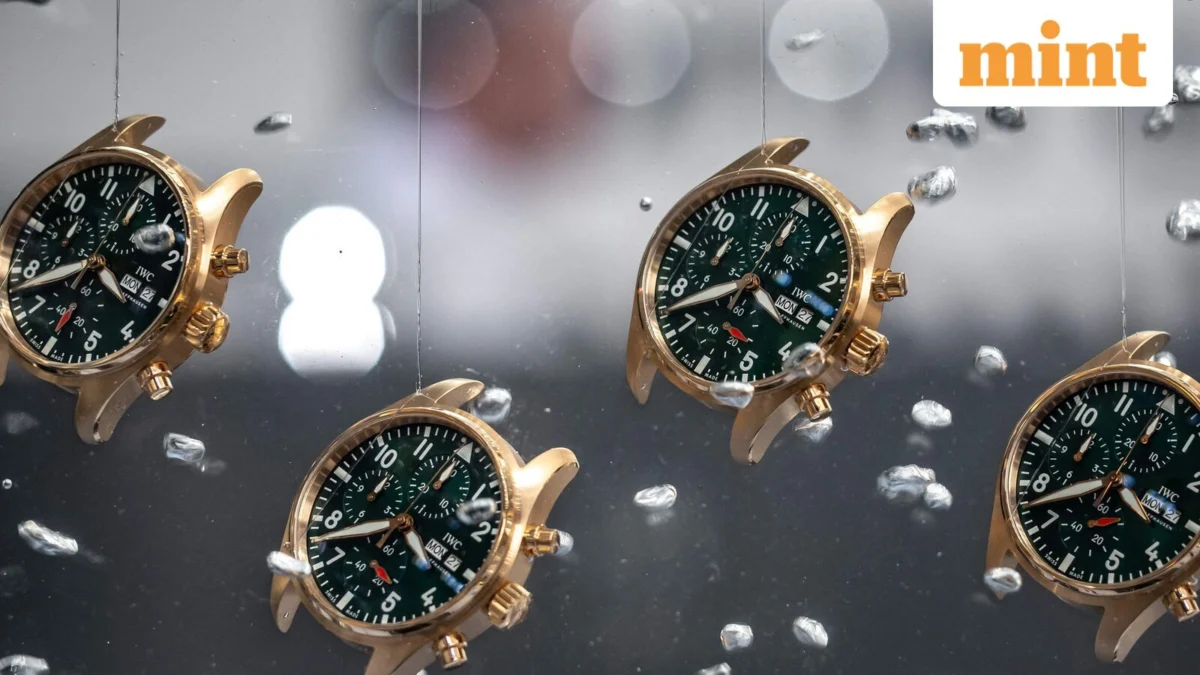
Amidst a nuanced global landscape for luxury goods, India has rapidly distinguished itself as a pivotal growth engine for the venerable Swiss watchmaking industry, defying a broader trend of decelerating worldwide exports. The nation’s burgeoning economy, coupled with a surging cohort of affluent consumers and strategic trade liberalizations, has propelled it into the upper echelons of the world’s most significant markets for haute horlogerie. This remarkable trajectory signals a fundamental shift in market dynamics, positioning India not merely as a burgeoning consumer base but as a critical strategic frontier for leading luxury brands.
The robust performance of the Indian market is particularly striking when juxtaposed against the global backdrop. In the first half of 2026, India imported an impressive 200,000 Swiss watches, marking an extraordinary 37% increase in volume compared to the previous year. Concurrently, the value of these imports soared by over 31% to CHF 168.7 million (approximately ₹1,991 crore), according to data released by the Federation of the Swiss Watch Industry (FH). This exceptional growth catapulted India from the 21st largest export market to the 15th within a single year, even as the global volume of Swiss watch exports experienced a marginal decline of 0.7%. This divergence underscores India’s unique position as a significant counter-cyclical force in the global luxury watch sector.
Unlike mature luxury markets in North America, Europe, or East Asia, where growth is often driven by replacement purchases or multi-watch ownership, India’s expansion is predominantly fueled by a burgeoning class of first-time luxury buyers. This demographic, characterized by increasing disposable incomes and a growing aspiration for premium goods, represents a vast untapped reservoir of demand. Industry executives frequently point to the expanding footprint of premium retail, including mono-brand boutiques and multi-brand luxury watch retailers, as well as the deliberate introduction of higher-priced collections by global brands into the Indian market, as key accelerators.
A significant macro-economic tailwind underpinning this growth is the India-Switzerland Trade and Economic Partnership Agreement (TEPA), which came into effect in October 2025. This landmark agreement is designed to progressively reduce tariffs on Swiss watches over the coming years, making these coveted timepieces more accessible and competitively priced for Indian consumers. Philippe Pegoraro, Chief Economist at the Federation of the Swiss Watch Industry, highlighted that this agreement, alongside the rising purchasing power of India’s middle class and increasing wealth levels, has been instrumental in stimulating demand. While France also recorded exceptional growth in value terms (63.4%) during the same period, and markets like Mexico and Poland saw low double-digit increases, India’s broad-based growth across volume and value, coupled with its sheer market potential, sets it apart.
However, the appreciation in import values is not solely attributable to increased demand. Several factors have contributed to higher pricing. The strengthening of the Swiss franc against major currencies, including the Indian rupee, has naturally inflated import costs. Furthermore, a significant surge in global gold prices and escalating freight costs, partly due to geopolitical disruptions in West Asia, have pushed up production and logistics expenses for watchmakers. Despite these cost escalations, Ashok Goel, Managing Director of Luxury Time Ltd., a major distributor of brands like Hublot and TAG Heuer in India, affirmed that underlying volume growth remains robust, with certain brands achieving impressive double-digit shipment increases. This indicates a strong, inelastic demand for luxury watches, even in the face of rising prices.

The most vigorous momentum within the Indian market is undeniably concentrated at the pinnacle of the luxury spectrum. Watches priced above ₹10 lakh are consistently reported as the fastest-growing segment, demonstrating the increasing willingness and capacity of Indian consumers to invest in ultra-luxury timepieces. The ₹5-10 lakh category also exhibits healthy growth in both value and volume, indicating a broader premiumization trend across various luxury tiers. This trend is further reinforced by the evolving perception of luxury watches, which are increasingly viewed not just as fashion accessories but as appreciating assets. The robust secondary market for pre-owned luxury watches further solidifies this investment narrative, attracting discerning buyers who see watches as tangible stores of value.
The expansion of India’s luxury retail infrastructure has been instrumental in facilitating this demand. Over the past three years, the landscape has transformed dramatically, with international brands and their local partners aggressively opening mono-brand boutiques in prime locations. Luxury malls are becoming vital destinations, attracting high-end retailers and offering consumers access to a wider assortment of products than ever before. Pushpa Bector, Group Executive Director and Business Head of DLF Retail, noted that watches have emerged as one of the best-performing luxury categories, driven by this dual appeal of fashion and investment. Raahuul Kapoor, co-founder of Luxury Ampersand Frolics, a Delhi-based luxury consultancy, emphasized that enhanced accessibility to a wider range of expensive watches has significantly contributed to the surge in demand.
India’s burgeoning importance is profoundly reshaping the strategic outlook of global watchmakers. In 2025, Swiss watch imports into India surpassed ₹3,500 crore for the first time, a substantial leap from approximately ₹2,600 crore in 2024, with industry projections indicating that this figure will be exceeded in the current year. Major retailers are responding aggressively to this growth. Ethos, one of India’s largest luxury watch retailers, achieved a milestone of 100 stores in FY26 and has announced ambitious plans to double its network within the next three to four years.
Global brands are also recalibrating their India strategies. TAG Heuer, for instance, has articulated its expectation for India to become its largest market within the Middle East, India, Africa, and Turkey (MEIAT) region within the next five years. Tissot already recognizes India as its third-largest global market, while Rado considers India its largest market by value. This strategic reorientation reflects a deeper understanding of India’s long-term potential and its evolving role in the global luxury ecosystem. Brands like Rolex and Omega continue to dominate the ultra-luxury segment, while Breitling and Hublot are experiencing robust demand in the mid-tier luxury category. Critically, more exclusive and higher-priced models are increasingly being allocated to India, a clear indicator of the market’s elevated status and the growing confidence of brands in its purchasing power. Even mid-market retailers like Just In Time report sustained resilience in demand, underscoring the pervasive nature of the premiumization trend across various consumer segments.
Looking ahead, India’s luxury watch market is poised for sustained growth, underpinned by strong macroeconomic fundamentals, a favorable demographic dividend, and continued liberalization of trade. The expansion of India’s overall luxury market, projected to grow significantly in the coming decade, provides a fertile ground for the watch sector. As disposable incomes continue to rise, and as more global luxury brands establish a deeper presence and tailor their offerings to Indian sensibilities, the nation’s trajectory from an emerging market to a global luxury powerhouse seems assured. While challenges such as currency fluctuations and the complexities of local market penetration remain, India’s strategic importance to the Swiss watch industry is undeniable, cementing its position as a critical frontier for future growth and innovation in the world of haute horlogerie.