Singapore’s corporate landscape is increasingly navigating the complex and ever-evolving terrain of cybersecurity, with a recent survey revealing a nuanced picture of business readiness across different maturity stages. Conducted between January and February 2024, the research, which involved telephone interviews and online surveys with 8,136 private sector business leaders across 30 global markets, including a significant cohort in Singapore, highlights the current state of preparedness against escalating digital threats. The findings underscore that while many businesses are actively engaged in bolstering their defenses, a substantial portion still resides in the foundational phases of cybersecurity maturity.
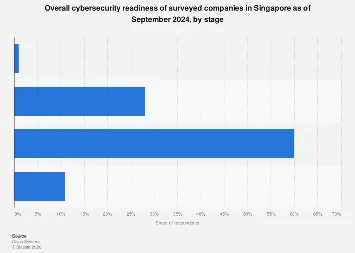
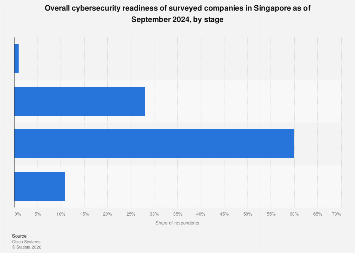
The survey categorizes companies into four distinct stages: Beginner, Formative, Progressive, and Mature. The ‘Beginner’ stage represents organizations in the initial phases of deploying cybersecurity solutions. The ‘Formative’ stage signifies businesses with some level of deployment but performing below average in overall cybersecurity readiness. ‘Progressive’ companies demonstrate a considerable level of deployment and are performing above average, while the ‘Mature’ stage encompasses those that have achieved advanced deployment stages and are most adept at addressing security risks.
Within Singapore, the data indicates that a significant majority of surveyed organizations fall into the ‘Formative’ stage. This segment represents a substantial portion of the business community that has begun to implement cybersecurity measures but has not yet reached a robust or consistently effective level of defense. While this indicates an awareness of the need for cybersecurity, it also points to a critical gap between initial efforts and comprehensive protection. The implications are significant, as businesses at this stage may remain vulnerable to sophisticated cyberattacks that can exploit gaps in their security infrastructure, leading to data breaches, financial losses, and reputational damage.
In contrast, a considerably smaller percentage of Singaporean companies have ascended to the ‘Mature’ stage of cybersecurity readiness. This elite group represents the vanguard of digital security within the nation’s business ecosystem, characterized by advanced deployment of security technologies, proactive threat intelligence, and well-established incident response protocols. Their preparedness is a testament to sustained investment, strategic planning, and a deep understanding of the threat landscape. These organizations are likely to be more resilient in the face of cyber incidents, capable of mitigating damage and ensuring business continuity more effectively.
Further illuminating the landscape, the ‘Beginner’ stage also accounts for a notable segment of Singaporean businesses. These are companies that are just embarking on their cybersecurity journey, likely focusing on fundamental protective measures. While their commitment is positive, their nascent approach to security implies a higher degree of vulnerability compared to their more advanced counterparts. The challenge for these businesses lies in rapidly scaling their cybersecurity efforts to keep pace with the evolving threat landscape and the sophistication of cyber adversaries.
The distribution across these stages offers a critical snapshot of Singapore’s corporate cybersecurity posture. The prevalence of businesses in the ‘Formative’ and ‘Beginner’ stages suggests a significant opportunity for growth and improvement. This also presents a clear imperative for government agencies, industry bodies, and cybersecurity providers to intensify their efforts in education, resource provision, and tailored support to help these businesses mature their defenses.
The economic ramifications of this uneven readiness are substantial. For organizations at the ‘Mature’ stage, their robust cybersecurity frameworks not only protect their own assets but also contribute to the overall stability and trustworthiness of Singapore’s digital economy. They are less likely to suffer costly disruptions from cyber incidents, which can range from ransomware attacks demanding significant payouts to prolonged downtime impacting revenue streams. Furthermore, their strong security credentials can enhance their competitiveness in international markets, where data protection and privacy are increasingly paramount.
Conversely, businesses in the ‘Beginner’ and ‘Formative’ stages are at a higher risk of experiencing significant financial and operational setbacks due to cyberattacks. The direct costs of a breach can include forensic investigations, system recovery, legal fees, and regulatory fines. Indirect costs, such as lost productivity, damage to brand reputation, and erosion of customer trust, can be even more damaging and long-lasting. For small and medium-sized enterprises (SMEs), which often form the backbone of an economy, a severe cyber incident can be an existential threat.
Globally, Singapore’s cybersecurity readiness can be viewed in the context of broader trends. Many developed nations are grappling with similar challenges, with varying degrees of success in fostering widespread cybersecurity maturity. Countries that have made significant investments in national cybersecurity strategies, public-private partnerships, and digital skills development often exhibit higher levels of corporate readiness. Singapore, with its strong governmental focus on digital innovation and smart nation initiatives, is well-positioned to learn from these global experiences and to drive its own businesses towards greater resilience.
The survey’s methodology, employing both telephone interviews and online surveys, aims to capture a comprehensive perspective from business leaders, providing insights into their strategic decisions and perceived security postures. The broad global sample size lends weight to the comparative analysis, allowing for an understanding of how Singapore’s businesses stack up against international peers. However, the exact percentages for each stage remain undisclosed in the publicly available data, necessitating a focus on the qualitative interpretation of the stages and the general distribution.
The definitions provided for each stage offer a clear framework for assessing cybersecurity maturity. The ‘Beginner’ stage, for instance, highlights the critical need for basic security hygiene, such as implementing firewalls, antivirus software, and employee training on phishing awareness. The ‘Formative’ stage suggests that while some measures are in place, they may be inconsistently applied or lack depth, perhaps failing to address more advanced threats like zero-day exploits or sophisticated social engineering tactics. The progression to ‘Progressive’ and ‘Mature’ stages involves a more holistic approach, encompassing advanced threat detection and response, robust data encryption, regular vulnerability assessments, and comprehensive business continuity and disaster recovery plans.
Looking ahead, the trajectory of Singapore’s cybersecurity readiness will be shaped by several factors. Continued investment in cybersecurity technologies and expertise is crucial. This includes not only adopting new solutions but also ensuring that IT and security teams are adequately skilled and trained to manage and adapt them effectively. Furthermore, fostering a culture of cybersecurity awareness throughout organizations, from the C-suite to frontline employees, is paramount. This involves ongoing education, clear communication of security policies, and encouraging employees to report suspicious activities without fear of reprisal.
The role of regulatory frameworks and government initiatives cannot be overstated. Policies that mandate certain security standards, provide incentives for cybersecurity investments, and offer resources for threat intelligence sharing can significantly accelerate the maturity of businesses. Singapore’s Cyber Security Agency (CSA) plays a vital role in this regard, working to enhance the nation’s cybersecurity capabilities through various programs and advisories.
In conclusion, while Singapore’s business sector is actively engaging with cybersecurity, the current data suggests a collective journey towards full maturity. The significant presence of companies in the formative and beginner stages presents a clear call to action for enhanced cybersecurity strategies and support mechanisms. By addressing these readiness gaps, Singapore can further solidify its position as a secure and trusted hub for digital innovation and economic activity in the region and globally. The continuous evolution of cyber threats demands an equally continuous evolution of defensive capabilities, making the pursuit of cybersecurity maturity an ongoing and critical endeavor for every business.