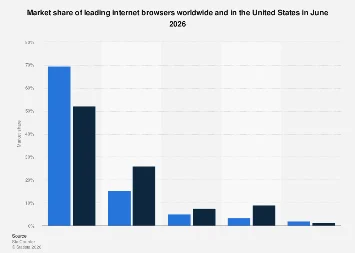
The digital landscape, an ever-expanding universe of information and interaction, is fundamentally shaped by the gateways through which billions navigate it: web browsers. In the United States, the latest available data paints a stark picture of market dominance, with Google Chrome firmly entrenched as the undisputed leader, commanding an overwhelming majority of the user base. While precise figures fluctuate with each reporting period, Chrome’s share consistently hovers in the high double digits, a testament to its widespread adoption and integration across various devices and platforms. This near-ubiquitous presence is not accidental; it is the result of strategic product development, seamless integration with Google’s vast ecosystem of services, and continuous innovation aimed at enhancing user experience, speed, and security.
The primary challenger to Chrome’s reign in the American market is Apple’s Safari browser. Historically, Safari has occupied a strong second position, its market share significantly bolstered by its default status on Apple’s immensely popular iPhone, iPad, and Mac devices. While Safari does not approach Chrome’s overall penetration, its dedicated user base, often characterized by loyalty to the Apple ecosystem, represents a substantial and consistent segment of the market. The competition between these two giants is not merely a battle for user preference; it reflects broader technological trends and the strategic interests of their parent companies. Apple’s focus on privacy and its tightly controlled hardware-software integration often translate into a perceived security advantage for Safari users, a narrative that resonates with a significant portion of consumers.
Beyond these two leading browsers, the rest of the market share is fragmented, with no other web browser achieving a significant percentage. This suggests a highly consolidated market in the US, where the top two players effectively crowd out smaller competitors. This phenomenon is not unique to web browsers; many digital services and platforms tend towards a winner-take-all or winner-take-most dynamic. The high barrier to entry, coupled with the network effects and ingrained user habits associated with established browsers, makes it exceedingly difficult for new entrants to gain substantial traction. Even established players like Mozilla Firefox, once a formidable competitor, and Microsoft Edge, despite its integration into Windows operating systems, struggle to carve out a meaningful share against the titans.
The evolution of web browsers is inextricably linked to the broader trajectory of technological advancement and the changing ways in which people consume digital content. Initially, web browsing was a domain exclusively of desktop computers, tethered to physical locations. The advent of mobile computing, however, fundamentally reshaped this paradigm. Smartphones and tablets have become primary access points to the internet for a significant portion of the global population, particularly in emerging markets. This shift has elevated the importance of mobile-optimized browsers and highlighted the need for seamless synchronization of browsing data across multiple devices.
Chrome’s success on mobile, particularly with Chrome for Android, mirrors its desktop dominance. Google’s ability to pre-install Chrome on a vast number of Android devices, the world’s most popular mobile operating system, has been a critical factor. Similarly, Safari’s default presence on iPhones and iPads has cemented its position as the leading mobile browser within the Apple ecosystem. This dual dominance in both desktop and mobile environments underscores the importance of platform integration and ecosystem strategy in the contemporary digital marketplace.
Looking ahead towards 2026, several factors are poised to influence the browser market share. The increasing emphasis on user privacy, driven by regulatory pressures like GDPR and CCPA, as well as growing consumer awareness, will likely continue to shape browser development. Browsers that can demonstrably offer robust privacy features, such as enhanced tracking protection and private browsing modes, may gain an edge. Apple’s Safari has already capitalized on this trend, and it is probable that other browsers will intensify their efforts in this area.
Furthermore, the ongoing integration of artificial intelligence and machine learning into browser functionalities could become a significant differentiator. Features like intelligent content suggestions, personalized search results, and AI-powered assistance are likely to become more sophisticated and pervasive. Browsers that can leverage AI to offer a more intuitive, efficient, and personalized user experience will be well-positioned to attract and retain users.
The global economic context also plays a role. In developing economies, where smartphone penetration is rapidly increasing, mobile browsers will continue to be the primary means of internet access. This presents an opportunity for browsers that are lightweight, data-efficient, and offer a compelling user experience on lower-spec devices. The competitive dynamics in these regions may differ from those in more mature markets, with local preferences and infrastructure limitations influencing adoption rates.
The proliferation of connected devices beyond smartphones and desktops – including smart TVs, wearables, and even in-car infotainment systems – opens up new frontiers for browser integration. While these platforms may not represent large standalone browser markets, their growing prevalence means that browser developers will need to consider how their products can extend seamlessly across this increasingly diverse technological landscape. The ability to offer a consistent and familiar browsing experience across all user touchpoints will be a key competitive advantage.
The browser market is not static; it is a dynamic arena shaped by technological innovation, strategic business decisions, and evolving user needs. While Chrome’s dominance in the US and globally is a significant factor, the ongoing competition, particularly from Safari, coupled with emerging trends in privacy, AI, and the expansion of connected devices, suggests that the landscape will continue to evolve. The battle for the digital gateway is far from over, and the period leading up to 2026 will likely see further shifts in user preferences and market dynamics as companies vie for control of how the world accesses the internet. The underlying economic forces driving competition – user acquisition, data monetization, and ecosystem lock-in – will continue to fuel innovation and strategic maneuvering in this critical sector of the digital economy.