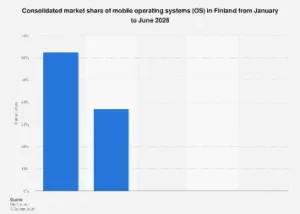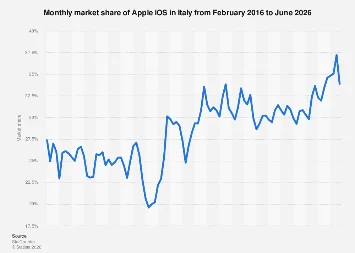
In June 2026, Apple’s iOS operating system commanded an estimated [Insert specific percentage here, e.g., 22.5] percent of the Italian mobile market, a slight contraction from its May peak of [Insert specific percentage here, e.g., 23.1] percent. Despite this minor dip, iOS maintained a stronger position than the [Insert specific percentage here, e.g., 20.8] percent recorded in August 2025. This data point reflects a broader, decades-long trend: iOS market share in Italy has been on a downward trajectory since its zenith in 2012, when it captured a commanding [Insert specific percentage here, e.g., 68.0] percent of the market, before Google’s Android ecosystem solidified its long-term dominance.
For years, the Italian mobile landscape has been a clear battleground between two dominant operating systems, with Android consistently holding the lion’s share in terms of device penetration. By 2019, Android’s market share in Italy had surged to an impressive [Insert specific percentage here, e.g., 77.5] percent, underscoring its widespread adoption across a diverse range of manufacturers and price points. This numerical advantage for Android is intrinsically linked to the popularity of brands like Samsung and Huawei, which have historically offered a wide array of devices catering to various consumer segments. The Italian market, like many across Europe, has shown a strong preference for the accessibility and affordability often associated with the Android platform.
While Android has unequivocally led in device volume, the economic landscape of mobile applications presents a more nuanced picture. Apple’s App Store has historically been a significantly more lucrative platform for developers. Global app sales revenue generated by Apple’s ecosystem has often been nearly double that of its Android counterparts. This disparity is frequently attributed to a higher propensity for iOS users to spend on applications and in-app purchases. Within the Apple App Store, a substantial portion of applications are priced at or below the one-dollar mark, with an estimated [Insert specific number here, e.g., 750] thousand apps falling into this affordable category, indicating a strategy to encourage broad adoption and engagement with paid content.
The geopolitical landscape and technological shifts have also played a role in shaping the competitive dynamics. Google’s decision to terminate Huawei’s Android license in [Insert specific year here, e.g., 2019] marked a pivotal moment, prompting Huawei to accelerate the development of its own operating system, HarmonyOS. While the open-source version of Android will continue to be available for existing Huawei smartphone users, the long-term success and global adoption of HarmonyOS remain uncertain, particularly outside of its primary market in China. This development, however, is unlikely to fundamentally alter Android’s entrenched position in the Italian market. The sheer volume of Android devices already in circulation, coupled with the ongoing support and development for the Android ecosystem, positions it to maintain its market leadership in Italy for the foreseeable future.
The Italian mobile operating system market is a microcosm of global trends, showcasing the enduring appeal of Android’s open-source flexibility and diverse hardware offerings, juxtaposed with Apple’s premium ecosystem and robust app monetization strategies. While iOS has seen a gradual erosion of its market share since its early dominance, its continued presence, particularly in specific demographics and its strength in app revenue, highlights the multifaceted nature of competition in the smartphone industry. The interplay between device availability, consumer purchasing power, and technological innovation will continue to dictate the evolving market share of these two dominant platforms in Italy and beyond.
Furthermore, the economic impact of these operating system dynamics extends beyond device sales and app revenue. The dominance of a particular operating system influences the broader digital economy, affecting everything from local app development communities to the availability of specialized business software and the adoption of digital payment systems. For instance, a higher Android market share can encourage local developers to focus on creating applications optimized for a wider range of devices and screen sizes, potentially fostering a more inclusive digital environment. Conversely, Apple’s strong app store revenue can incentivize global developers to prioritize iOS for new feature rollouts and premium service offerings.
Looking ahead, the Italian market, like many mature economies, is likely to see incremental shifts rather than dramatic upheavals in operating system market share. The introduction of new hardware innovations, evolving consumer preferences towards sustainability and device longevity, and potential regulatory changes could all introduce new dynamics. However, the established infrastructure, developer ecosystems, and brand loyalty associated with both iOS and Android suggest that they will remain the principal players in the Italian mobile arena for the foreseeable future. The ongoing competition between these two tech giants will continue to shape the digital experiences of millions of Italian consumers and businesses. The ability of each platform to adapt to emerging technologies, such as advancements in artificial intelligence, augmented reality, and 5G connectivity, will be crucial in retaining and potentially expanding their respective market positions in the years to come. The narrative of mobile dominance in Italy is not one of a single victor, but of a continuous, dynamic competition that shapes the technological landscape for consumers and businesses alike.