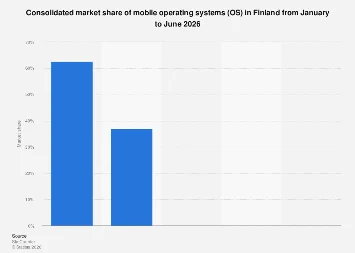
The Finnish mobile operating system market in 2024 presents a clear picture of established dominance, with Google’s Android platform continuing to hold a commanding lead, reflecting global trends. While specific, granular market share percentages for Finland in the current year are typically proprietary and compiled by market research firms, the overarching narrative is one of Android’s pervasive influence, interspersed with the persistent, albeit smaller, presence of Apple’s iOS. This dichotomy forms the bedrock of the Finnish mobile ecosystem, shaping device choices, application development, and the broader digital economy.
Globally, Android consistently accounts for a substantial majority of the smartphone market, often exceeding 70% and in some regions even reaching into the high 80s. Finland, as a developed market with a high smartphone penetration rate, generally aligns with these international patterns. This dominance is driven by a multitude of factors, including the sheer diversity of Android-powered devices available across all price points, from budget-friendly options to premium flagships. Manufacturers worldwide, including major players like Samsung, Xiaomi, and OnePlus, offer a vast array of Android smartphones, catering to every consumer segment. This wide selection empowers Finnish consumers with choices, making Android the accessible and often default option for a significant portion of the population. Furthermore, the open-source nature of Android allows for greater customization and flexibility, appealing to a segment of users who value personalization and the ability to tweak their device’s functionality.
Conversely, Apple’s iOS operates within a more curated and premium ecosystem. While its market share in Finland is considerably smaller than Android’s, it remains a significant force, particularly among users who prioritize a seamless user experience, robust security, and a tightly integrated hardware-software environment. Apple’s iPhone lineup, known for its premium build quality and user-friendly interface, has cultivated a loyal customer base in Finland, as it has in many other developed nations. The brand’s emphasis on privacy and its consistent software updates also resonate with a segment of the Finnish consumer base. Despite the higher price point of iPhones, the perceived value in terms of user experience, longevity of software support, and resale value often justifies the investment for its adherents.
The economic implications of this market structure are multifaceted. For device manufacturers and mobile network operators in Finland, the dominance of Android translates into a need to cater to a broad spectrum of hardware capabilities and software versions. This can present challenges in terms of device compatibility testing and ensuring widespread access to services. However, it also opens up a larger potential customer base for Android-centric applications and services. The Finnish app development sector, therefore, largely focuses on building for the Android platform, given its larger addressable market. This includes everything from local banking applications and public service portals to gaming and entertainment apps.
For businesses operating in Finland, understanding the mobile OS landscape is crucial for their digital strategies. E-commerce platforms, for instance, must ensure their websites and mobile applications are optimized for both Android and iOS, although the emphasis on Android development may be greater due to its larger user base. Marketing campaigns also need to consider the prevalent OS, tailoring their reach and messaging accordingly. The development of native applications for each platform, while resource-intensive, often provides the best user experience, and companies must weigh the investment against the potential return in terms of customer engagement and sales.
Looking beyond the immediate market share figures, several underlying trends influence the Finnish mobile OS environment. The increasing sophistication of mobile devices means that even lower-cost Android phones offer capabilities that were once exclusive to high-end models. This democratization of technology further solidifies Android’s position. Simultaneously, the increasing focus on digital security and privacy, amplified by global data protection regulations like GDPR, is a factor that both operating systems are actively addressing. Apple has historically leveraged its privacy-first approach as a key differentiator, while Google has been investing heavily in enhancing Android’s security features.
The role of emerging technologies also bears consideration. The rollout of 5G networks across Finland is enhancing mobile data speeds and enabling new use cases, such as augmented reality (AR) and more immersive mobile gaming. Both Android and iOS devices are equipped to take advantage of these advancements, and the adoption rate of 5G-compatible smartphones will likely influence future OS market dynamics. As consumers increasingly rely on their mobile devices for a wide range of tasks, from communication and entertainment to work and financial management, the operating system becomes a critical determinant of their overall digital experience.
Comparing Finland’s mobile OS market to other Nordic countries, a similar pattern of Android dominance with a strong iOS presence is generally observed. Countries like Sweden, Norway, and Denmark also exhibit high smartphone penetration rates and a preference for the two leading mobile operating systems. However, subtle regional differences can emerge based on economic factors, consumer purchasing power, and the presence of specific device manufacturers. For instance, in markets with a higher average disposable income, the premium segment occupied by iOS might see a slightly larger share compared to markets where budget-friendly Android devices are more prevalent.
The future trajectory of Finland’s mobile OS market will likely be shaped by several key developments. The continued innovation in smartphone hardware, the evolution of 5G capabilities, and the increasing integration of artificial intelligence (AI) into mobile devices will all play a role. Furthermore, the ongoing competition between Google and Apple to provide compelling ecosystems, robust security, and innovative features will continue to influence consumer choices. While Android is expected to maintain its lead, the persistent appeal of iOS, particularly among a discerning consumer segment, ensures a dynamic and competitive landscape for the foreseeable future. The ability of both platforms to adapt to evolving consumer needs and technological advancements will be paramount in shaping their respective market shares in the years to come.