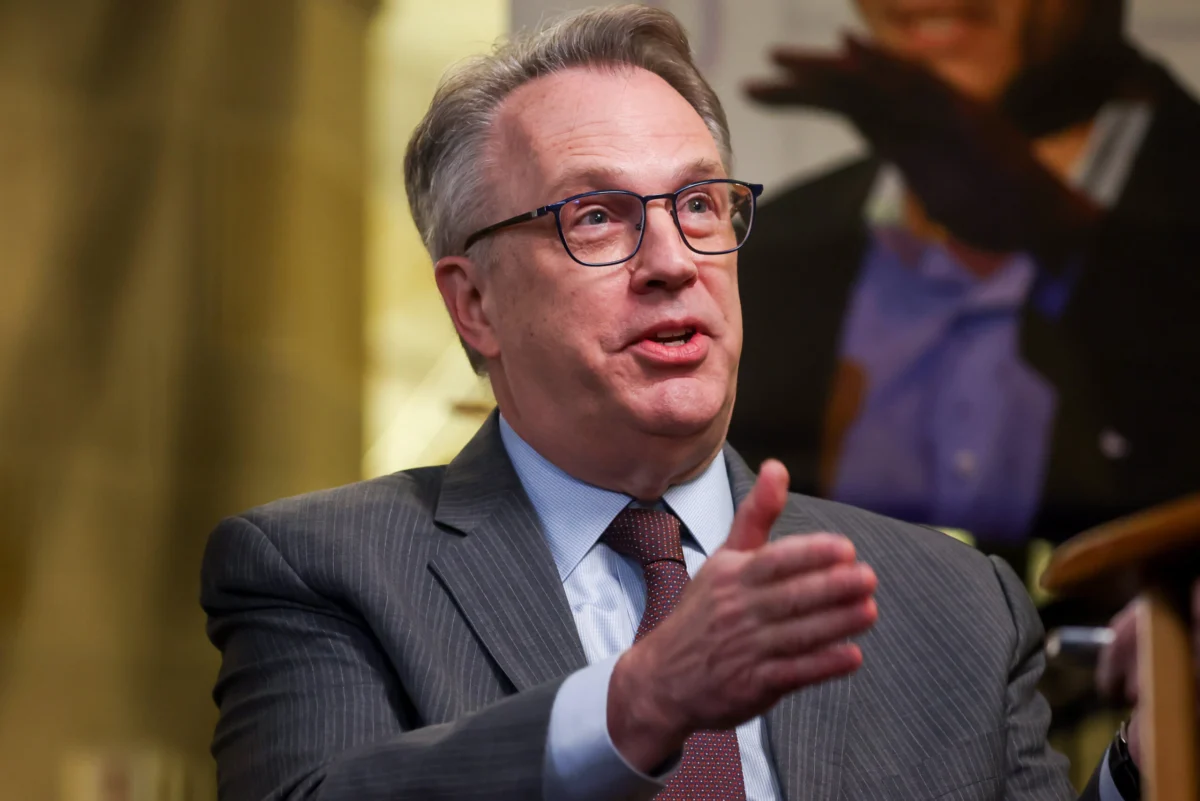
The Federal Reserve Bank of New York’s leadership has signaled a pivotal shift in the trajectory of American monetary policy, suggesting that the aggressive cycle of interest rate hikes may have finally reached its conclusion. Speaking before a gathering of influential business leaders within his home district on Wednesday, New York Fed President John Williams articulated a compelling case for stability, asserting that the current restrictive stance of the central bank is "well positioned" to return the economy to price stability. His remarks come at a critical juncture for global markets, which have been grappling with the twin pressures of geopolitical volatility and a structural transformation driven by the rapid integration of artificial intelligence into the industrial base.
Williams’ assessment hinges on the belief that the primary catalysts of the most recent inflationary surge have begun to lose their momentum. After a period of significant economic turbulence, he identified five specific pillars that support his thesis that inflation has passed its zenith. This cooling trend, according to Williams, will allow the Federal Reserve to maintain the federal funds rate at its current level, even as a segment of the market continues to brace for a potential increase in the coming months. The New York Fed President’s outlook suggests a "glide path" toward the central bank’s long-term 2% target, with an intermediate expectation that overall inflation will settle near 3.25% by the end of the current calendar year.
The backdrop for this policy recalibration is a complex tapestry of international conflict and energy market disruption. The early months of the year were defined by a dramatic spike in energy costs following the escalation of military tensions in the Middle East, specifically involving the United States, Israel, and Iran in late February. This geopolitical flashpoint sent shockwaves through global crude markets, pushing oil prices to levels that threatened to derail the post-pandemic recovery. Williams acknowledged the profound impact of this conflict, noting that the resulting energy price spiral was a dominant driver of the spring inflation data. However, he now observes a "peak" in these pressures, suggesting that the risk premium associated with the conflict is being absorbed and that prices are likely to retreat toward historical norms as supply chains reorganize.
Beyond the immediate impact of energy costs, Williams addressed the structural influence of trade policy and tariffs. In recent years, the transition toward protectionist measures and the restructuring of global trade routes have often been cited as inflationary. Yet, the New York Fed President offered a more nuanced view, suggesting that the "impulse" from these duties is neutralizing. As older tariffs expire and are replaced by new, more targeted duties, the net inflationary effect is expected to remain flat. This stabilization of trade-related costs provides the Federal Reserve with a more predictable environment in which to manage domestic price levels, removing one of the more volatile variables from the central bank’s forecasting models.
Perhaps the most forward-looking aspect of Williams’ address was his analysis of the burgeoning artificial intelligence sector. The massive influx of capital into AI infrastructure—from data centers to specialized semiconductors—has created temporary "imbalances" in the economy, characterized by high demand and constrained supply. While this accelerated technology spending initially contributed to price pressures in the tech and energy sectors, Williams anticipates that these imbalances will recede as global production capacity expands. The narrative here is one of a "productivity shock" that is initially inflationary due to heavy investment but ultimately serves to lower the costs of goods and services as efficiency gains are realized across the broader economy.
In contrast to previous cycles where a "wage-price spiral" was a primary concern for central bankers, Williams pointed to the current labor market as a source of stability rather than a driver of inflation. He described the employment landscape as "solid and stable," characterized by steady job growth that is trending in line with long-term economic potential. By decoupling labor costs from the recent inflationary spike, Williams is signaling that the Fed does not see a need to aggressively cool the labor market to achieve its price stability goals—a sentiment that will likely be welcomed by both workers and policymakers concerned about the risk of a recession.

Crucially, the New York Fed President highlighted that inflation expectations remain "well-anchored" among consumers and businesses alike. This psychological component of monetary policy is vital; if the public believes inflation will remain high, their behavior can create a self-fulfilling prophecy. The fact that long-term expectations have not drifted significantly upward despite the recent shocks gives the Fed what Williams described as "breathing room." This credibility allows the FOMC to exercise patience, observing the lagged effects of previous rate hikes rather than reacting impulsively to short-term data volatility.
Despite Williams’ optimistic tone, a palpable tension remains between the Fed’s internal projections and market sentiment. While Williams advocates for a steady hand, many market participants are still pricing in a quarter-percentage-point hike as early as September. This divergence is reflected within the Federal Open Market Committee (FOMC) itself; during the June meeting, a narrow margin of committee members penciled in one additional rate increase before the end of the year. The debate centers on whether the current 3.5% annual inflation rate—as reported by the Bureau of Labor Statistics for June—is descending quickly enough to justify a pause.
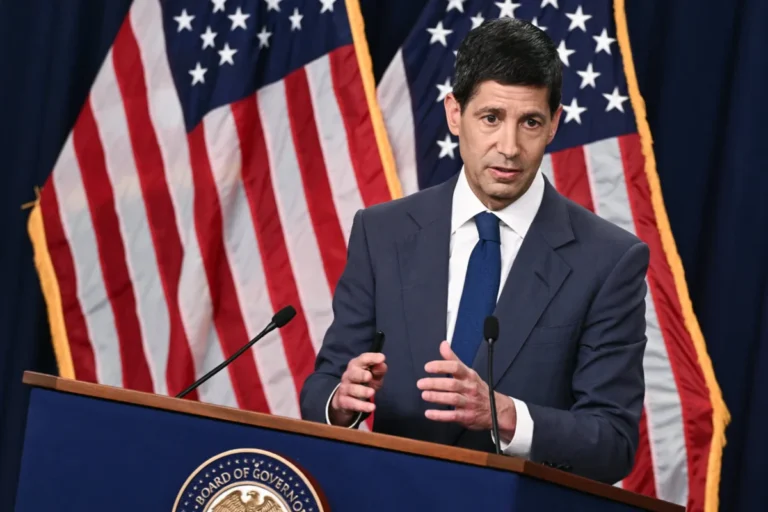
The June consumer price data offered a significant boost to the "peak inflation" narrative, showing a surprising 0.4% month-over-month decline. This represented the largest single-month drop in prices since the height of the pandemic lockdowns in April 2020. However, the path back to the Fed’s 2% mandate remains long and fraught with potential obstacles. Federal Reserve Chairman Kevin Warsh, in his recent testimony before the House Financial Services Committee, was careful to temper any premature celebrations. Warsh emphasized that a single month of favorable data does not constitute a "mission accomplished" moment, maintaining a more hawkish stance that keeps the door open for further tightening if the downward trend stalls.
The contrast between Williams’ focus on the "glide path" and Warsh’s cautionary rhetoric illustrates the delicate balancing act the Federal Reserve must perform. On one hand, keeping rates too high for too long risks an unnecessary economic contraction; on the other, easing too soon could allow inflation to become entrenched at a level well above the 2% target. Williams’ forecast suggests a multi-year journey: reaching 3.25% by the end of this year, continuing the descent through 2026, and finally landing on the 2% target by 2028. This timeline reflects a central bank that is prepared to be patient, prioritizing a "soft landing" over a rapid, potentially disruptive return to price stability.
From a global perspective, the Fed’s stance carries immense weight. As the world’s reserve currency issuer, the Fed’s interest rate decisions influence capital flows, exchange rates, and borrowing costs from London to Tokyo. A decision by the New York Fed and its colleagues to hold rates steady would provide a measure of relief to emerging markets, which have struggled with a strong dollar and high debt-servicing costs. It would also align the U.S. more closely with other major central banks that have begun to pivot toward a neutral or easing bias as global growth moderates.
In his concluding remarks to the business community, Williams reinforced the dual mandate of the Federal Reserve: promoting maximum employment and stable prices. He maintained that the economy is currently on a "solid and on-trend" growth path, which provides the necessary foundation for the final phase of the inflation fight. By asserting that policy is "well positioned," Williams is effectively calling for a period of monetary hibernation, allowing the restrictive measures already in place to work their way through the financial system. Whether the rest of the FOMC—and the broader market—will share this conviction remains the defining question for the American economy in the second half of the year. For now, the message from the New York Fed is clear: the peak has been scaled, and the long descent toward stability has begun.