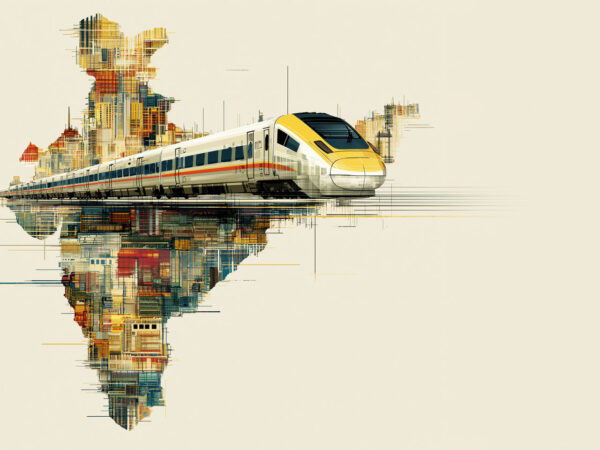
The successful completion of the Western Dedicated Freight Corridor’s final electrified sections in January 2026 marks a significant milestone in India’s ongoing infrastructure revolution. This colossal project, spanning 1,500 kilometers from Jawaharlal Nehru Port near Mumbai to the industrial hubs of Dadri and Khurja in Uttar Pradesh, drastically reduces transit times for goods, with containers now reaching their destination a day faster than before, outperforming transit times in many other global logistics networks, including the United States. This achievement not only solidifies India’s position as having one of the longest electrified rail systems globally, reaching 100 percent electrification of its broad-gauge network, but also places it in esteemed company with nations like Switzerland, renowned for its advanced rail infrastructure. In stark contrast, the United Kingdom has electrified approximately 37 percent of its rail network, while the United States has electrified a mere one percent. The pace of India’s electrification is nothing short of astonishing; over the past six years, Indian Railways has consistently added more than 15 kilometers of electrified track daily. This rapid expansion, totaling 70,000 kilometers of electrified broad-gauge rail, is a cornerstone of Prime Minister Narendra Modi’s comprehensive plan to modernize the nation’s vital transport, energy, and shipping sectors. This concerted effort symbolizes a profound economic rejuvenation that has, perhaps, flown under the global radar.
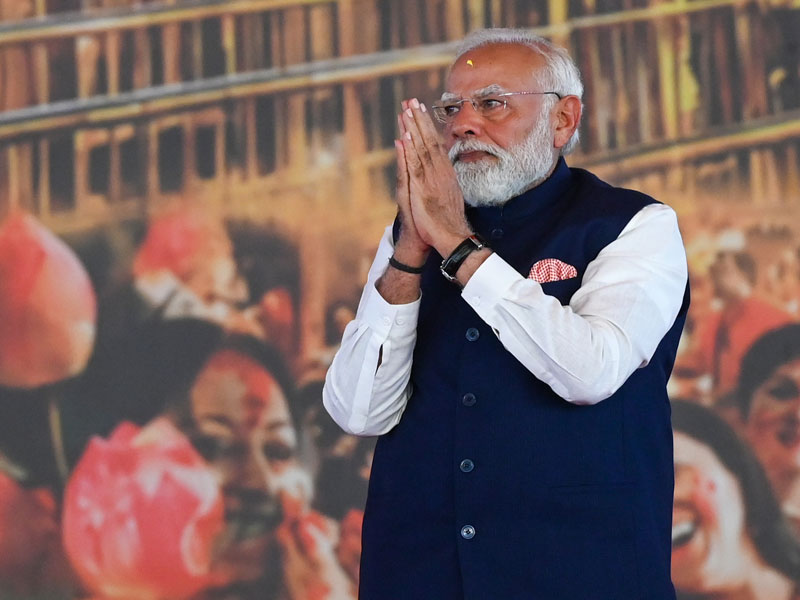
The economic policies championed by Prime Minister Modi since his ascent to power in 2014, following decades of socialist governance, have been broadly termed "Modinomics." Initially coined by critics who questioned their efficacy, the term has also been embraced by supporters who argue that these reforms were long overdue in a country historically characterized by its complex governance structures. India’s vast geographical expanse, ranking seventh globally and encompassing 28 states and eight union territories, coupled with its status as the world’s most populous nation with 1.47 billion citizens, presents unique challenges to policy implementation. As noted in a Springer Nature publication, "significant hurdles persist, including entrenched bureaucracy, social fragmentation, and deep-seated political divisions."
One of the most substantial challenges has been the labor market. In 2014, the government introduced sweeping changes to employment laws aimed at curbing the influence of obstructive trade unions and stimulating job creation. This move triggered a nationwide 24-hour strike involving approximately 150 million workers across banking, manufacturing, and construction sectors, resulting in an estimated economic loss of $3.5 billion. Even rickshaw drivers participated in the protest. Nevertheless, these reforms are yielding tangible results. According to Australia’s Treasury, India’s economy maintained an annual growth rate of between 6.5 and 7 percent during Modi’s first decade in office, up to 2024. This trajectory has solidified India’s standing among the world’s fastest-growing major economies, even weathering the significant contraction experienced in 2020 due to the COVID-19 pandemic. Projections from institutions like the International Monetary Fund anticipate a sustained robust growth rate through 2035.
Despite this progress, India’s dynamic political landscape continues to subject Modi’s reform agenda to scrutiny. A particularly consequential and long-overdue reform was the demonetization of currency. On November 8, 2016, with minimal notice, India withdrew 500 and 1,000 rupee banknotes from circulation. The stated objective was to combat "black money"—cash generated from illicit activities, untaxed, and often used to fund terrorism and other illegal enterprises. This measure was comprehensive, affecting 86 percent of the nation’s currency. The effectiveness of demonetization remains a subject of debate among economists. While some point to the short-term economic disruption it caused, others highlight the long-term damage inflicted by the parallel economy. As Bhaskar Chakravorti, Dean of Global Business at The Fletcher School at Tufts University, observed in an article for the Brooking Institute a year later, only one percent of Indians had been declaring their earnings for tax purposes prior to the reform.
The demonetization policy spurred a significant return of currency to the formal banking system. By the deadline of December 30, 2016, banks had reportedly received 14.97 trillion rupees ($220 billion), representing 97 percent of the total value of demonetized currency. Beyond the immediate impact, demonetization provided a substantial impetus to the adoption of cashless payment systems, benefiting digital wallet providers like Paytm. More critically, in the intervening years, the tax base has demonstrably widened. This was further supported by the government’s overhaul of the complex system of state and local consumption taxes with the introduction of a unified Goods and Services Tax (GST).
The Modi administration has, at times, set ambitious targets that critics have characterized as "grandiose claims." The "Make in India" initiative, launched in 2014, aimed to transform the country into a manufacturing powerhouse by attracting foreign investment and technology. Initial targets included doubling the manufacturing growth rate, creating 100 million jobs in the sector by 2022, and increasing manufacturing’s share of GDP to 25 percent by the same year. While the sector has seen some growth and employment gains, it has not met these ambitious projections, with its share of GDP experiencing a decline. A contributing factor is India’s manufacturing structure, where nearly three-quarters of manufacturers employ fewer than five staff. These small enterprises are historically less productive, contributing significantly less output compared to larger Indian manufacturers and their counterparts in Western nations, particularly the United States.
Bureaucratic red tape is identified as a persistent impediment to productivity. The IMF notes that "many of these enterprises remain small for decades due to complex compliance requirements, rigid labor regulations, and product market rules that discourage growth. Easing these constraints would help businesses expand and, in turn, dramatically lift productivity." While employment in manufacturing has grown, the "Make in India" initiative has not led to manufacturing outpacing other economic sectors in job creation, according to analysis by The Print. Furthermore, while the program aimed to boost exports and reduce imports, data over the past decade indicates limited success in the former, with only marginal improvements in the latter, and even these gains have recently shown signs of reversal.
Despite these challenges, "Modinomics" has facilitated a reorientation of India’s manufacturing sector towards higher-margin and higher-growth areas such as electronics, defense, and electric vehicles (EVs). Without the "Make in India" impetus, the quadrupling of mobile phone production value between 2016 and 2024 and India’s emergence as a leading global manufacturer of solar panels might not have materialized. The government has also set an ambitious target for an all-electric transport sector by 2030, a deadline that surpasses even China’s aspirations. Launched in 2015, this goal initially appeared formidable, given that only one percent of India’s 200 million vehicles were electric at the time, and only one domestic automotive group offered a battery-powered car.
The Faster Adoption and Manufacturing of Electric Vehicles in India (FAME) program was designed to prioritize e-rickshaws and commercial vehicles, particularly the ubiquitous two- and three-wheelers, with passenger cars to follow. To accelerate this transition, manufacturers received tax incentives to produce vehicles without batteries, which could then be swapped at dedicated stations in approximately two and a half minutes. This strategy aimed to make battery-free vehicles up to 70 percent cheaper than their battery-equipped counterparts, attracting interest from automotive firms like Honda and Piaggio, with the latter establishing a wholly-owned subsidiary in India. Shell, the energy giant, also recognized the potential of battery-swapping technology. Kasturi Gomatham, Shell’s global head of battery swapping, explained that the concept "decouples certain critical links that inherently create bottlenecks for EV adoption. For instance, the concept decouples grid from that of the dynamic EV-charging needs and decouples battery from the vehicle itself." The World Economic Forum has highlighted battery-swapping technology as a growing trend poised to "potentially turbo-charge EV sales."
Bengaluru-based startup SUN Mobility embraced this approach, initially establishing battery-swapping stations for compact batteries across 14 cities, operating on a pay-as-you-go subscription model powered by Microsoft’s Cloud. Concurrently, the Indian government mandated refineries to invest $46 billion in transitioning to lower-emission fuels, a decision subsequently upheld by the Supreme Court. Recent analyses by the International Society of Markets and Development (ISMD) indicate significant progress in the EV market, largely driven by systematic government policies aimed at reducing urban emissions and promoting sustainable mobility. While FAME has faced challenges in meeting all its objectives, both stages of the program have been instrumental in shaping India’s EV ecosystem, addressing critical issues of affordability, infrastructure, and market growth. The FAME program has contributed to a roughly 50 percent increase in EV adoption nationwide, predominantly within the two-wheel segment. While buses and cars lag, their impact on overall electric mobility is less pronounced given that only 7.5 percent of Indians own four-wheeled vehicles. SUN Mobility’s network has seen substantial uptake, with over 1.4 million battery swaps recorded monthly at nearly 650 stations across more than 20 cities, underscoring the success of the battery-swapping model.
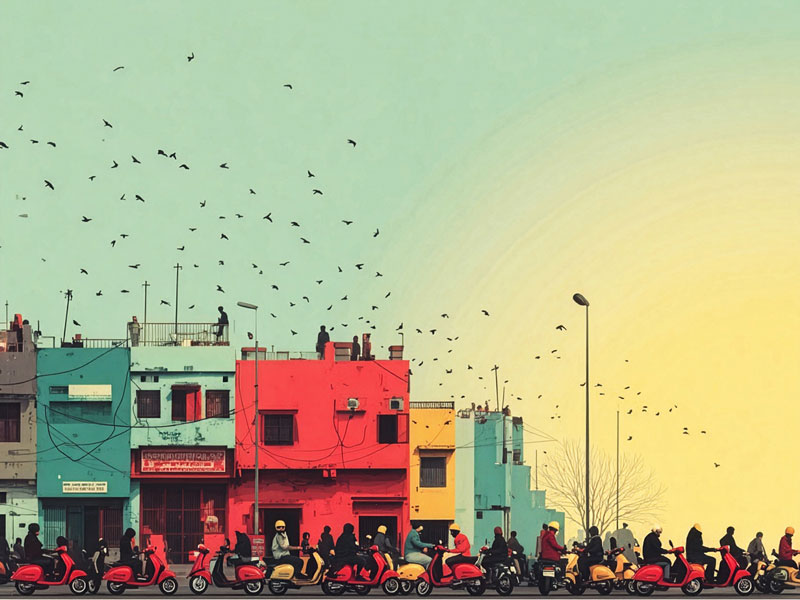
The rise of the e-rickshaw signifies a pivotal shift in India’s energy future. With approximately 270 million two-wheelers and 10 million three-wheelers—the preferred mode of transport in bustling cities for deliveries and taxis—currently on Indian roads, these vehicles are at the forefront of the transition away from fossil fuels. As India accelerates its pivot towards clean energy, the increasing adoption of e-rickshaws is expected to significantly reduce the nation’s reliance on oil imports, half of which are currently consumed by vehicles. This transition is crucial for achieving Modi’s long-term goal of a zero-emission nation by 2070. Projections from the Rocky Mountain Institute suggest that by 2030, approximately 80 percent of new two- and three-wheeler sales in India could be electric, making a substantial contribution to this ambitious target. The volume of EV sales has surged dramatically, from just over 95,000 units in 2017 to 1.6 million in 2024.
The Atlas think tank summarizes this trend, noting a "remarkable upward trajectory" in Indian EV sales in recent years, primarily driven by the two- and three-wheeler segments, with a compound annual growth rate of 61 percent. Meanwhile, the world’s largest renewable energy project is underway in the salt deserts bordering Pakistan. The Khavda renewable energy park, spanning an area five times the size of Paris, is being developed by the Indian conglomerate Adani Green Energy. Upon its projected completion by 2029, it will generate 30 gigawatts of green energy from high-efficiency solar modules and hybrid solar-wind systems, enough to power over 16 million homes.
Currently, about half of India’s installed power capacity originates from non-fossil sources, including solar, wind, and hydroelectric power. The government has set an ambitious target of achieving 500 gigawatts of non-fossil fuel capacity and producing five million tonnes of green hydrogen by 2030, intended for decarbonizing heavy industries like steel. While initially perceived by some as an overly optimistic plan, the rapid electrification of the railways, completed four years ahead of schedule, demonstrates the feasibility of such large-scale projects. Although India continues to rely on coal, a "critical source for grid stability" according to energy experts, the nation’s commitment to clean energy is clear. Initiatives to enhance carbon sequestration through afforestation, targeting a sink of 2.5 to 3.0 billion tonnes of CO2 equivalent, and more scientific water management, along with a focus on the Himalayan ecosystem, underscore this commitment. India’s emissions intensity has been reduced by 39 percent between 2005 and 2023, exceeding its targets. It is currently the world’s third-largest producer of solar energy and is poised to potentially surpass China in the number of solar-powered homes. The production of renewable energy is consistently exceeding official goals.
India’s maritime sector, once neglected, is undergoing a significant revival. This ambitious program, however, has faced challenges stemming from India’s federal structure, with powerful political factions in various states exhibiting limited cooperation. Despite these hurdles, the initiative is progressing. India, with its extensive 11,000-kilometer coastline and strategic location along the Indian Ocean, a vital global trade artery, is well-positioned to reassert its maritime prowess. Its proximity to four key maritime chokepoints—the Strait of Hormuz, Bab-el-Mandeb, the Strait of Malacca, and the Lombok Strait—coupled with concerns over China’s growing influence in the Indian Ocean region, has heightened the strategic importance of this sector. The government has explicitly stated that "militarization of the Indian Ocean region is not desirable."
Despite bureaucratic inertia, India’s maritime ambitions have seen a promising start. In early 2026, the container shipping giant CMA CGM placed a significant order for six LNG-fueled vessels to be constructed at India’s Cochin Shipyard. While these vessels have a capacity of 1,700 containers each, their construction will contribute to the expansion and modernization of India’s ports, shipping industry, and coastal trade. CMA CGM will also recruit 1,500 Indian seafarers, establish an R&D hub, register some of its vessels under the Indian flag, and support sustainable ship-recycling, an area where India aims to become a global leader. Other major container shipping companies are expected to follow suit.
Simultaneously, India is developing deep-draught mega-ports, such as Vadhaven, located 150 kilometers from Mumbai, scheduled for completion in 2034. Upon its opening, Vadhaven will rank among the world’s ten largest ports, strategically positioned along a critical trade corridor connecting India with the Middle East and Europe. Trade agreements are already being forged along this vital supply line. Following years of legal challenges, bureaucratic delays, and local opposition that have historically hampered significant economic projects in India, construction is finally set to commence on another mega-port in the Bay of Bengal. Impatient with such delays, the government enacted legislation in 2025 to streamline paperwork and enhance inter-port cooperation. The Ministry of Ports, Shipping and Waterways has acknowledged that "the capacity of the ports in terms of their berths and cargo-handling equipment needs to be vastly improved to cater to the growing requirements of overseas trade."
India may also soon establish its own state-backed container shipping line. In early 2026, the government approved a $1.66 billion allocation to launch an all-Indian shipping company, which is also intended to leverage the country’s 14,500 kilometers of largely underdeveloped inland waterways. A study by the Observer Research Foundation indicates that these waterways are "only now beginning to be used for commerce." Current plans aim to significantly increase cargo capacity along this extensive natural network, providing a substantial boost to trade. While India’s merchant fleet ranks 18th globally, indicating a considerable distance to cover in maritime matters, the government has earmarked $7.7 billion for this economically vital project over the next decade.
The Modi administration is actively confronting corruption, albeit at a measured pace. In the early 2000s, India was notorious for its pervasive graft, with the World Bank citing "Mafia Raj" as a significant impediment to development funds intended for infrastructure projects. At that time, India was the World Bank’s largest borrower, prompting the institution to implement measures to ensure the integrity of fund allocation. The gravity of the situation was such that India’s then Chief Justice, K.G. Balakrishnan, lamented at an anti-corruption conference how "the quality of governance suffers when decisions are made on account of extraneous considerations related to political patronage, kinship or caste and linguistic identity among other factors." Transparency International ranked India at 84th on its Corruption Perception Index during that period, on par with countries like Guatemala and Panama. India’s Central Bureau of Investigation (CBI) was overwhelmed with over 9,000 pending cases, many of which had remained unresolved for a decade or longer.
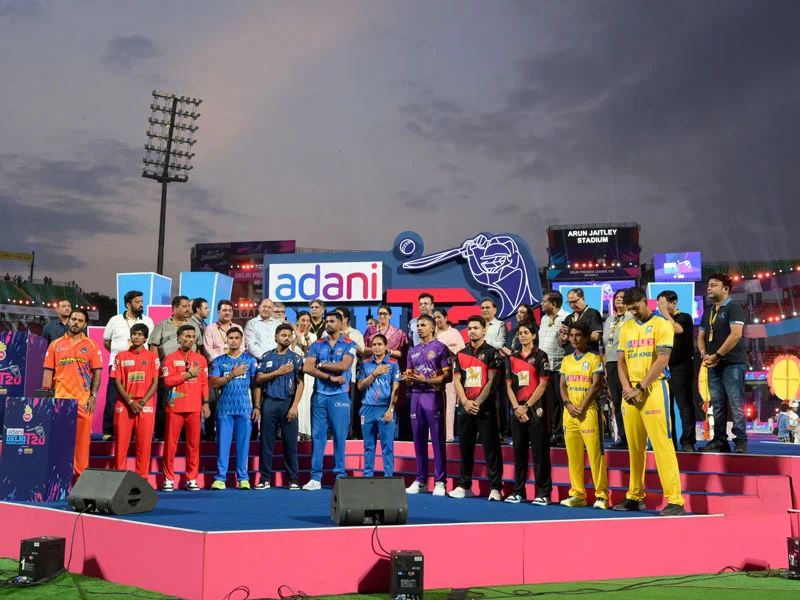
Combating endemic corruption is a formidable task. Despite the Modi government’s concerted efforts, India ranked 91st on the Corruption Perception Index in 2026, placing it roughly in the middle. However, the CBI appears to be making progress. In late 2025, it reported just over 7,000 pending cases, with 2,660 dating back ten years and 380 remaining unresolved for two decades. While petty corruption, such as minor bribes to government agencies, has reportedly decreased, senior tax and customs officials have been dismissed for high-level fraud. Meanwhile, one of India’s most successful recent innovations lies in the realm of sports: the Indian Premier League (IPL). Founded in 2008 by the Board of Control for Cricket in India, the IPL is now among the top ten most valuable sports leagues globally by revenue. Its franchise-based model, with teams owned by corporations and celebrities, offers a high-action alternative to traditional cricket formats. Fans and observers alike view the IPL as a testament to India’s commercial and sporting creativity, representing a "new business model" rather than a mere replication of existing formats. This home-grown league, much like the modernized railway system, is a source of significant national pride.
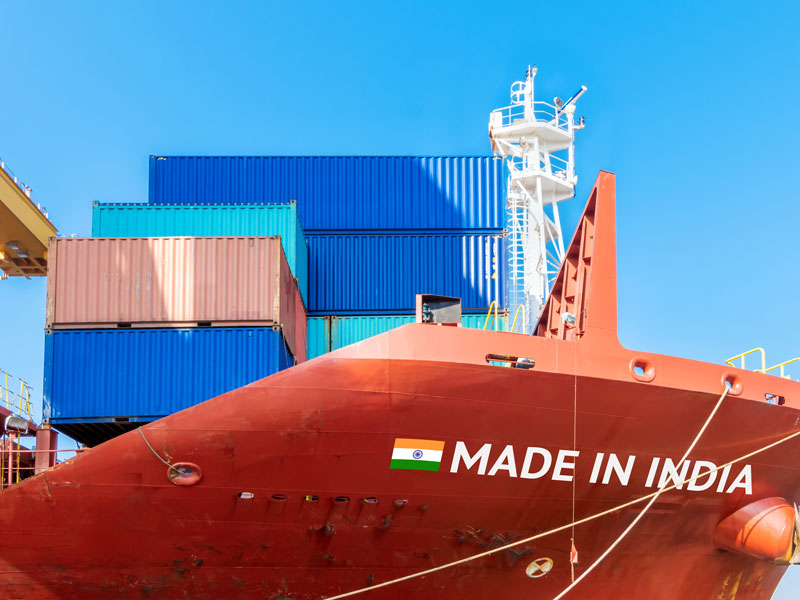
The government’s substantial investment in a fully electrified railway system, initiated in 2014, has yielded remarkable results. While countries like Britain are electrifying their railways at a rate of approximately two kilometers per year, and the United States is not matching even that pace, Indian Railways has quadrupled its electrification efforts. In the 2022-23 financial year alone, an impressive 6,565 kilometers of track were electrified. A rail enthusiast noted that Indian rail crews achieved more by their mid-morning tea break on January 1st than Britain accomplished throughout the entire preceding year, a feat largely attributable to the overarching framework of Modinomics.