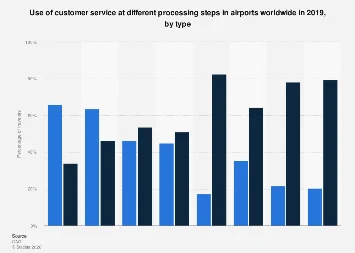
In the year 2019, a critical period before the seismic shifts brought on by the global pandemic, the operational efficiency and customer service quality at key airport processing points worldwide were under scrutiny. This pre-COVID-19 landscape offers a valuable benchmark for understanding the inherent challenges and the baseline performance of international air travel hubs in managing passenger flow, security, and immigration. While specific data on customer satisfaction metrics across all processing stages globally remains a complex mosaic, the underlying infrastructure and operational models of major airports provide significant insights into the passenger journey.
The passenger experience within an airport is a multi-faceted encounter, with processing points representing some of the most critical and often scrutinized touchpoints. These include check-in, baggage drop, security screening, and immigration or passport control. The efficiency and perceived quality of service at these junctures directly influence passenger satisfaction, travel anxiety, and ultimately, the overall perception of an airline or an entire destination. In 2019, the global aviation industry was operating at peak capacity, with passenger numbers consistently setting new records. This sustained growth placed immense pressure on airport infrastructure and personnel to maintain high service standards while processing millions of travelers daily.
Airport check-in, whether traditional counter-based or increasingly common self-service kiosks, sets the initial tone for a passenger’s airport experience. In 2019, many airports were investing heavily in technology to streamline this process. The adoption of mobile check-in and the proliferation of self-service options aimed to reduce queue times and empower passengers with greater control. However, the effectiveness of these initiatives varied significantly. Major hubs in North America and Europe, such as Hartsfield-Jackson Atlanta International Airport and Amsterdam Airport Schiphol, often showcased advanced self-service solutions. Conversely, airports in developing economies, while also striving for modernization, might have relied more on traditional staffing models, leading to potentially longer wait times during peak periods. The economic implications here are substantial; efficient check-in processes can lead to reduced operational costs for airlines through faster turnaround times and fewer dedicated staff hours, while also enhancing passenger loyalty.
Baggage handling, while largely behind the scenes, is intrinsically linked to the passenger’s perception of airport service. Lost or delayed luggage remains a significant pain point. In 2019, advancements in baggage tracking technology, including RFID tagging, were gaining traction, promising greater visibility and fewer errors. Airports with sophisticated automated baggage handling systems, often found in large, modern facilities like Singapore Changi Airport or Incheon International Airport, generally reported lower rates of baggage mishandling. The cost of mishandled baggage to the airline industry, including compensation and logistical expenses, runs into billions of dollars annually, making efficient baggage processing a key economic imperative.
Security screening represents perhaps the most universally experienced and often the most time-consuming processing step. In 2019, as global security concerns remained elevated, airports worldwide continued to invest in advanced screening technologies, such as computed tomography (CT) scanners, which allow passengers to keep liquids and electronics in their carry-on luggage. The implementation of these technologies was uneven, however. While leading airports in regions like the Middle East and East Asia often pioneered these innovations, others lagged due to the significant capital investment required. The passenger perception of security is heavily influenced by wait times and the perceived intrusiveness of the process. Long queues at security checkpoints in 2019 were a common complaint, contributing to passenger stress and potentially leading to missed flights. Economic analyses often highlight the trade-off between robust security measures and passenger convenience, with airports constantly seeking to optimize this balance.
Immigration and passport control represent another crucial, and often lengthy, processing stage, particularly for international travelers. The introduction of automated gates and e-passport technologies had begun to alleviate some of the pressure in many countries by 2019. For instance, the Global Entry program in the United States and similar initiatives in the UK, Australia, and Schengen Area countries aimed to expedite the process for pre-vetted travelers. However, the effectiveness of these systems is dependent on national border control policies and the availability of staffing. Airports serving a high volume of international transit passengers, such as Dubai International Airport, often faced immense challenges in managing immigration queues, especially during peak travel seasons. The economic impact of border control efficiency extends to tourism and trade, as seamless entry and exit procedures can encourage business travel and leisure tourism.
Globally, the performance of airports in customer service at these processing points in 2019 could be broadly categorized. Major international hubs in Asia, Europe, and North America, characterized by significant investment in technology and infrastructure, often offered a more streamlined experience, albeit with occasional congestion during peak hours. Airports in these regions frequently featured integrated systems for check-in, baggage, and security, aiming for a holistic passenger journey. For example, metrics from airports like Seoul’s Incheon International consistently ranked high in passenger satisfaction surveys, often attributing success to efficient processes and friendly staff.
In contrast, many airports in emerging markets, while undergoing modernization, still grappled with older infrastructure, limited technological adoption, and a greater reliance on manual processes. This often translated into longer wait times and a less predictable passenger experience. However, it is important to note that even in these regions, customer service could be exceptionally high in terms of personal interaction and helpfulness from ground staff, compensating for technological limitations. The economic development trajectory of a nation directly influences the resources available for airport upgrades, creating a disparity in the global airport customer service landscape.
The economic underpinnings of airport operations in 2019 were heavily influenced by passenger volume, airline fees, retail revenue, and government investment. Airports that effectively managed passenger processing not only enhanced customer satisfaction but also optimized their operational efficiency, leading to cost savings and increased revenue potential. For instance, shorter dwell times at security could translate to passengers having more time to spend in retail and dining areas, boosting non-aeronautical revenue streams – a critical component of airport profitability.
Furthermore, the competitive nature of the aviation industry meant that airports, like airlines, were increasingly recognizing customer experience as a key differentiator. Positive word-of-mouth, favorable online reviews, and repeat passenger traffic are invaluable assets. Airports that excelled in providing a smooth and pleasant experience at processing points were more likely to attract airlines, foster greater passenger loyalty, and thus contribute to the economic vitality of their respective regions. The data from 2019, therefore, serves as a crucial historical reference point, illustrating the pre-pandemic operational realities and the economic drivers shaping customer service at airports worldwide, setting the stage for the profound transformations that were to follow.