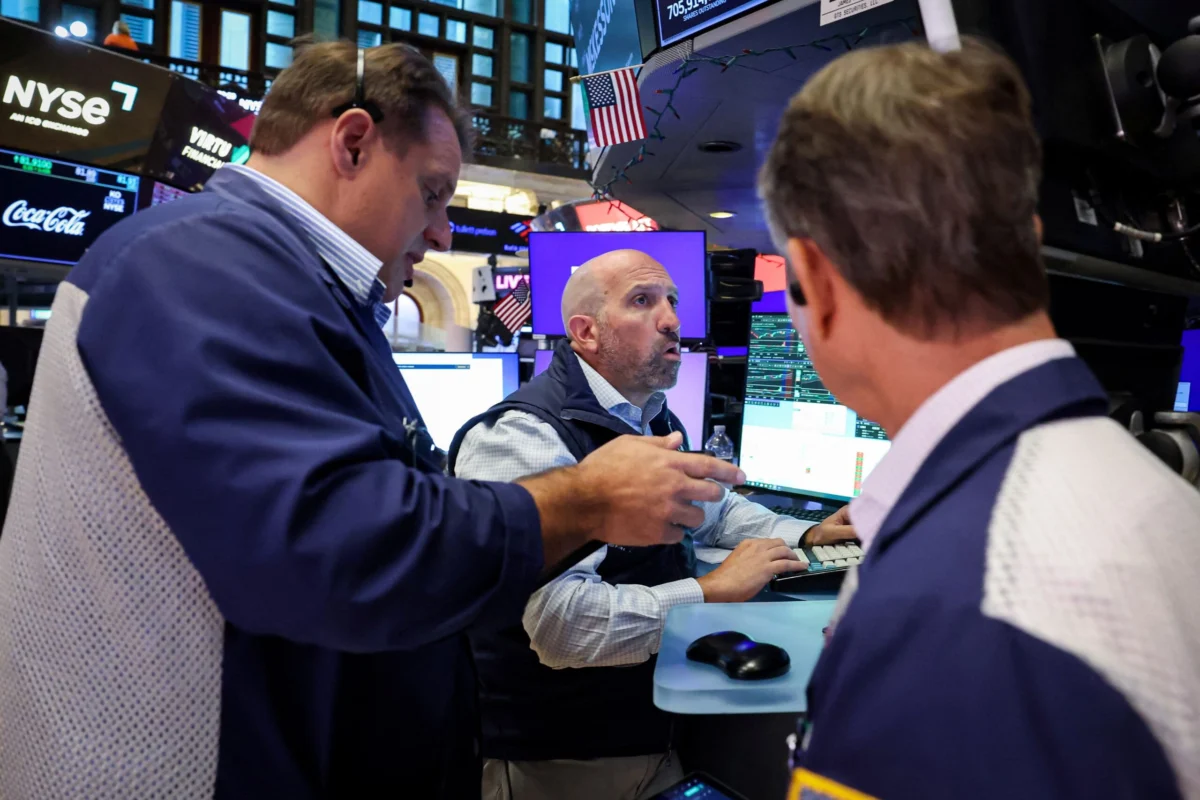
The veneer of investor complacency regarding geopolitical instability was decisively shattered this week as the intersection of rising energy costs and surging bond yields forced a radical repricing of risk across global exchanges. For months, the domestic equity market had maintained an almost defiant resilience, largely decoupling from the escalating hostilities between the United States and Iran. However, that detachment ended abruptly on Thursday when the financial implications of a prolonged conflict became too significant to ignore. As Brent Crude futures breached the psychologically and economically critical $100 per barrel threshold, the S&P 500 plummeted, marking its most significant single-day contraction in over a month and signaling a pivot in the broader market narrative.
The catalyst for this shift was a toxic combination of direct military escalation and tangible threats to global energy infrastructure. The U.S. military has now conducted strategic strikes against Iranian targets for twelve consecutive nights, a sustained campaign that has finally eroded the "off-ramp" optimism that previously buoyed the markets. The situation reached a boiling point following reports of targeted attacks against oil tankers off the coast of Saudi Arabia, raising the specter of a total blockade or severe disruption in the Strait of Hormuz—a maritime chokepoint through which approximately one-fifth of the world’s petroleum passes.
Market participants are no longer viewing the conflict as a localized skirmish but as a systemic shock to the global economy. Steve Sosnick, chief strategist at Interactive Brokers, noted that the sheer scale of the numbers has made it impossible for traders to remain sidelined. When Brent Crude trades north of $100 and West Texas Intermediate (WTI) jumps 6% to hit $92 per barrel—a staggering 28% recovery from its recent lows—the inflationary pressures become a primary concern for equity valuations. The S&P 500 has now shed roughly 2% of its value since the current cycle of U.S. strikes began on July 12, erasing much of the progress made during the late spring.
The volatility in the energy sector is being mirrored, and perhaps exacerbated, by a dramatic sell-off in the Treasury market. The 10-year Treasury yield, a benchmark for everything from corporate debt to residential mortgages, broke through the 4.7% barrier on Thursday, reaching its highest level since January 2025. Simultaneously, 30-year rates have established a firm footing above the 5% mark. These moves represent a significant tightening of financial conditions, effectively doing the work of the Federal Reserve by cooling economic activity through higher borrowing costs.
The rapid ascent of yields has fundamentally altered the interest rate outlook. According to the CME FedWatch tool, the probability of a rate hike at the Federal Reserve’s upcoming meeting has spiked to nearly 38%, a sharp increase from the 12% probability priced in just one week ago. More tellingly, the odds for a September hike have surged to over 80%. This hawkish recalibration suggests that the "higher for longer" mantra is not just a policy preference but a mathematical necessity if energy-driven inflation continues to percolate through the supply chain.
This current period of turbulence bears a striking resemblance to the initial outbreak of the U.S.-Iran conflict in March. During that period, the S&P 500 cratered by more than 7.5% at its nadir as oil prices surged nearly 70%. The primary fear then, as it is now, was stagflation—a paralyzing economic condition where stagnant growth and high unemployment coincide with rising prices. While the U.S. economy has shown remarkable resilience in the face of previous energy shocks, the concern is that sustained high prices at the pump will eventually cannibalize consumer discretionary spending, which accounts for roughly two-thirds of the U.S. Gross Domestic Product (GDP).
In the interim months of April and May, the market had managed a "ferocious" rebound, driven largely by two factors: a belief in a diplomatic resolution and an insatiable appetite for artificial intelligence (AI) equities. The "AI trade" acted as a powerful sedative, masking the underlying geopolitical risks as investors poured capital into semiconductor giants and software innovators. Furthermore, many institutional desks, including equity strategists at JPMorgan, had advised clients to "buy the dip," betting that President Donald Trump would successfully navigate a de-escalation roadmap to avoid the political fallout of a wartime economy during an election cycle.
However, the "Trump off-ramp" theory is currently facing its most rigorous test. The persistence of the twelve-night strike campaign suggests that a diplomatic "grand bargain" remains elusive. Sameer Samana, head of global equities and real assets at Wells Fargo Investment Institute, argues that the market must now re-examine the economic anxieties that dominated the first quarter. He warns that the confluence of reignited conflict and structural inflation is a harbinger of a larger drawdown in equities, suggesting that the "safety net" provided by tech-sector enthusiasm may no longer be sufficient to catch the falling market.
From a sector-specific perspective, the impact is uneven. While energy companies and defense contractors have seen a surge in interest, the broader technology sector—particularly those with high valuations based on future cash flows—is feeling the burn of rising discount rates. As the 10-year yield climbs, the present value of future earnings for growth stocks diminishes, leading to a rotation out of high-multiple tech and into more defensive postures. Additionally, the transportation and manufacturing sectors are bracing for the secondary effects of $100 oil, as fuel surcharges and increased logistics costs threaten to squeeze profit margins that were already under pressure from rising labor costs.
Global comparisons further illustrate the gravity of the situation. Unlike the United States, which has become a net exporter of energy, many European and Asian economies remain deeply vulnerable to fluctuations in the Brent Crude market. If the Middle East conflict leads to a sustained disruption of supply, the resulting energy crisis in the Eurozone could trigger a global recessionary impulse that would inevitably wash back onto American shores. The interconnectedness of global supply chains means that a tanker attack in the Gulf of Oman can effectively raise the price of consumer electronics in Chicago or automobiles in Frankfurt.
Despite the grim outlook, some analysts maintain a degree of cautious optimism regarding the U.S. economy’s structural ability to withstand these pressures. Michael Tanney, CEO of Pereon Wealth, suggests that the current spike is more of a "headline event" for portfolios in the immediate term. He argues that the true "breaking point" for the U.S. economy would be a sustained oil price above $120 per barrel. At that level, the "trickle-down" effects would likely become irreversible, forcing a contraction in consumer behavior that no amount of AI-driven productivity could offset.
As the trading week draws to a close, the focus remains squarely on the Persian Gulf and the Federal Reserve’s next move. The era of the stock market "brushing off" geopolitical strife appears to have ended, replaced by a sober realization that the cost of conflict is ultimately paid in the currency of inflation and interest rates. With the S&P 500 heading for its most challenging month of the year, the "short-sightedness" that previously characterized the bull market has been replaced by a cautious, if not fearful, long-term gaze. The question now is not whether the war will impact the economy, but how long the economy can endure the weight of a $100 barrel of oil and a 5% bond yield before the foundations begin to crack.