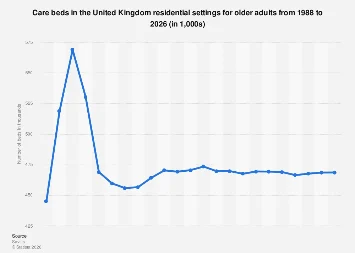
The United Kingdom is facing a critical juncture in its provision of elder care, with projections indicating a significant shortfall in available care beds by 2026. This looming deficit is not merely a statistical anomaly but a complex economic and social challenge that will necessitate urgent strategic intervention from policymakers, healthcare providers, and the private sector. The demand for residential and nursing care for an aging population continues to surge, driven by increased life expectancy and a growing cohort of individuals requiring specialized support. Simultaneously, the supply side of the equation is grappling with a confluence of pressures, including rising operational costs, workforce recruitment and retention difficulties, and evolving regulatory landscapes. Understanding the scale and implications of this projected gap is paramount to formulating effective solutions that ensure the dignity and well-being of the UK’s older citizens.
Several key demographic and economic factors underpin the anticipated shortage. The UK’s population is aging at an accelerated pace. Official statistics reveal a consistent upward trend in the number of individuals aged 65 and over, and more crucially, the 85 and over demographic, which typically has the highest care needs. This demographic shift directly translates into increased demand for various forms of care, including residential care homes, nursing homes, and supported living facilities. Projections from organizations like the Office for National Statistics (ONS) consistently highlight this demographic acceleration, forecasting a substantial increase in the number of older adults requiring assistance with daily living activities and complex medical conditions in the coming years.
On the supply side, the care sector is experiencing a strain on its capacity. A significant challenge lies in the financial viability of care providers. The cost of delivering high-quality care continues to escalate, encompassing expenses such as staff wages, utilities, food, medication, and regulatory compliance. Local authority funding, which often forms a substantial portion of care home revenue, has faced considerable pressure, leading to a widening gap between the cost of care and the fees received. This financial squeeze can limit providers’ ability to invest in infrastructure, upgrade facilities, and offer competitive remuneration packages to attract and retain staff, thereby impacting the overall availability and quality of beds.
The workforce crisis within the social care sector is a pervasive and deeply entrenched issue that directly exacerbates the bed shortage. Care providers are struggling to recruit and retain qualified staff, including nurses, care assistants, and support workers. Factors contributing to this deficit include an aging workforce, limited pathways for career progression, demanding working conditions, and the perception of social care as a less attractive profession compared to other sectors. The ongoing impact of Brexit has also presented challenges in terms of international recruitment, a source of labor that was previously significant for many care providers. This persistent staffing shortage means that even if physical bed capacity exists, many facilities may be unable to operate at full capacity due to a lack of trained personnel.
The economic implications of this projected care bed deficit are far-reaching. For individuals and families, it means increased waiting times for essential care, potential relocation to facilities further from their support networks, and the possibility of facing higher costs if private options become the only viable route. For the National Health Service (NHS), a strained social care sector can lead to increased hospital bed occupancy, as individuals who are medically fit for discharge remain in hospital due to a lack of suitable care placements. This "bed blocking" phenomenon not only incurs significant costs for the NHS but also impacts its ability to admit emergency patients and perform elective surgeries, creating a ripple effect throughout the healthcare system.
The economic impact extends to local authorities, which are responsible for commissioning and funding social care services. The projected increase in demand, coupled with funding constraints, places immense pressure on local government budgets. This can lead to difficult decisions regarding service provision, potentially resulting in reduced levels of care or increased reliance on market-based solutions that may not be affordable for all. Furthermore, the care sector is a significant employer, and its ability to expand and meet demand is crucial for local economies. A contraction or stagnation in the sector due to insufficient capacity or financial pressures can have negative employment consequences.
Globally, the UK’s situation is not unique. Many developed nations are grappling with similar demographic shifts and the associated challenges in elder care provision. Countries like Japan, Germany, and parts of North America are also experiencing rapidly aging populations and are exploring innovative models for care, including integrated health and social care systems, technological solutions, and incentivizing private sector investment. Benchmarking the UK’s performance and policy responses against these international peers can offer valuable insights and potential best practices. For instance, some European countries have more robust public funding models for long-term care, while others are actively promoting home-based care solutions to reduce reliance on institutional settings.
Addressing the projected 2026 care bed deficit requires a multi-pronged approach. Firstly, there is a clear need for increased and sustainable funding for the social care sector. This could involve a combination of central government investment, reforms to social care funding models, and potentially exploring new revenue streams. Secondly, urgent action is required to bolster the care workforce. This includes investing in training and development, improving pay and working conditions, creating clearer career pathways, and implementing effective recruitment strategies, both domestically and internationally where appropriate and ethical.
Technological innovation also presents an opportunity to enhance care delivery and potentially alleviate some of the pressure on bed capacity. The adoption of digital health solutions, remote monitoring systems, and assistive technologies can empower individuals to live more independently in their own homes, thereby reducing the immediate demand for residential care. Furthermore, exploring models of integrated care, where health and social care services are more seamlessly coordinated, can lead to more efficient use of resources and better outcomes for individuals with complex needs.
The private sector’s role is also crucial. Encouraging investment in new care facilities and the modernization of existing ones will be vital. However, this must be balanced with ensuring that such investments lead to accessible and affordable care, rather than simply exacerbating market-driven price increases. Regulatory frameworks need to be agile enough to support innovation and growth while maintaining high standards of quality and safety. Collaboration between government, regulatory bodies, care providers, and technology developers will be essential to navigate this complex landscape and ensure that the UK can meet the growing demand for elder care with dignity and effectiveness. The challenge is significant, but proactive and strategic planning can mitigate the worst impacts of the projected shortfall and secure a sustainable future for elder care in the United Kingdom.