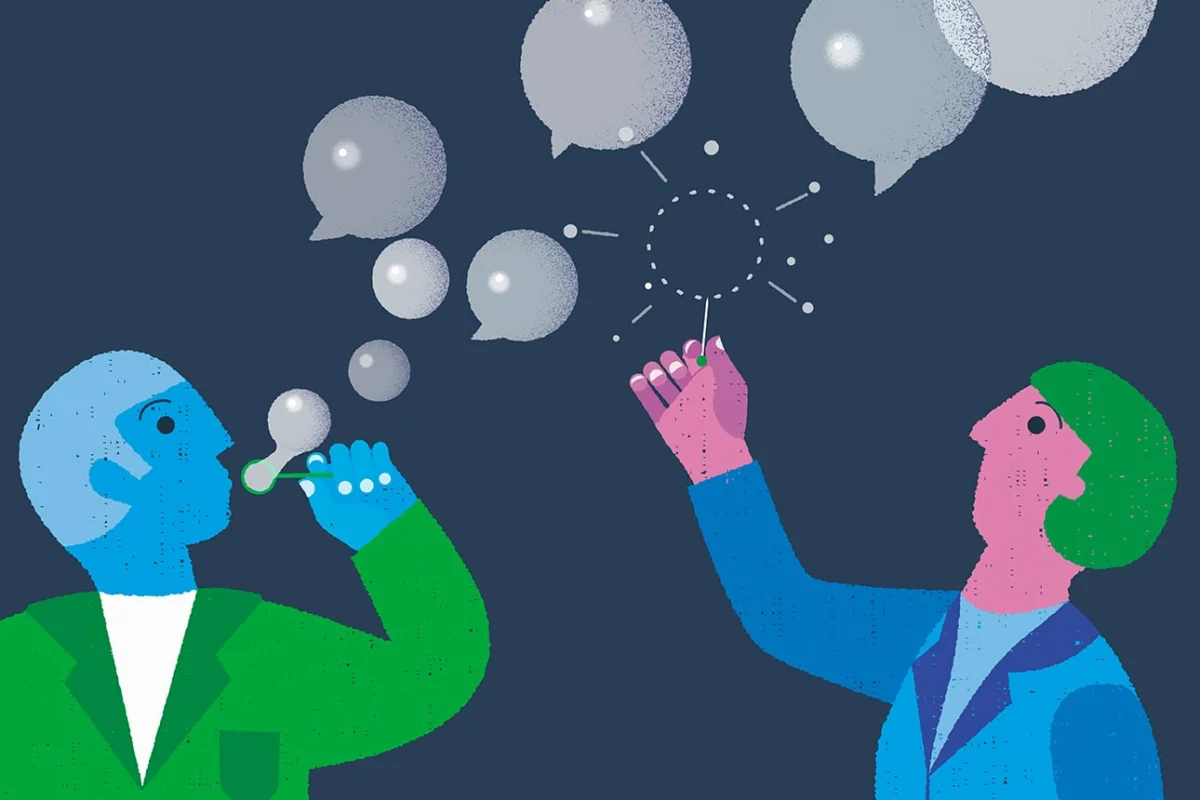
The executive leadership at Medita Holdings, a diversified family-owned enterprise in Southern Europe, found itself in a protracted state of operational paralysis. Despite a portfolio spanning various unrelated ventures, the firm struggled to allocate its dwindling capital and managerial focus effectively. Competitors, meanwhile, aggressively pursued new market opportunities and forged strategic alliances, leaving Medita in a stagnant position. Superficially, team meetings appeared productive, characterized by engaged leaders who maintained amicable relations. However, the Head of Human Resources observed a persistent pattern of unproductive discourse: discussions frequently devolved into re-litigating past decisions without resolution, or veering significantly off-topic. This led to a critical realization: the company’s underlying issues might not solely stem from a flawed business strategy, but rather from a deeper, unaddressed dysfunction within the leadership team itself. Was the CEO’s leadership inadequate, or was there another, more subtle impediment to the team’s capacity for focused execution?
The root of Medita’s chronic indecision and conversational drift, it emerged, was a pervasive trait shared by most team members: an exceptionally high degree of intellectual curiosity. While often lauded as a valuable attribute, an unchecked concentration of this trait within a high-stakes decision-making body can lead to perpetual exploration, analysis paralysis, and an inability to converge on definitive action. This revelation underscores a fundamental truth in organizational psychology: the effectiveness of a team is profoundly shaped by the interplay of its members’ personalities, specifically their similarities and differences. Yet, systematically examining how diverse personality types influence team interaction and performance remains a remarkably underutilized practice in the corporate world.
Modern organizational structures and work processes often inadvertently exacerbate this oversight. The proliferation of agile, ad hoc teams formed to tackle specific challenges means individuals frequently collaborate without the benefit of established rapport. The ubiquity of virtual meetings, while efficient for task execution, typically offers scant opportunity for the informal personal connections that historically allowed colleagues to understand each other’s working styles and temperaments. In such an environment, the traditional "trial and error" approach to building robust team relationships becomes a laborious and inefficient drain on resources, as noted by industry leaders like Ian Roberts, CTO at Swiss plant equipment manufacturer Bühler. The economic cost of such inefficiency is substantial, manifesting in delayed projects, suboptimal decisions, and a palpable drag on innovation. Industry reports suggest that upwards of 60% of cross-functional projects fail to meet their objectives, with a significant portion attributed to interpersonal dynamics rather than technical competence.
Over nearly a decade, working with thousands of executives across hundreds of teams, a refined methodology has emerged to address these systemic issues, leveraging a well-established psychological instrument: the personality assessment. This approach posits that by making explicit the implicit personality traits within a team, organizations can preemptively resolve latent tensions, accelerate cohesion in newly formed groups, and unlock significantly higher levels of productivity and decision-making efficacy.
At the heart of this methodology lies the "Big Five" personality framework, also known as the OCEAN model: Openness to Experience, Conscientiousness, Extraversion, Agreeableness, and Neuroticism (often framed as Emotional Stability). This robust, empirically validated model provides a common language for understanding individual differences:

- Openness to Experience: Reflects a person’s curiosity, imagination, and preference for variety. While high openness drives innovation, an entire team of highly open individuals, like Medita’s leadership, might struggle with closure.
- Conscientiousness: Indicates self-discipline, organization, and a focus on achieving goals. Highly conscientious teams excel at execution but can become overly detail-oriented or risk-averse.
- Extraversion: Characterizes sociability, assertiveness, and energetic behavior. Extraverted teams might thrive in public-facing roles but could overlook quieter, introspective perspectives.
- Agreeableness: Pertains to compassion, cooperativeness, and a desire for harmony. High agreeableness fosters positive relationships but can lead to a reluctance to challenge ideas, potentially hindering critical evaluation.
- Neuroticism (Emotional Stability): Measures emotional reactivity, stress tolerance, and anxiety. Lower neuroticism (higher emotional stability) correlates with resilience and calm under pressure, crucial for navigating complex business environments.
The methodology involves team members completing a standardized Big Five assessment, followed by facilitated discussions where collective personality profiles are openly reviewed. This process allows participants to connect specific personality traits, both individual and aggregated, to observed team tensions or difficulties. For instance, a team with a low average in agreeableness might frequently engage in vigorous, even confrontational, debates, while a team with high conscientiousness might struggle with rapid prototyping and adaptability due to a focus on perfection. The facilitated discussion, guided by an experienced expert, helps team members articulate how their own traits interact with those of others, fostering empathy and strategic adjustments in communication and collaboration.
The economic benefits of this approach are multifaceted and profound. For established teams grappling with chronic issues, the structured insights can defuse long-standing conflicts, which, left unaddressed, contribute to significant economic costs through reduced morale, increased absenteeism, and higher turnover rates. Studies estimate that workplace conflict can consume 20-40% of a manager’s time, translating into billions in lost productivity annually across global enterprises. By understanding the personality dynamics, teams can move past superficial disagreements to address the underlying behavioral patterns, saving countless hours and fostering a more psychologically safe environment where constructive disagreement is possible.
For newly formed teams, the exercise acts as an accelerator for cohesion. Rather than enduring months of "storming and norming," where personality clashes are discovered through often painful experience, teams gain immediate insight into potential friction points and complementary strengths. This foresight enables them to establish robust communication protocols and role assignments that leverage individual traits, minimizing the learning curve and bringing projects to fruition faster. In fast-paced sectors like technology or finance, where time-to-market is paramount, this accelerated team development can yield significant competitive advantages and market share gains. For example, a tech startup forming a product development team might discover a strong prevalence of high openness, leading them to proactively implement structured decision-making frameworks to ensure ideas translate into actionable plans.
Beyond direct productivity gains, understanding team personality dynamics fosters improved decision-making quality. Homogeneous teams, while often comfortable, risk groupthink. Diverse personality mixes, when managed effectively, introduce a broader range of perspectives and critical thinking. For example, a team with a balanced mix of high conscientiousness (for planning and execution) and high openness (for innovative ideas) is better equipped to navigate complex strategic challenges. The facilitated process helps teams appreciate these differences, turning potential friction into creative tension that fuels superior outcomes. This intellectual honesty, where diverse viewpoints are genuinely considered and integrated, is a cornerstone of innovation.
The application of such a framework transcends cultural boundaries, though its implementation may vary. In highly individualistic cultures, the focus might be on leveraging individual strengths and managing differences. In more collectivist societies, the emphasis might shift to fostering harmony through understanding individual contributions to the collective good. Regardless of cultural context, the underlying principles of self-awareness and mutual understanding remain universal drivers of effective collaboration.
Ultimately, investing in a deeper understanding of team personality dynamics is not merely a soft HR initiative; it is a strategic imperative with tangible economic returns. By transforming an organization’s approach from reactive problem-solving to proactive behavioral engineering, companies can unlock latent potential, mitigate costly conflicts, and significantly enhance their capacity for innovation, agility, and sustained growth in an increasingly complex global economy. The case of Medita Holdings serves as a potent reminder that sometimes, the most impactful business solutions lie not in overhauling strategy, but in refining the very human interactions that bring strategy to life.