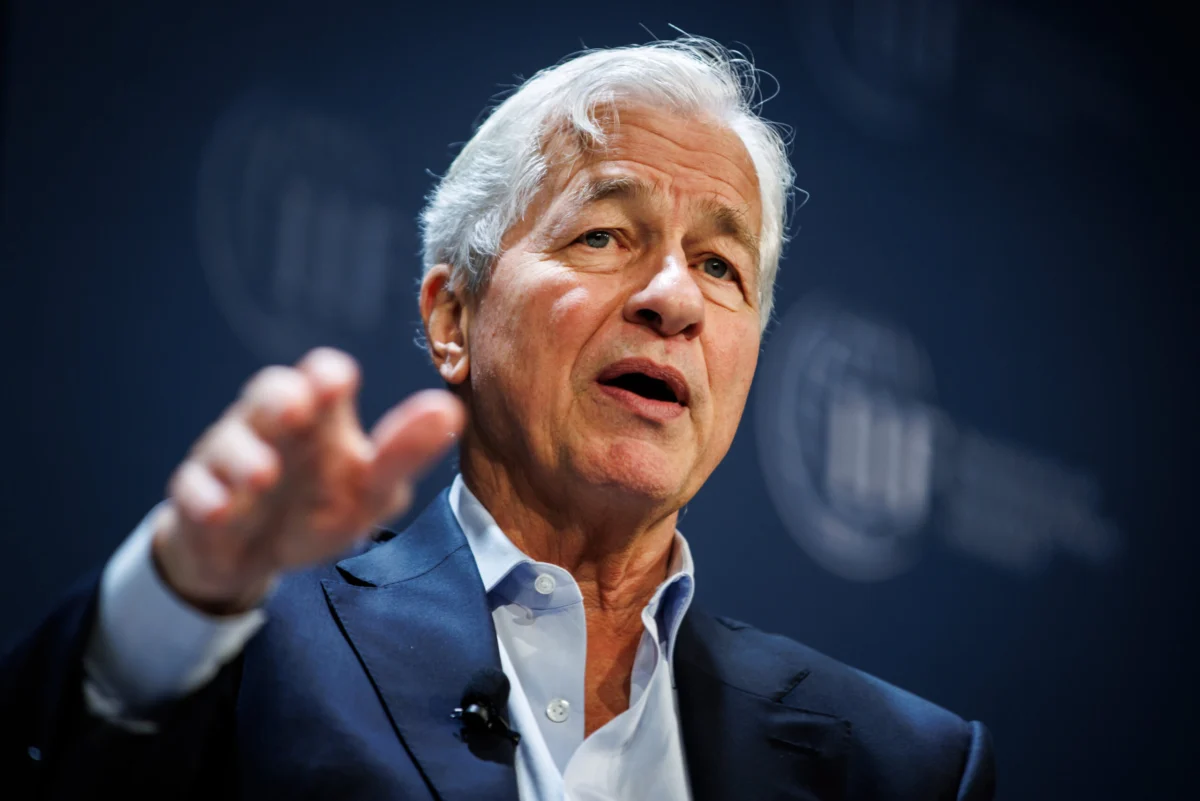
The prevailing optimism on Wall Street, characterized by record-breaking indices and a fervent embrace of artificial intelligence, may be masking a structural fragility in the global economy that investors are dangerously ignoring. Jamie Dimon, the Chairman and Chief Executive Officer of JPMorgan Chase, has issued a sobering counter-narrative to the "soft landing" consensus, suggesting that the current pricing of financial assets fails to account for a convergence of geopolitical volatility and fiscal instability. In an expansive assessment of the current macro environment, the leader of the world’s largest bank by market capitalization signaled a retreat from the broader markets, stating unequivocally that he would not be a buyer of U.S. equities or long-dated Treasury bonds at their current valuations.
The disconnect between market performance and macroeconomic reality has rarely been more pronounced. While the S&P 500 has climbed nearly 10% this year, buoyed by resilient consumer spending and a moderation in inflationary pressures, Dimon views this period of calm as a deceptive prelude to potential upheaval. His concerns are rooted in a "triple threat" of escalating military conflicts, deteriorating international relations, and a domestic fiscal trajectory that he believes is unsustainable. For Dimon, the risk-reward profile of the current market is skewed, with the potential for a "tipping point" far outweighing the remaining upside in a high-valuation environment.
Central to Dimon’s thesis is the precarious state of the U.S. Treasury market. For decades, long-dated government bonds were viewed as the ultimate "safe haven," but Dimon suggests that the fundamental math of American debt has changed the calculus. He noted that even if the Federal Reserve manages to guide inflation back to its 2% target, the structural demands on the economy—ranging from the green energy transition to increased military outlays—will likely keep interest rates higher for longer. Dimon posited that the 10-year Treasury yield should realistically sit between 4% and 4.5%, implying that current prices are overvalued and offer little protection against future shocks.
This skepticism toward government debt is tied to the specter of the "bond vigilantes"—market participants who demand higher yields as compensation for the perceived risk of a government’s fiscal profligacy. With the U.S. national debt surpassing $34 trillion and annual budget deficits continuing to swell, Dimon warns that a reckoning is inevitable. As the supply of Treasurys increases to fund these deficits, and as traditional buyers like foreign central banks potentially scale back their purchases, the upward pressure on rates could become a self-fulfilling prophecy of higher borrowing costs and suppressed economic growth.
Beyond the domestic fiscal horizon, the geopolitical landscape presents a level of complexity that Dimon believes is not "baked in" to current asset prices. The ongoing war in Ukraine and the volatile conflict in the Middle East are not merely regional tragedies but systemic risks to global trade and energy security. Furthermore, the deepening rift between the United States and China represents a fundamental shift away from the era of hyper-globalization that fueled corporate profit margins for thirty years. Dimon emphasized that while markets often focus on the "known unknowns," it is the actual unfolding of these crises—the "what actually happens"—that catches investors off guard.
The shift toward a more militarized global economy is a specific point of concern. Dimon noted that rising military spending, necessitated by global instability, is occurring at a time when government balance sheets are already stretched. This "guns and butter" dilemma creates a persistent inflationary bias that could complicate the Federal Reserve’s mandate. While the U.S. economy has shown remarkable resilience—partially due to its decreased dependence on imported energy compared to the 1970s—Dimon cautioned that resilience has its limits. He utilized the metaphor of the "straw that breaks the camel’s back," suggesting that while the economy has absorbed several shocks already, the cumulative weight of fiscal deficits and geopolitical friction could eventually trigger a sudden inflection point.

The equity markets, meanwhile, have been driven into a state of euphoria by the promise of artificial intelligence. Dimon, while acknowledging the transformative potential of the technology, offered a historical reality check. He compared the current AI spending boom to the early days of the internet in the late 1990s. During that era, the fundamental premise—that the internet would change the world—was correct, but the initial market leaders and the timelines for profitability were often wildly off the mark. He reminded investors that early giants like Yahoo and Netscape eventually ceded their dominance to companies like Google and Meta, which emerged later in the cycle.
The massive capital expenditures currently being poured into AI by "Hyperscalers" and enterprises may eventually pay off, but Dimon is skeptical that the returns will manifest according to the aggressive timelines currently priced into tech stocks. The risk of a "valuation air pocket" exists if the massive investments in chips and data centers do not translate into immediate, scalable productivity gains or revenue growth. For a value-conscious leader like Dimon, buying the "broader market" at these levels represents a gamble on perfection in an imperfect world.
Interestingly, Dimon’s cautious outlook comes on the heels of exceptionally strong performance from JPMorgan Chase itself. The bank recently reported blockbuster quarterly results, driven by a surge in investment banking activity and robust trading revenue. This creates a paradox: the very institutions managing the world’s capital are thriving, yet their leadership is sounding the alarm. This suggests that the current "Goldilocks" environment—where growth is steady and inflation is cooling—may be the "peak" of the cycle rather than a sustainable plateau.
The economic impact of Dimon’s warnings extends to the broader banking sector and credit markets. If interest rates remain elevated due to fiscal pressures, the "higher-for-longer" environment will continue to stress regional banks with exposure to commercial real estate and increase the cost of capital for small businesses. Dimon’s refusal to buy long-dated Treasurys is a signal to other institutional investors to prepare for a regime of volatility rather than a return to the low-rate environment of the 2010s.
Ultimately, Dimon’s perspective is one of strategic patience and risk mitigation. While he indicated he would still consider individual stocks if they presented exceptional value, his avoidance of the broader indices and long-term bonds reflects a belief that the "margin of safety" in global markets has evaporated. The global economy is currently navigating a period of profound transition—from a world of cheap money and geopolitical stability to one of expensive capital and fragmented alliances.
As the Federal Reserve continues to calibrate its monetary policy, the eyes of the financial world remain fixed on whether the U.S. can truly achieve a soft landing. However, if Jamie Dimon’s assessment is correct, the landing may be secondary to the environment the plane is landing in. With "bond vigilantes" on the horizon, geopolitical fault lines widening, and an AI boom that may be ahead of its own reality, the "hurricane" Dimon previously warned about may not have dissipated, but merely changed form. For the global investor, the message from the "Master Investor" is clear: the greatest risk is the belief that the risks have already been managed.