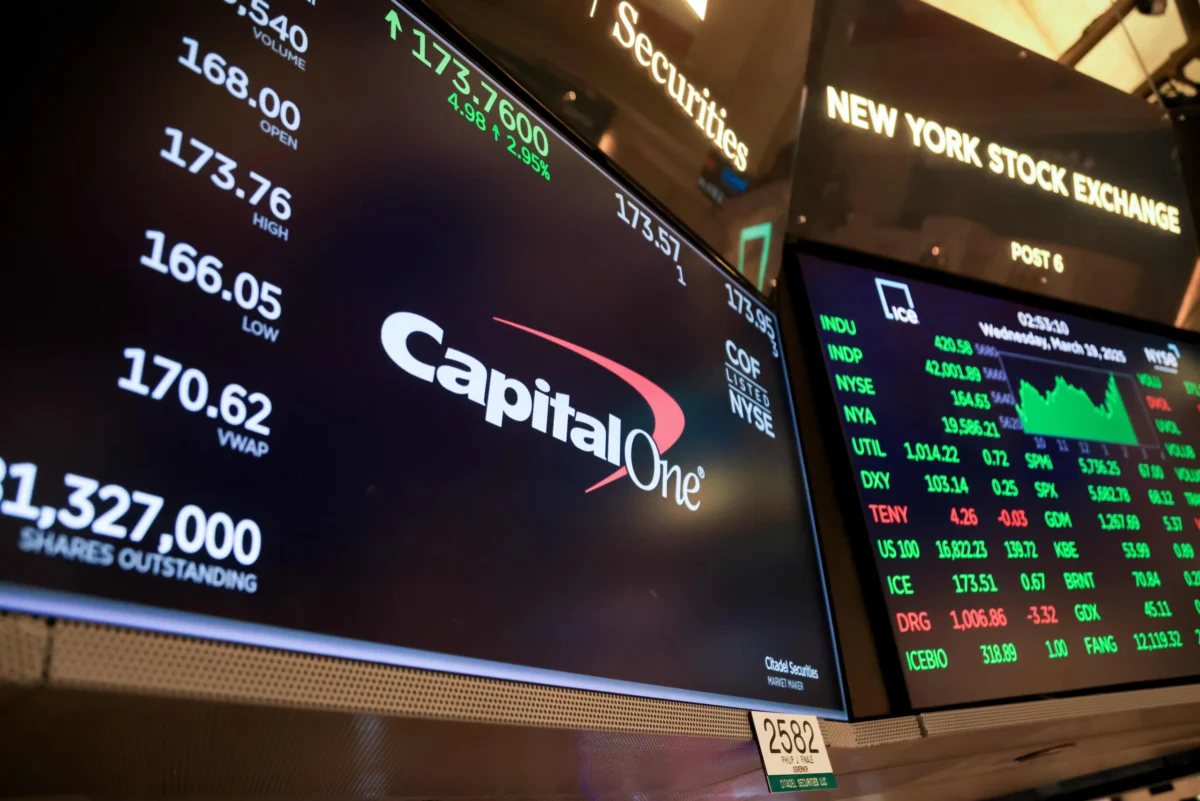
The landscape of American consumer finance is currently undergoing its most significant transformation in decades, anchored by a proposed $35.3 billion acquisition that seeks to merge two of the nation’s most prominent credit card issuers. When Capital One Financial Corp. announced its intention to acquire Discover Financial Services in an all-stock transaction, it sent shockwaves through Wall Street and Washington alike. This move is not merely a play for greater market share; it is a calculated attempt to disrupt the long-standing duopoly of Visa and Mastercard by creating a vertically integrated payments titan capable of competing on a global scale. As the deal moves through a grueling regulatory gauntlet, the financial industry is watching closely to see if Capital One can successfully navigate the complexities of integration while proving to skeptical lawmakers that bigger is indeed better for the American consumer.
At the heart of this transaction lies a fundamental shift in business philosophy. For years, Capital One has operated primarily as a lender, relying on the payment networks of Visa and Mastercard to facilitate its transactions. By acquiring Discover, Capital One gains control over one of the few proprietary payment networks in the world. This "network play" is the crown jewel of the deal. Discover’s network, which includes the PULSE debit network and Diners Club International, provides Capital One with the "rails" upon which transactions travel. This vertical integration allows Capital One to capture the interchange fees that it previously paid to external networks, potentially adding billions to its bottom line while gaining unprecedented access to transaction data that can be used to refine its lending algorithms.
The scale of the combined entity is staggering. If approved, the merger would create the largest credit card issuer in the United States by loan volume, surpassing even banking behemoths like JPMorgan Chase and Citigroup. The combined company would boast over $250 billion in credit card outstandings and a massive footprint in the subprime and near-prime markets—segments where Capital One has historically excelled. However, this concentration of power is precisely what has drawn the ire of consumer advocacy groups and progressive lawmakers. Critics argue that the consolidation of two major competitors in the credit card space will inevitably lead to higher interest rates, reduced rewards for consumers, and less incentive for innovation.
The regulatory environment facing Capital One CEO Richard Fairbank is perhaps the most challenging in a generation. The Biden administration has signaled a much more aggressive stance toward bank mergers, issuing executive orders aimed at increasing competition and scrutinizing "too big to fail" institutions. The Department of Justice and the Federal Reserve are currently weighing the potential impact on the "unbanked" and "underbanked" populations, who often rely on the very products Capital One and Discover provide. To win approval, Capital One must demonstrate that the merger will result in "public benefits" that outweigh the loss of a standalone competitor. This likely involves commitments to maintain low-fee accounts, expand access to credit in underserved communities, and ensure that the Discover network remains open to third-party issuers to foster competition.
From an economic perspective, the timing of the deal is particularly noteworthy. The American consumer is currently navigating a complex financial environment characterized by persistent inflation and the highest interest rates in twenty years. Total U.S. credit card debt has recently surpassed the $1.1 trillion mark, and delinquency rates are beginning to climb toward pre-pandemic levels. For Capital One, acquiring Discover provides a larger "moat" during economic uncertainty. Discover’s customer base tends to skew slightly more toward the prime and "transactor" segments—those who pay off their balances in full—compared to Capital One’s traditional "revolver" base. This diversification could provide a buffer if the labor market softens and credit losses rise in the lower-income tiers.
Market analysts also point to the technological synergies that could be unlocked through this merger. In the modern banking era, data is the most valuable currency. By owning the payment network, Capital One will have a 360-degree view of consumer behavior, from the point of sale to the final payment of the monthly bill. This granular data allows for more sophisticated risk modeling and personalized marketing. In an era where fintech upstarts and "Buy Now, Pay Later" (BNPL) providers are chipping away at traditional banking revenues, the ability to leverage big data at scale is a survival imperative. Capital One has long positioned itself as a "tech company that happens to do banking," and the Discover acquisition is the ultimate expression of that identity.
Global comparisons further illuminate the strategic logic behind the deal. In markets like China, payment ecosystems are dominated by integrated platforms like Alipay and WeChat Pay, which handle everything from messaging to wealth management. In Europe, the "Open Banking" movement has forced traditional lenders to share data with third-party providers to stimulate competition. By building a closed-loop system similar to American Express but at a much larger scale and across a broader demographic, Capital One is attempting to create a Western version of a "super-app" ecosystem. If they can successfully migrate their massive customer base onto the Discover network, they will have created a self-sustaining financial engine that is less dependent on the whims of external network providers.
However, the path to integration is fraught with operational risks. Merging two massive financial institutions requires the consolidation of disparate IT systems, the alignment of corporate cultures, and the management of significant human capital. Discover has also faced its own internal challenges recently, including regulatory consent orders related to compliance and risk management failures. Capital One will need to prove to the Office of the Comptroller of the Currency (OCC) that it can remediate these issues without compromising the stability of the combined firm. Any slip-up in the integration process could lead to service disruptions for millions of cardholders, providing ammunition to those who believe the deal poses a systemic risk.
The financial mechanics of the all-stock deal also reflect the current market reality. By using its own shares as currency, Capital One is betting that the long-term value creation of the merger will far exceed the dilution experienced by current shareholders. At the time of the announcement, the deal represented a significant premium for Discover shareholders, reflecting the strategic value of the network. For Capital One investors, the "bet" is that the projected $2.7 billion in pre-tax synergies—largely driven by cost savings and the elimination of network fees—will materialize quickly enough to justify the high price tag.
As the debate continues, the focus remains on the "Big Four" of the credit card world. For decades, the industry has been defined by the dominance of Visa and Mastercard as networks, and a handful of large banks as issuers. This merger threatens to break that mold. If Capital One succeeds in scaling the Discover network, it could force other major banks to reconsider their own network allegiances. Could we see a future where JPMorgan Chase or Bank of America seeks to acquire or build their own rails? The Capital One-Discover deal may be the first domino to fall in a broader restructuring of the global payments architecture.
In the coming months, public hearings and regulatory filings will provide more clarity on the fate of this merger. The outcome will serve as a bellwether for the future of American antitrust policy and the evolution of the banking sector. Whether this "gamble" pays off will depend on Capital One’s ability to balance its pursuit of scale with its obligations to the public interest. If successful, the merger will not only redefine the company’s future but also set a new standard for how financial services are delivered in the digital age. If it fails, it may signal the end of the era of "mega-mergers" in the banking industry, forcing firms to find growth through internal innovation rather than acquisition. Regardless of the result, the audacity of the move has already changed the conversation about what a modern bank can and should be.