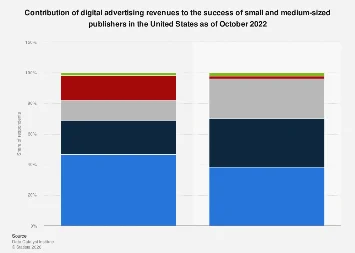
In the complex and ever-evolving landscape of digital media, the financial viability of small and medium-sized businesses (SMBs), particularly those operating as publishers, hinges significantly on their ability to harness revenue from digital advertising. A comprehensive survey conducted in late 2022 among U.S. SMB publishers revealed a stark reality: a substantial majority acknowledge that without the income generated from selling digital ad space, their capacity to produce and disseminate content would be severely curtailed. This underscores a critical dependency, positioning digital advertising not merely as a supplementary income stream, but as a foundational element for content creation and distribution in the contemporary digital ecosystem.
The survey, which gathered insights from 2,428 respondents between September 6 and October 2, 2022, painted a clear picture of the indispensable nature of digital ad revenue. A significant portion of these SMB publishers, when asked about their reliance on digital advertising, expressed strong agreement that their content output would diminish substantially in its absence. This sentiment highlights the direct correlation between advertising income and the volume and perhaps even the quality of content these businesses can afford to produce. For many, digital advertising acts as the primary engine driving their operations, enabling them to invest in journalists, editors, content creators, and the technological infrastructure required to reach their audiences.
Beyond the direct impact on content production, the survey also pointed to a more profound existential threat posed by the potential loss of digital ad revenue. A notable percentage of respondents indicated that without this income, their entire business models would be negatively impacted. This suggests that for many SMB publishers, digital advertising revenue is not just about funding content creation; it’s about sustaining the very existence of their organizations. The business models of these entities are often intricately woven around the advertising ecosystem, encompassing everything from editorial operations and marketing efforts to sales teams and administrative functions. Any disruption to this primary revenue source could therefore trigger cascading effects, jeopardizing their long-term sustainability.
This reliance on digital advertising is a global phenomenon, though the specific percentages may vary by region and market maturity. In the United States, a highly developed digital advertising market, SMB publishers have historically been early adopters of online monetization strategies. The increasing fragmentation of audiences across numerous platforms and the shift in consumer attention towards digital channels have made online advertising a compelling proposition for reaching target demographics. However, this also presents challenges, including intense competition for ad spend, the rise of ad-blocking technologies, and the increasing dominance of large tech platforms that control significant portions of the digital advertising inventory.
The data from the 2022 survey can be contextualized within broader industry trends. Global digital ad spending has seen consistent growth over the past decade, driven by the effectiveness of targeted advertising, the measurability of campaign performance, and the expanding reach of online platforms. According to industry reports, global digital advertising expenditure is projected to surpass half a trillion U.S. dollars, with significant contributions from search, social media, and display advertising. For SMB publishers, navigating this vast market requires sophisticated strategies to attract advertisers and demonstrate value, often competing with larger, more established media outlets and direct-to-consumer brands.
The economic impact of this dependency is multifaceted. On one hand, a thriving digital advertising market supports a diverse ecosystem of content creators, fostering innovation and providing consumers with a wide array of information and entertainment. SMB publishers play a crucial role in this ecosystem by offering niche content, local news, and specialized perspectives that might be overlooked by larger media conglomerates. Their ability to generate revenue through digital ads directly contributes to local economies through job creation and economic activity.
On the other hand, the concentrated nature of digital advertising revenue, with a significant portion flowing to major technology platforms, poses a challenge for smaller players. These platforms often benefit from network effects and vast user data, allowing them to offer highly targeted advertising solutions that can be difficult for independent publishers to match. This dynamic can lead to a concentration of wealth and influence, potentially stifling competition and diversity within the media landscape. The reliance on a single, albeit large, revenue stream also exposes SMB publishers to market volatility and algorithmic changes that can impact their visibility and earnings.
Expert analysis often points to the need for diversification of revenue streams for publishers. While digital advertising remains crucial, many successful SMBs are exploring alternative models such as subscription services, memberships, e-commerce integrations, sponsored content, and events. These strategies aim to reduce the sole dependence on advertising and create more resilient business models. The survey’s findings, indicating a strong agreement on the essential nature of ad revenue, suggest that while these diversification efforts are underway, they have not yet fully supplanted the primary role of digital advertising for a significant segment of SMB publishers.
Furthermore, the regulatory environment surrounding digital advertising is also a significant factor. Evolving data privacy regulations, such as the GDPR in Europe and various state-level privacy laws in the U.S., impact how publishers can collect and utilize user data for targeted advertising. This necessitates ongoing adaptation and investment in compliance, adding another layer of complexity to their operations.
In conclusion, the 2022 survey data from U.S. SMB publishers highlights an undeniable truth: digital advertising revenue is not just a contributor to their success, but a fundamental pillar of their operational capacity and overall survival. The findings serve as a critical reminder of the delicate balance that exists within the digital media economy, where the ability to inform, engage, and entertain is intrinsically linked to the financial resources generated through online advertising. As the digital landscape continues to evolve, the challenge for these businesses will be to maintain and strengthen this vital revenue stream while simultaneously exploring avenues for diversification to ensure long-term sustainability and continued contribution to the media ecosystem. The economic health of a significant portion of the U.S. content creation industry remains intricately tied to the effectiveness and accessibility of digital advertising solutions for businesses of all sizes.