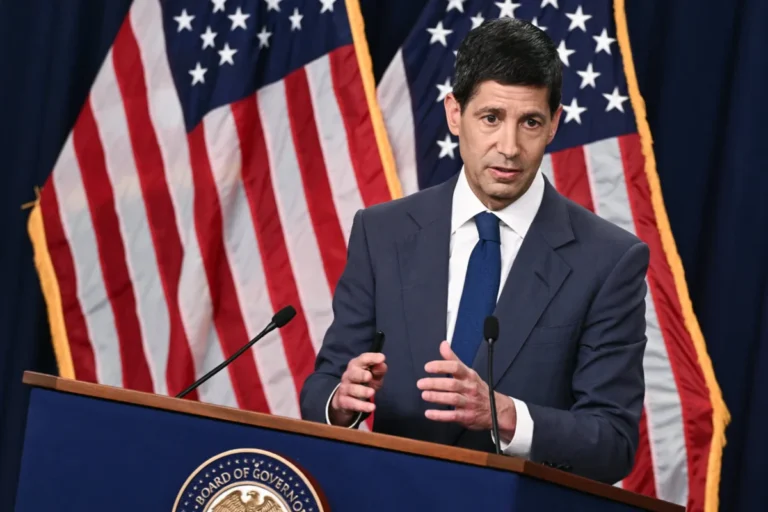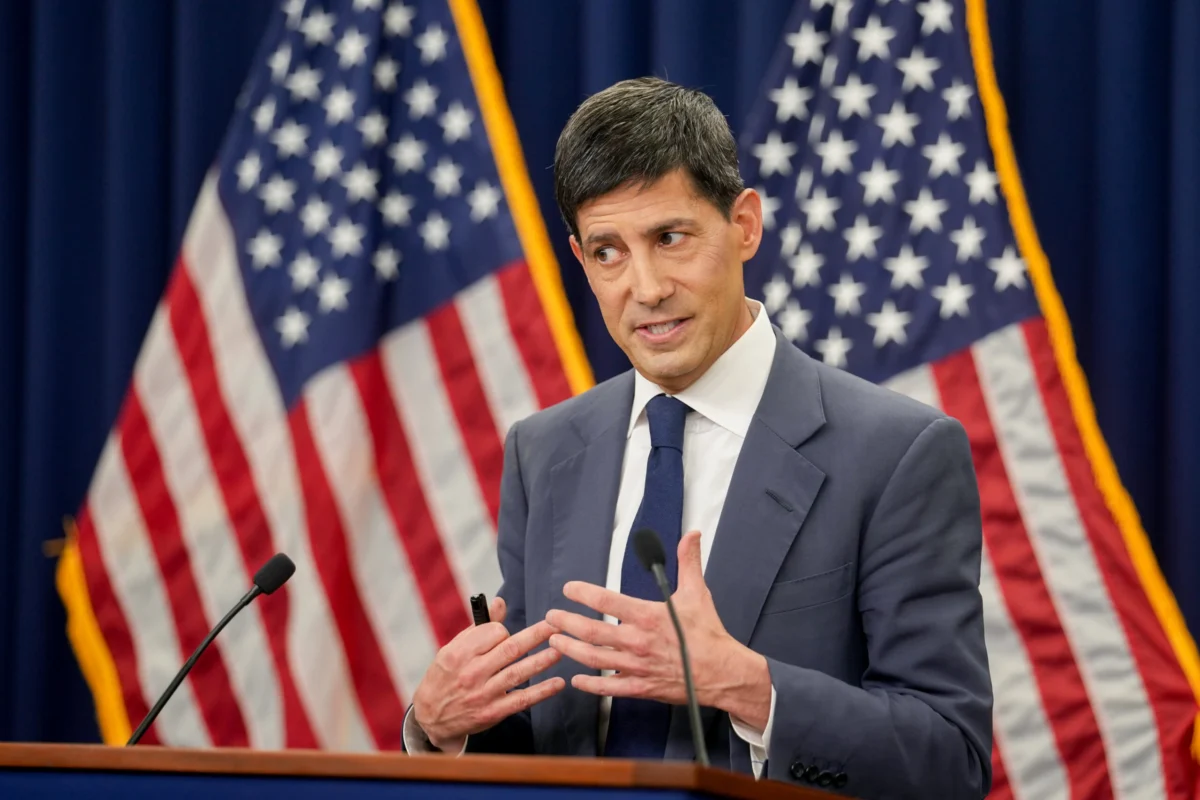
In a move that signals a profound shift in the governance and strategic direction of the world’s most powerful financial institution, Federal Reserve Chairman Kevin Warsh has unveiled the roster for five specialized task forces designed to dismantle and rebuild the foundations of U.S. monetary policy. The announcement, made on Thursday, represents the most aggressive effort to modernize the Federal Reserve in decades, drawing on an eclectic mix of Silicon Valley venture capitalists, retail giants, global central banking veterans, and elite academics. By bringing in figures such as Andreessen Horowitz co-founder Marc Andreessen and Walmart’s Doug McMillon, Warsh is signaling that the "New Fed" will prioritize real-time data and technological disruption over the insular, often lagging models of traditional economic theory.
The formation of these task forces follows Warsh’s pledge last month to "remake" the central bank from the ground up. Since taking the helm less than two months ago, Warsh has moved with startling speed to challenge the institutional orthodoxy that has defined the Fed’s response to the post-pandemic inflationary surge. The five committees are tasked with examining the most critical pillars of the institution: communication strategy, data utilization, the management of the Fed’s multi-trillion-dollar balance sheet, the impact of artificial intelligence on productivity and jobs, and the very framework used to target inflation.
The inclusion of Marc Andreessen on the Productivity and Jobs task force is perhaps the most striking choice, marking a rare bridge between the high-growth ethos of Sand Hill Road and the cautious corridors of Constitution Avenue. Andreessen, a vocal advocate for the "software is eating the world" thesis, joins the Fed at a time when the central bank is struggling to quantify the impact of generative artificial intelligence on the labor market. Traditional economic indicators often fail to capture the rapid shifts in productivity gains brought about by digital transformation. By placing Andreessen alongside Stanford’s Charles I. Jones and Microsoft’s Xbox CEO Asha Sharma, Warsh is betting that the Fed can better anticipate the deflationary pressures of technology and the evolving nature of work in an AI-driven economy.
On the data front, the appointment of Doug McMillon, the former CEO of Walmart, provides the Fed with a direct line to the heart of the American consumer. In the modern era, traditional government statistics—such as the Consumer Price Index (CPI) or Personal Consumption Expenditures (PCE)—often lag behind the reality on the ground by weeks or months. Walmart, which processes millions of transactions daily, serves as a high-frequency laboratory for consumer behavior and supply chain logistics. McMillon will work with renowned economists Raj Chetty and Kevin Murphy to explore how the Fed can integrate private-sector "big data" to create a more agile, responsive monetary policy that does not wait for quarterly reports to sense a shifting economic tide.
The institutional "old guard" is also well-represented, ensuring that Warsh’s radicalism is tempered by deep experience. Mervyn King, the former Governor of the Bank of England, and Raghuram Rajan, the former Governor of the Reserve Bank of India, bring a global perspective to a Fed that has often been criticized for an overly domestic focus. Rajan, in particular, is known for his prescient warnings about financial stability and the "fault lines" in the global economy. His role on the Balance Sheet Policy task force, alongside former Fed Governor Jeremy Stein and Harvard’s Karen Dynan, suggests a rigorous re-evaluation of the Fed’s massive holdings. With a balance sheet that expanded to nearly $9 trillion during the pandemic, the mechanics of "quantitative tightening" and the Fed’s role as a liquidity provider of last resort remain among the most contentious issues in global finance.
Warsh’s reformist agenda is already being felt in the Fed’s communication style. For years, "forward guidance"—the practice of telegraphing future interest rate moves to the markets—has been a cornerstone of Fed policy. However, critics argue that this approach has boxed the Fed into corners, making it slow to react when inflation spiked in 2021. Warsh has already begun to dismantle this framework, favoring a "reaction function" where the Fed responds to incoming data rather than promising future paths. This shift was evident in June, when the post-meeting FOMC statement was significantly truncated, removing the verbose qualifiers that have historically fueled market speculation. The Communications task force, led by Peter R. Fisher and Arminio Fraga, will formalize this move toward transparency and simplicity.
Perhaps the most intellectually heavy-hitting group is the Inflation Frameworks task force. Led by Greg Mankiw, the former chairman of the White House Council of Economic Advisers, and including Nobel laureate Thomas Sargent and Canadian economist William White, this group will tackle the Fed’s 2% inflation target. William White is a particularly notable inclusion; as a senior official at the Bank for International Settlements, he was one of the few prominent economists to warn of the dangers of "easy money" policies prior to the 2008 global financial crisis. His presence suggests that the Fed may be moving toward a more symmetric view of inflation, one that is more sensitive to the risks of asset bubbles created by prolonged periods of low interest rates.
The economic stakes of this reorganization cannot be overstated. The Federal Reserve is currently navigating a precarious "soft landing" as it attempts to bring inflation down to its target without triggering a recession. Market volatility has remained high as investors parse every word from Fed officials for clues about the trajectory of the federal funds rate. By bringing in outsiders to "ask hard questions," Warsh is attempting to break the "groupthink" that many believe led the Fed to misjudge the persistence of inflation following the COVID-19 pandemic.
The task forces will operate independently, with a mandate to follow the evidence and provide "candid feedback" directly to the Federal Open Market Committee (FOMC). While the Fed news release did not provide a specific deadline for the final reports, Warsh has indicated that he expects to implement substantial changes within the current calendar year. This accelerated timeline reflects the urgency of the moment, as the global economy faces structural shifts including the decoupling of U.S.-China trade, the transition to green energy, and the aforementioned AI revolution.
Critics of the move may argue that the inclusion of figures like Andreessen—who has recently taken a more active role in political and defense policy—could politicize an institution that prides itself on independence. However, supporters contend that the Fed has become too academic and disconnected from the real economy. By blending the theoretical rigor of Sargent and Mankiw with the practical, data-driven insights of McMillon and Sharma, Warsh is attempting to create a "technocratic vanguard" capable of navigating an increasingly complex 21st-century landscape.
As the task forces begin their work, the global financial community will be watching closely. The Federal Reserve’s decisions do not merely influence U.S. mortgage rates and corporate borrowing costs; they set the pulse for global liquidity and the value of the U.S. dollar, the world’s reserve currency. If Warsh’s experiment succeeds, it could provide a new blueprint for central banking in the digital age—one that is faster, more transparent, and more deeply integrated with the technological forces shaping the global economy. If it fails, it risks creating a fragmented policy framework at a time when the world can least afford a misstep by its "lender of last resort." For now, the message from the Warsh-led Fed is clear: the era of incrementalism is over, and the era of "first principles" has begun.