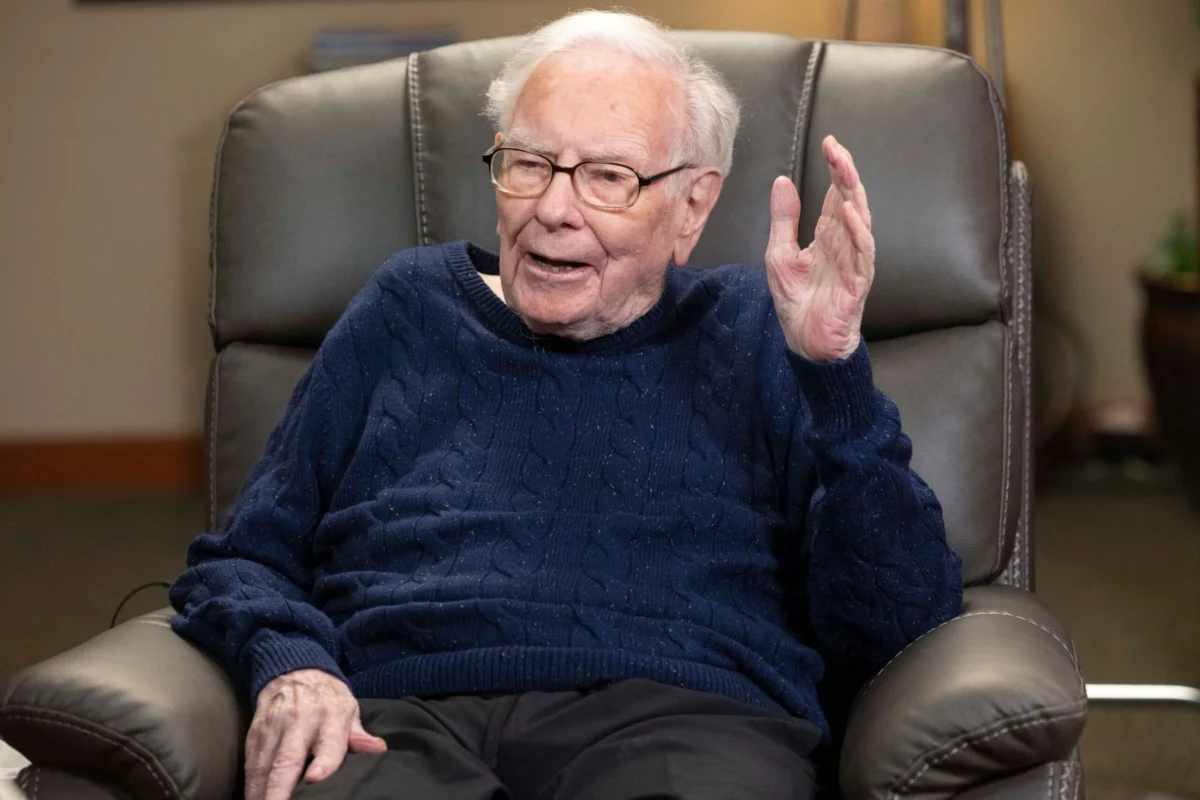
In an era defined by lightning-fast digital transactions and the democratization of complex financial instruments, the traditional art of value investing is facing an existential challenge. Warren Buffett, the 95-year-old chairman of Berkshire Hathaway and the world’s most renowned practitioner of fundamental analysis, has recently intensified his critique of a global financial landscape that he believes is increasingly untethered from economic reality. For Buffett, the modern stock market has transitioned from a mechanism for capital allocation into a high-stakes arena where the thrill of the trade often supersedes the logic of the investment.
The core of Buffett’s concern lies in the prevailing difficulty of identifying undervalued assets in a climate where market participants are more interested in price action than in the intrinsic health of businesses. He has noted that finding genuine value becomes an arduous task when the collective preference of the market shifts toward speculative "gambling." This sentiment reflects a broader frustration among disciplined investors who find themselves competing with algorithmic trading, retail frenzies, and a systemic obsession with short-term gains.
This shift in market character is perhaps best illustrated by Buffett’s evocative metaphor of the stock market as a "church with a casino attached." While the "church" represents the institutional side of the market—long-term pension funds, disciplined value hunters, and the steady compounding of corporate earnings—the "casino" side has grown disproportionately large and influential. The rise of zero-day-to-expiration (0DTE) options is a primary culprit in this transformation. These derivative contracts, which expire within 24 hours of being traded, have seen an explosion in volume, often accounting for nearly half of the total options activity on the S&P 500. For Buffett, this is the purest form of gambling, as it focuses entirely on minute-to-minute price fluctuations rather than the multi-year trajectory of a company’s profitability.
The current market environment has been characterized by a paradoxical "wall of worry." Despite significant geopolitical tensions, including energy shocks stemming from conflicts in the Middle East and ongoing inflationary pressures, equities have surged to record highs. Much of this rally has been fueled by the massive build-out of artificial intelligence (AI) infrastructure. Investors have flocked to semiconductor giants like Micron and followed the developments of private ventures like SpaceX with a fervor that borders on the religious. While the technological advancements are real, the valuations attached to them often assume a level of perfection that leaves little room for error, creating a "speculative froth" that Buffett finds increasingly difficult to navigate.
The surge in retail participation has further altered the market’s DNA. The accessibility of trading apps and the gamification of finance have invited millions of new participants into the fold. While the democratization of finance is often lauded as a positive development, it has also introduced a level of volatility driven by social media trends rather than balance sheet analysis. When retail traders move en masse, they can drive the prices of even large-cap stocks to levels that are disconnected from their cash flow projections. To Buffett, this trend is a symptom of a culture that finds more profit in "cultivating gamblers" than in "cultivating investors." The financial industry, he argues, is incentivized to encourage frequent trading because transaction fees, payment for order flow, and margin interest are generated by activity, not by the patient holding of shares.

From an economic perspective, the scarcity of value opportunities has profound implications for capital allocation. Berkshire Hathaway, which sits on a record-breaking cash pile exceeding $180 billion, serves as a barometer for this scarcity. Buffett has long maintained that his preferred holding period is "forever," yet he is currently finding it more prudent to hold short-term Treasury bills than to overpay for businesses in a heated market. This disciplined withdrawal suggests a belief that the current market cycle is in a late, highly speculative stage where the risk-to-reward ratio has become unfavorable for the cautious allocator.
Global comparisons further highlight the uniqueness of the current American market exuberance. While European and Asian markets have faced their own challenges—ranging from sluggish growth in the Eurozone to property sector debt in China—the U.S. market has remained the primary theater for speculative excess. This is partly due to the depth of the U.S. capital markets and the concentration of world-leading technology firms. However, this dominance also makes the U.S. financial system more susceptible to the "gambling" instincts that Buffett warns against. Historically, periods of extreme speculation, such as the Nifty Fifty era of the early 1970s or the Dot-com bubble of the late 1990s, have ended in painful corrections that disproportionately affected those who mistook a bull market for personal genius.
The psychology of the modern trader is also a point of concern for economic historians. The "fear of missing out" (FOMO) has been amplified by the speed of information, creating a feedback loop where rising prices attract more speculators, which in turn drives prices even higher. Buffett’s approach—to be "fearful when others are greedy and greedy when others are fearful"—becomes much harder to execute when greed is institutionalized through leveraged exchange-traded funds (ETFs) and complex derivative strategies. These vehicles add "fuel to the fire," as Buffett describes it, exacerbating both the upward surges and the eventual downward spirals.
Looking ahead, the tension between value and speculation will likely define the next decade of global finance. If the "casino" continues to dominate, the risk of a systemic "Minsky Moment"—a sudden collapse of asset values after a long period of speculative growth—increases. Conversely, if the market undergoes a period of cooling, it may allow for a return to the fundamental principles that Buffett has championed for over seven decades. He notes that there are rare windows in history when opportunities are "thrown at you so fast" that an investor can barely keep up. However, those moments are usually the byproduct of a crash or a period of extreme pessimism. In the current environment, Buffett suggests that one is lucky to find even a single high-quality, fairly priced investment every few years.
The broader economic impact of this speculative shift cannot be overstated. When the market prioritizes short-term trading over long-term investment, the primary purpose of the stock market—to provide capital for productive enterprises—is undermined. Instead of funding innovation and infrastructure, capital is recycled through derivative bets and high-frequency algorithms. This can lead to a misallocation of resources where companies focus on engineering their stock price through buybacks and short-term earnings management rather than investing in long-term research and development.
In the final analysis, Warren Buffett’s critique serves as a sobering reminder that the laws of economics cannot be suspended indefinitely by enthusiasm alone. While the allure of quick gains through AI speculation or options trading is powerful, the foundation of wealth remains the ownership of productive assets that generate real-world value. As the "Oracle of Omaha" enters his mid-90s, his message to the financial community is clear: the most meaningful investment opportunities require a level of patience and discipline that is currently out of fashion. In a world preferring the casino, the true value investor is the one who has the courage to stay in the church, waiting for the noise to subside and for reality to reassert itself. The current era of gambling may provide temporary excitement, but history suggests that the house—represented by the cold, hard facts of valuation—eventually wins.