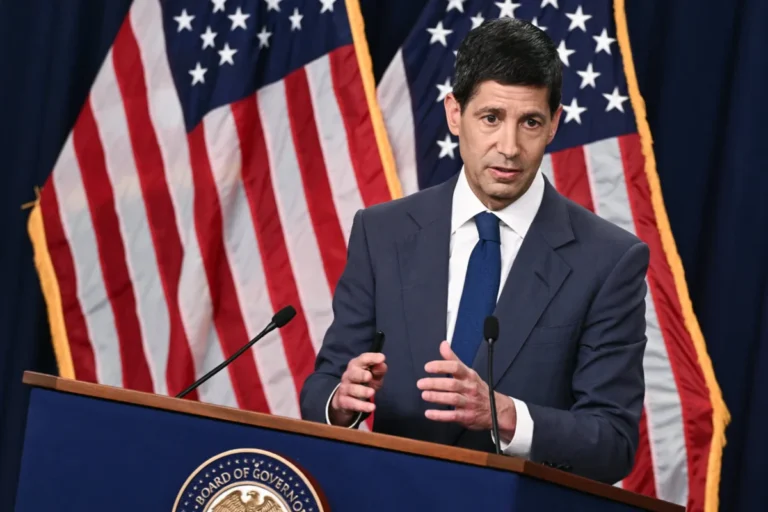
New York Federal Reserve President John Williams expressed a measured sense of optimism regarding the trajectory of the United States economy this week, suggesting that the aggressive cycle of monetary tightening may have finally reached a plateau. Speaking to a gathering of business leaders within his district, Williams outlined a comprehensive case for why the current interest rate environment is "well positioned" to return the nation to price stability. His remarks come at a critical juncture for global financial markets, which have been grappling with the dual pressures of geopolitical instability and a transformative surge in technology spending.
The central pillar of Williams’ thesis is the belief that inflation has officially peaked. According to his projections, the headline inflation rate is expected to moderate to approximately 3.25 percent by the end of the current calendar year. From there, he anticipates a gradual "glide path" that will see price growth return to the Federal Reserve’s long-term target of 2 percent by 2027, eventually stabilizing fully at that level by 2028. This timeline suggests a patient, long-term approach to monetary policy, signaling that the central bank is prepared to maintain current restrictive levels for an extended period rather than rushing into further hikes or premature cuts.
The economic landscape of the past year has been defined by unexpected volatility, much of it originating from beyond the borders of the United States. Williams specifically pointed to the late February military escalations involving the U.S., Israel, and Iran as a primary catalyst for the most recent inflationary spike. The conflict sent shockwaves through global energy markets, driving crude oil prices to levels that threatened to derail the post-pandemic recovery. However, Williams noted that the "impulse" from this energy shock appears to be fading. As supply chains adjust and the immediate threat to energy infrastructure reaches a perceived ceiling, the President of the New York Fed expects oil prices to revert toward historical norms, removing a significant tailwind for consumer price increases.
Beyond energy, the Fed is closely monitoring the impact of international trade policy and the ongoing shift in global supply chains. While tariffs have historically acted as a one-time inflationary shock, Williams argued that the current environment is different. He suggested that the inflationary pressure from trade barriers has largely neutralized, as expiring duties are being replaced by new ones in a manner that does not provide a "significant additional impulse" to the price index. This stability in trade costs is a vital component of the Fed’s outlook, providing a predictable floor for goods inflation as domestic demand begins to normalize.
A more modern contributor to the economic dialogue has been the unprecedented scale of investment in artificial intelligence and high-capacity computing. This surge in technology spending initially created supply-demand imbalances, particularly in the semiconductor and data center sectors, which rippled through the broader economy. Williams, however, views these imbalances as transitory. He noted that as global production capacity for advanced technology comes online, the inflationary friction caused by the "AI boom" should recede. This perspective aligns with broader economic theories suggesting that while technological revolutions are initially expensive and inflationary, they ultimately lead to productivity gains that exert downward pressure on prices over the long term.
The labor market remains perhaps the most resilient sector of the American economy, and for Williams, it is currently a source of strength rather than a driver of inflation. Unlike previous cycles where a "wage-price spiral" threatened to entrench high inflation, the current labor market is characterized as "solid and stable." Wage growth, while healthy, has not accelerated to a degree that would necessitate further aggressive intervention by the central bank. This stability allows the Federal Reserve to focus on the "last mile" of its inflation fight without the immediate fear of a labor-led overheating of the economy.

Despite these encouraging signs, a notable divergence remains between the Fed’s public rhetoric and the expectations of private financial markets. Traders and institutional investors continue to price in a potential rate hike as early as September, reflecting a skepticism that the "peak" has truly been established. This market sentiment is bolstered by the June "dot plot" from the Federal Open Market Committee (FOMC), which showed that a narrow majority of Williams’ colleagues still anticipated at least one more quarter-percentage-point increase before the end of the year. This internal tension within the Fed highlights the difficulty of navigating a "soft landing" when the margin for error is razor-thin.
The data released by the Bureau of Labor Statistics just a day prior to Williams’ speech added another layer of complexity to the debate. Consumer prices in June posted an unexpected 0.4 percent decline, marking the sharpest one-month drop since the onset of the pandemic in April 2020. This brought the annual inflation rate down to 3.5 percent. While the market initially rallied on this news, Federal Reserve Chairman Kevin Warsh cautioned against over-exuberance during his testimony before the House Financial Services Committee. Warsh maintained a more hawkish tone, explicitly stating that the recent data does not represent a "mission accomplished" moment. The Chairman emphasized that while the direction of travel is correct, the Fed’s credibility depends on ensuring that inflation does not just dip, but stays down on a sustained basis.
The global context of this policy stance cannot be overstated. As the U.S. Federal Reserve signals a potential end to its hiking cycle, other central banks are watching closely. The "higher for longer" strategy adopted by the Fed has significant implications for the U.S. dollar, which remains near multi-year highs against a basket of international currencies. This strength in the dollar has helped export inflation to other nations, as their own currencies weaken and the cost of dollar-denominated commodities—like oil—rises. If Williams’ prediction of a "glide path" holds true, it may provide the necessary window for the European Central Bank and the Bank of England to synchronize their own policy shifts, potentially stabilizing the global foreign exchange markets.
The concept of "well-anchored expectations" is another psychological factor that Williams believes is working in the Fed’s favor. Inflation expectations—the belief among consumers and businesses about where prices will be in the future—are a self-fulfilling prophecy in economics. If the public believes inflation will stay high, they demand higher wages and raise prices in anticipation. Currently, these expectations remain remarkably stable, suggesting that the public still has faith in the Fed’s ability to eventually hit its 2 percent target. Williams cited this as a key reason why the central bank has the "breathing room" to hold rates steady rather than reacting impulsively to every monthly data print.
Looking ahead, the Federal Reserve’s path remains fraught with variables that are difficult to quantify. While the cooling of energy prices and the normalization of tech spending are positive indicators, the structural shifts in the global economy—including the move toward "near-shoring" and the transition to green energy—continue to present long-term inflationary risks. Furthermore, the solid growth of the domestic economy, which Williams described as being "on trend," means that demand remains robust enough to potentially keep price pressures simmering just beneath the surface.
In the final analysis, the New York Fed President’s remarks serve as a bridge between the aggressive posture of the past two years and the more nuanced, observational phase of monetary policy that lies ahead. By identifying the specific drivers of the recent spike—geopolitics, tariffs, and technology—and explaining why those drivers are losing momentum, Williams has provided a roadmap for a period of policy stasis. Whether the rest of the FOMC or the broader financial markets fully embrace this vision will depend on the economic data emerging in the third quarter. For now, the message from one of the Fed’s most influential voices is clear: the peak is in view, the tools are in place, and patience is the new priority.