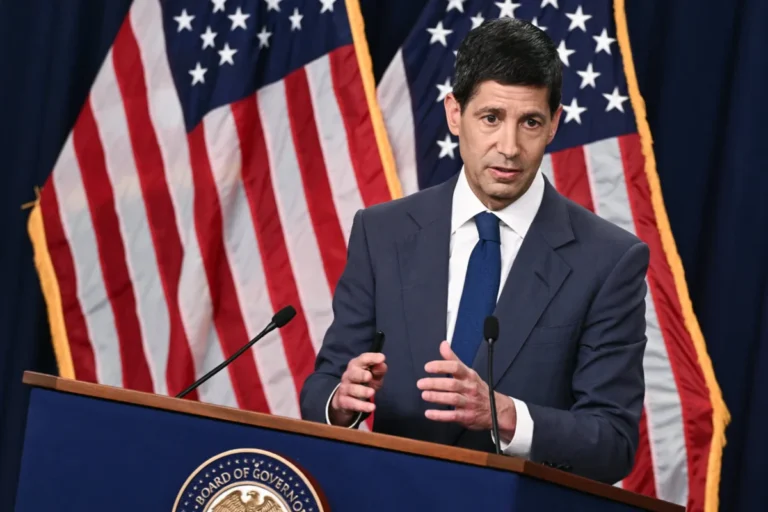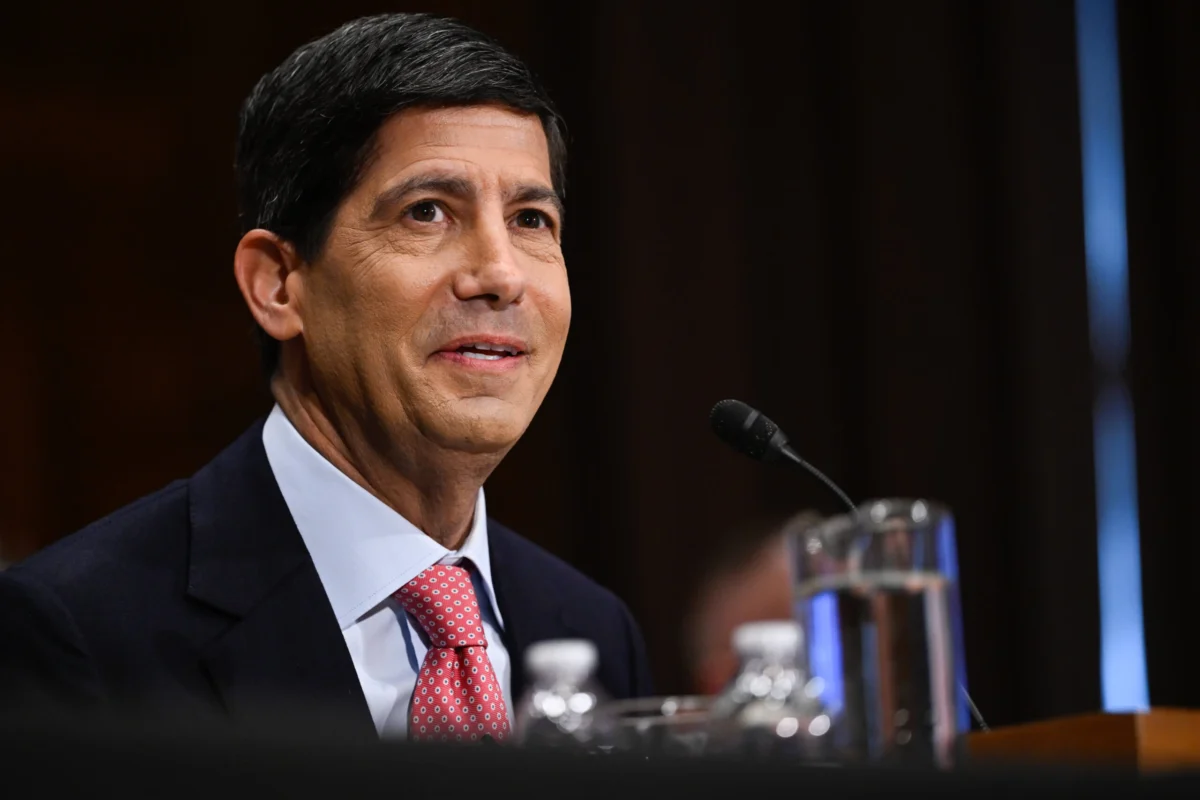
In a pivotal moment for global financial markets, Federal Reserve Chairman Kevin Warsh appeared before the Senate Banking Committee this week, delivering a testimony that underscored a fundamental transformation in how the United States central bank intends to manage the national economy. Following a similarly rigorous session with the House Financial Services Committee, Warsh’s remarks have sent a clear signal to investors and policymakers alike: the era of reactive monetary policy is being replaced by a proactive "regime change" aimed at permanently dismantling the inflationary pressures that have haunted the American consumer for the better part of the decade.
The Chairman’s appearance on Capitol Hill comes at a delicate juncture for the U.S. economy. While labor markets remain resilient and the equity markets continue to reach new heights, the specter of persistent price volatility remains a primary concern for the Federal Open Market Committee (FOMC). Warsh, who has long been a proponent of a more streamlined and transparent central bank, utilized his testimony to frame inflation not merely as a statistical anomaly, but as a "hidden tax" on the American public—one that requires a structural, rather than a cyclical, response.
During the two-day congressional circuit, Warsh faced a barrage of questions regarding the future trajectory of interest rates. Despite intense pressure from both sides of the aisle to provide a definitive timeline for rate adjustments, the Chairman remained characteristically guarded. He reaffirmed the Fed’s unwavering commitment to its price stability mandate while simultaneously offering a nuanced perspective on the shifting "neutral rate" of interest. Analysts noted that while Warsh provided few explicit clues regarding a near-term cut or hike, his rhetoric suggested a central bank that is less concerned with month-to-month data prints and more focused on the long-term productivity gains promised by the ongoing technological revolution.
Central to Warsh’s testimony was his optimistic assessment of the burgeoning artificial intelligence (AI) investment boom. He argued that the massive capital expenditures currently being funneled into the tech sector could represent a significant supply-side expansion, potentially allowing the economy to grow at a faster clip without triggering a corresponding spike in inflation. This "AI-driven productivity miracle," as some economists have dubbed it, serves as a cornerstone of the Warsh doctrine. By facilitating an environment where technological efficiency lowers the cost of production, the Fed hopes to see a natural downward pressure on prices, effectively doing some of the heavy lifting that would otherwise require aggressive monetary tightening.
To better understand these shifting dynamics, Warsh highlighted the recent formation of specialized Federal Reserve task forces. These groups, which include high-profile figures such as venture capitalist Marc Andreessen and Walmart CEO Doug McMillon, are tasked with bridging the gap between traditional economic modeling and the real-world impact of disruptive technologies. The inclusion of such diverse private-sector voices marks a departure from the Fed’s traditionally academic-heavy advisory structure. Warsh told the committee that understanding the "micro-foundations of the digital economy" is essential for making sound macro-policy decisions in the 21st century.
However, the path forward is far from unanimous within the walls of the Eccles Building. Warsh’s testimony alluded to what many observers are calling a "family fight" within the FOMC. Recent meeting minutes have revealed deep-seated divisions among governors and regional presidents regarding the appropriate level of restrictiveness for current policy. One faction remains concerned that keeping rates "higher for longer" could eventually crack the labor market, while another group—seemingly aligned with Warsh’s regime-change philosophy—fears that easing too early could allow inflation to become structurally embedded in the service sector.
This internal friction was a focal point for several Senators, who questioned whether the Fed’s lack of clear forward guidance was contributing to market volatility. Warsh defended the bank’s stance, arguing that "deliberate ambiguity" is a necessary tool in an era of unprecedented economic transformation. He cautioned against the "tyranny of the dot plot," suggesting that the Fed must remain nimble enough to react to geopolitical shocks or sudden shifts in credit conditions without being boxed in by previous forecasts.
The political dimension of the hearing was equally fraught. Legislators from both parties attempted to draw Warsh into debates over fiscal policy, government spending, and the ballooning national debt. In an era of heightened political polarization, the independence of the Federal Reserve is frequently under fire. Warsh, however, successfully navigated these inquiries by strictly adhering to the central bank’s statutory boundaries. He stressed that while fiscal policy undoubtedly influences the economic environment, the Fed’s role is to act as an independent arbiter of monetary conditions, free from the short-term pressures of the election cycle. This defense of institutional autonomy is seen as a critical component of maintaining the U.S. dollar’s status as the world’s primary reserve currency.
On the global stage, the "Warsh Doctrine" is being watched with intense scrutiny. As the European Central Bank (ECB) and the Bank of England grapple with their own stagflationary pressures, the Fed’s pivot toward a productivity-focused framework represents a bold experiment in central banking. If Warsh is correct—and the AI boom provides a genuine boost to potential GDP—the United States could decouple from the slower-growth trajectories currently seen in other G7 nations. This would likely strengthen the dollar further, creating a complex set of challenges for emerging markets that carry significant dollar-denominated debt.
Market reaction to the testimony was measured but optimistic. Treasury yields saw a slight compression as investors interpreted Warsh’s focus on productivity as a sign that the Fed might be able to tolerate a slightly higher "natural" rate of interest without choking off growth. The S&P 500 and Nasdaq remained relatively stable, buoyed by the Chairman’s positive outlook on the tech-led investment cycle. Economic data released shortly after the testimony showed that while manufacturing activity remains somewhat sluggish, the services sector continues to expand, supporting the Fed’s "soft landing" narrative.
As the session concluded, the overarching message from the Chairman was one of cautious transformation. The "inflation tax," according to Warsh, is a relic of a policy framework that failed to account for the rapid evolution of the modern economy. By focusing on the supply side, leveraging private-sector expertise, and maintaining a disciplined approach to the money supply, the Federal Reserve aims to usher in a new era of stable, non-inflationary growth.
The road ahead, however, is fraught with risks. Should the AI productivity gains fail to materialize, or if geopolitical tensions in the Middle East or Eastern Europe cause a fresh spike in energy prices, the Fed’s "regime change" will be put to its ultimate test. For now, Kevin Warsh has successfully laid out a vision for a more modern, technologically aware central bank. Whether this vision can survive the internal "family fight" at the FOMC and the external pressures of a volatile global economy remains the defining question for the financial world in 2026.
Ultimately, the Senate testimony served as a reminder that the Federal Reserve is currently undergoing its most significant philosophical shift since the Volcker era. By moving away from the "lower for longer" mentality that defined the post-2008 world and embracing a more dynamic, growth-oriented posture, Warsh is betting that the American economy’s best days are not behind it, but are instead being built in the laboratories of Silicon Valley and the boardrooms of the nation’s largest retailers. As the testimony ended and the Chairman departed the Dirksen Senate Office Building, the message to the markets was clear: the Fed is no longer just watching the economy—it is actively seeking to reshape the framework of American prosperity.