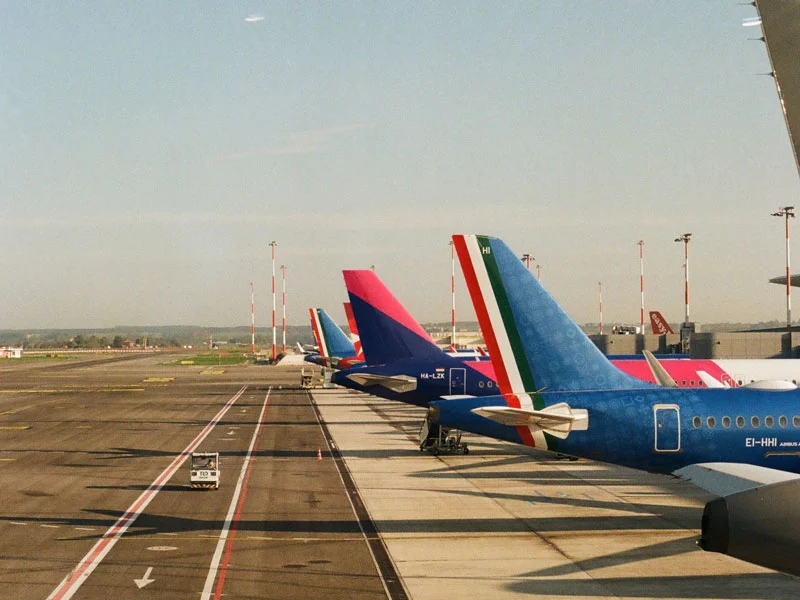
Rome Fiumicino Airport, officially known as Leonardo da Vinci International Airport, is emerging as a vanguard in the global aviation industry by embracing and implementing comprehensive circular economy principles across its extensive operations and infrastructure development. This ambitious strategic shift, spearheaded by Aeroporti di Roma (ADR), aims to transform a complex, high-throughput environment into a model of resource efficiency, waste reduction, and environmental stewardship, thereby enhancing both economic competitiveness and ecological responsibility. As a leading European airport operator managing Rome Fiumicino and Ciampino airports, ADR oversees a critical gateway to Italy and a significant global hub. Fiumicino’s status as a Skytrax five-star rated airport, a distinction held by only a dozen airports worldwide, and its milestone achievement of exceeding 50 million passengers in 2025, underscore its importance and the scale of its circular economy initiatives.
The integration of circular economy principles at Fiumicino is not an isolated project but a foundational element of ADR’s operational strategy. It interconnects the lifecycle of infrastructure, the intricacies of daily operations, and the behaviours of all stakeholders, from passengers to commercial tenants and construction partners. This holistic approach has been formally recognized and supported by a Memorandum of Understanding (MoU) signed in 2025 with the Italian Ministry of the Environment and Energy Security. This agreement positions the airport ecosystem as a crucial proving ground for advancing circular economy models, translating theoretical concepts into tangible, measurable results and providing valuable insights for the broader aviation sector. Fiumicino is actively striving to become a true "circular hub."
Embedding Sustainability into the Fabric of Infrastructure
At Fiumicino, the philosophy of building and maintaining airport infrastructure has been fundamentally reoriented. Construction and refurbishment projects are now conceived as dynamic, adaptable systems rather than static, finite assets. A strong emphasis is placed on redevelopment and reuse of existing structures (brownfield development) wherever feasible, minimizing the need for demolition and new construction. Design protocols rigorously incorporate Italy’s minimum environmental criteria and international benchmarks such as LEED (Leadership in Energy and Environmental Design) and BREEAM (Building Research Establishment Environmental Assessment Method). These standards mandate modularity and reversibility in design, facilitating future adaptations and maximizing the potential for material recovery at the end of an asset’s life. Currently, over 75 percent of Rome Fiumicino’s terminal infrastructure has achieved LEED or BREEAM certification, a testament to ADR’s commitment to extending asset lifespans and significantly reducing its reliance on virgin resources.
The application of circular principles extends directly to the physical components of the airport’s operational surfaces. Runways, taxiways, aprons, and associated road networks are increasingly being constructed using recycled materials. This includes advanced bituminous conglomerates with high percentages of recycled content and aggregates derived from demolition waste. In 2025 alone, recycled materials constituted over half of all materials used in completed works at the airport. A key element of this strategy is the meticulous on-site separation of excavation and demolition materials. This waste stream is then processed for reuse in foundational layers and non-structural applications, dramatically reducing both landfill waste and the demand for newly quarried raw materials. To support this closed-loop system, dedicated processing plants have been established within the airport’s perimeter. These practices are now codified within technical specifications, with defined thresholds for recycled content that are carefully balanced against stringent performance and safety requirements, ensuring that sustainability does not compromise operational integrity. These specifications are actively applied across all major ongoing projects at Leonardo da Vinci Airport.
Transforming Daily Operations Through Circularity
Beyond the physical infrastructure, the principles of a circular economy are deeply woven into the fabric of Fiumicino’s daily operations. Waste management, a perennial challenge for large-scale facilities, is being reimagined as a core operational process designed for maximum efficiency and the highest quality of waste segregation across the entire airport.
Within the passenger terminals and operational areas, a sophisticated system of differentiated waste collection is supported by dedicated recycling centres and managed by specialized personnel. This system is further incentivized by an innovative tariff model. It combines a fixed fee with a variable component directly linked to the volume of unsorted waste generated. This pricing structure creates a clear financial incentive for commercial operators to improve their waste separation practices at the source, directly aligning environmental performance with economic benefits. The effectiveness of this system is continuously enhanced through the deployment of digital monitoring tools. These technologies provide real-time tracking of waste collection, transportation, and disposal, leading to improved data accuracy, greater operational control, and more informed decision-making.
Water circularity is another critical operational domain where Fiumicino is making significant strides. The airport is equipped with an advanced system for the recovery and treatment of non-potable water. This includes water sourced from a biological treatment plant and the Tiber River. By utilizing this treated water for thermal systems, irrigation, and sanitation purposes, the airport dramatically reduces its consumption of precious potable water. The impact is substantial: annually, over 70 percent of Fiumicino’s total water consumption is met by non-potable sources, equating to a saving of approximately 1.2 million cubic meters of potable water, enough to fill around 500 Olympic-sized swimming pools.
Complementing these technological solutions is a concerted effort to foster behavioural change. Addressing the complex challenge of accurate waste separation within a diverse, multicultural passenger environment, ADR has introduced intelligent waste bins in Fiumicino’s terminals. Developed in collaboration with an Italian start-up, these bins utilize artificial intelligence to recognize waste items in real-time and provide immediate feedback to users. This interactive approach not only improves the quality of waste separation but also generates valuable data that informs analysis and supports the development of targeted awareness campaigns. Following highly successful pilot programs that demonstrated a remarkable 60 percent reduction in plastic sorting errors, the smart bin system is being progressively scaled up as a permanent fixture of ADR’s operational model.
Further initiatives are empowering passengers to make more sustainable choices. The provision of easily accessible refillable drinking fountains offers a practical and convenient alternative to single-use plastic bottles. Concurrently, ADR is actively collaborating with its retail partners to promote the adoption of more circular packaging solutions. Partnerships with organizations like "Too Good To Go" have yielded significant results. Since the initiative’s inception up to the first quarter of 2026, over 10,000 meals have been saved from being discarded at Rome Fiumicino. This effort is estimated to have avoided nearly 30 tonnes of CO2 emissions, effectively reducing food waste and maximizing the value derived from resources.
Underpinning these advancements across both infrastructure and operations is the pervasive role of digitalization. Digital technologies serve as an essential enabler, enhancing traceability, accountability, and the sophistication of decision-making processes. By providing unprecedented visibility into material and waste flows, ADR is continuously optimizing resource utilization, driving down operational costs, and identifying further opportunities for resource recovery and value creation throughout the entire airport ecosystem.
Transcending the Linear Economy for Sustainable Growth
The economic justification for embracing circularity at the scale of an international airport is compelling and increasingly evident. The systematic incorporation of recycled materials in infrastructure projects directly translates into reduced procurement costs and a diminished dependence on volatile raw material markets. Similarly, achieving high-quality waste separation and increased recycling rates leads to lower disposal expenses and enhances the recovery of valuable secondary materials. These operational efficiencies collectively contribute to a more resilient and robust business model, where enhanced environmental performance and rigorous financial discipline mutually reinforce each other.
For Rome Fiumicino Airport, the pursuit of a circular economy represents more than just incremental operational optimization; it is a fundamental growth strategy for the future. By redesigning its infrastructure and operational processes to function as regenerative systems, ADR is building greater resilience and a stronger competitive edge in an increasingly resource-constrained global environment. This forward-looking approach is geared towards creating long-term value for all stakeholders while successfully decoupling economic growth from environmental degradation. Fiumicino’s commitment to these principles positions it not only as a leading aviation hub but also as a pioneer in sustainable development within the infrastructure sector.