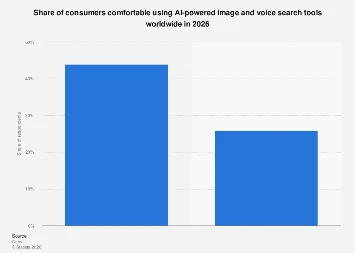
The way consumers interact with digital information is undergoing a profound transformation, with visual and voice search technologies poised to become increasingly central to everyday online experiences. Projections indicate a significant surge in consumer openness and adoption of these innovative search modalities over the next few years, fundamentally reshaping e-commerce, information retrieval, and brand engagement. This shift is not merely a technological upgrade but a fundamental alteration in user behavior, driven by convenience, accessibility, and the increasing sophistication of artificial intelligence.
By 2026, a substantial portion of the global consumer base is expected to embrace visual search, allowing individuals to use images to query search engines and identify products or information. This capability, already nascent in platforms like Google Lens and Pinterest Lens, offers a more intuitive and efficient method of discovery, particularly for visually driven sectors such as fashion, home decor, and travel. Instead of relying on descriptive keywords, users can simply upload a photo of an item they like and receive relevant search results, streamlining the path from inspiration to purchase. Market analysts predict that the visual search market, currently valued in the billions, will experience robust year-over-year growth, fueled by advancements in image recognition algorithms and wider integration into popular e-commerce and social media platforms. For businesses, this presents a critical imperative to optimize their product imagery and online catalogs for visual search, ensuring their offerings are discoverable through this emerging channel.
Parallel to the rise of visual search, voice search is also on an upward trajectory, driven by the proliferation of smart speakers, virtual assistants embedded in smartphones, and the growing demand for hands-free interaction. As voice recognition technology becomes more accurate and conversational, consumers are increasingly comfortable using spoken queries to find information, set reminders, play music, or even make purchases. This trend is particularly pronounced in certain demographics and geographic regions. For instance, in North America and parts of Europe, where smart speaker ownership is relatively high, voice search is already a significant component of daily digital interaction. The convenience of asking a question without needing to type, especially while multitasking or in environments where typing is impractical, is a powerful adoption driver. Global data suggests that the percentage of internet users who regularly utilize voice search is set to climb steadily, potentially reaching over 50% in developed markets within the next few years. This necessitates a strategic shift in search engine optimization (SEO) strategies, with a greater emphasis on long-tail keywords, natural language processing, and structured data that helps search engines understand and respond to conversational queries.
The economic implications of this dual evolution in search behavior are far-reaching. For e-commerce businesses, the ability to be found through visual or voice queries opens up new avenues for customer acquisition and engagement. Companies that invest in AI-powered visual search capabilities can offer a more personalized and frictionless shopping experience, reducing cart abandonment rates and increasing conversion. Similarly, businesses optimizing for voice search can capture a significant share of the market by ensuring their content is easily accessible through spoken commands. This includes developing comprehensive FAQ sections, utilizing schema markup to provide clear and structured information, and creating content that directly answers common consumer questions in a conversational tone. The shift also impacts advertising models, with increasing opportunities for sponsored product placements within visual search results and voice assistant responses.
Furthermore, the increasing reliance on visual and voice search signals a broader trend towards more intuitive and less text-dependent digital interactions. As augmented reality (AR) and virtual reality (VR) technologies mature, the lines between physical and digital search experiences will continue to blur. Imagine pointing your phone at a piece of furniture in a store and having an AR overlay provide product details, reviews, and purchasing options, all initiated through a visual search. Or asking a smart home device to find a recipe and having it display the steps visually on a nearby screen, with the option to navigate through the instructions via voice commands. These integrated experiences represent the future, where search is not a distinct activity but an embedded, seamless part of our environment.
The development of these technologies is also fostering innovation in natural language processing (NLP) and machine learning. The ability of algorithms to understand the nuances of human speech, interpret complex visual cues, and provide relevant, context-aware responses is a testament to the rapid advancements in AI. This, in turn, fuels further investment and research, creating a virtuous cycle of innovation. As these technologies become more pervasive, they also raise important considerations regarding data privacy, algorithmic bias, and the digital divide. Ensuring equitable access to these technologies and addressing potential ethical concerns will be crucial as they become integral to the global digital economy.
The transition towards visual and voice search is not without its challenges. For businesses, adapting existing infrastructure and strategies to accommodate these new search paradigms requires significant investment in technology, talent, and data analysis. Understanding how consumers formulate visual queries or what kind of language they use in voice searches is critical for effective optimization. Moreover, the competitive landscape for capturing consumer attention through these channels is intensifying, demanding a proactive and agile approach from brands and marketers. The ability to provide immediate, accurate, and contextually relevant responses will be a key differentiator.
Looking ahead, the continued evolution of AI, coupled with the increasing digital fluency of consumers worldwide, suggests that visual and voice search will move beyond niche applications to become mainstream methods of information discovery and interaction. The next few years will be a crucial period for businesses to assess their readiness, adapt their strategies, and harness the transformative potential of these powerful new search modalities. The digital frontier is expanding, and those who can navigate its visual and auditory dimensions will be best positioned for success in the evolving global marketplace.