The accelerating integration of artificial intelligence into the global economy has sparked widespread debate, with many analyses focusing on AI’s capacity for automation and the potential for job displacement. However, a more profound and arguably more impactful evolution is underway: AI’s burgeoning ability to understand the nuances of human interaction, emotion, and context. This shift signifies not merely a change in operational efficiency but a fundamental reimagining of how technology can augment, rather than replace, human capabilities, fostering deeper connections and unlocking new dimensions of human potential.
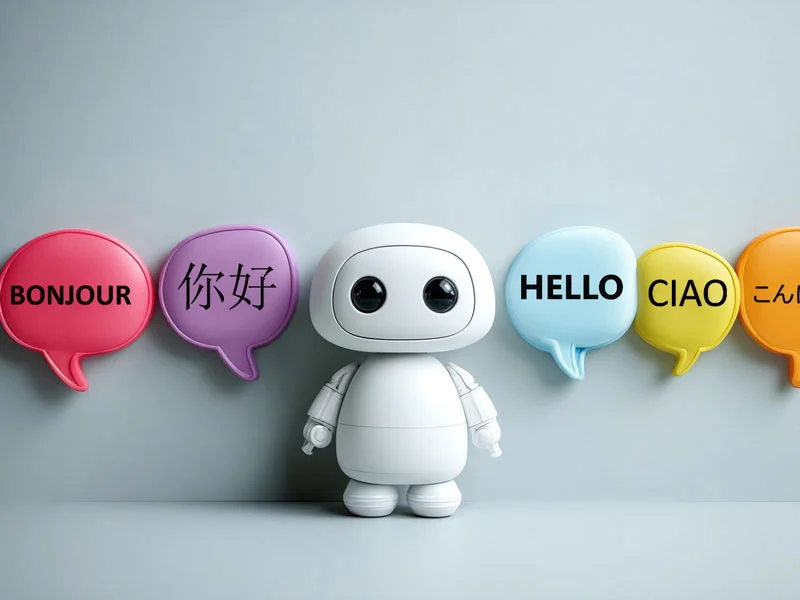
At the forefront of this transformation lies the domain of language and communication. The advent of sophisticated large language models, capable of generating coherent and contextually relevant responses, represents a significant leap forward, built upon decades of research in natural language processing and machine translation. These models have democratized access to information and facilitated communication across linguistic barriers, enabling individuals and businesses to connect on an unprecedented scale. Yet, as AI systems become more adept at processing and generating language, a critical distinction remains: the inherent difference between linguistic accuracy and genuine human comprehension. While AI can translate words with increasing speed and precision, it is the subtler layers of meaning – the emotional undertones, cultural context, and implicit intent – that continue to present the greatest challenge and the most significant opportunity for advancement.
This burgeoning capability for understanding is not merely a theoretical pursuit; it is actively shaping industries and prompting a re-evaluation of human roles. In sectors where language is paramount, such as global translation services, AI is not poised to render human expertise obsolete but rather to elevate it. By automating the more routine and time-consuming aspects of translation – the literal rendering of text – AI liberates human translators to focus on the more complex and intrinsically human elements of their work. These include capturing the cultural resonance of idioms, conveying subtle emotional nuances, and ensuring that the translated message not only conveys information but also preserves the original intent and spirit. This collaborative model, where AI handles the mechanistic tasks and humans apply their interpretive and empathetic skills, exemplifies the future of human-AI synergy.
The ongoing discourse surrounding AI often centers on a utilitarian calculus of jobs gained versus jobs lost, and tasks automated versus tasks retained. While these are legitimate concerns for individuals and policymakers alike, a more forward-looking perspective asks: what are the unique strengths of human intelligence, and how can AI be leveraged to amplify these strengths? The answer lies in fostering a form of "human-centered intelligence" where technology serves as a catalyst for human flourishing. This involves developing AI systems that are not just efficient but also insightful, capable of understanding and responding to the complexities of human experience.
One pioneering initiative in this direction is the Diversibus Viis Plurima Solvo (DVPS) project. This ambitious undertaking, supported by a substantial European seed investment and a consortium of 20 partners across nine countries, aims to push the boundaries of AI beyond mere text and image processing. DVPS is focused on developing models that can integrate and interpret multimodal sensory input – vision, audio, and sensor data – enabling AI to engage with the physical world in real-time and possess a far greater degree of contextual awareness. Such advancements are crucial for AI to move from simply processing information to truly understanding the dynamic and multifaceted nature of human environments and interactions.
The ethical and societal implications of these powerful AI advancements necessitate broad and inclusive global dialogue. High-profile forums, such as the World Meeting on Human Fraternity in Rome, have brought together leading AI researchers, ethicists, and religious leaders to discuss the responsible development and deployment of AI. Discussions involving luminaries like Nobel Laureate Geoffrey Hinton and AI pioneer Yoshua Bengio have underscored the imperative that AI must serve humanity, safeguarding its dignity and fostering a shared sense of well-being. A consensus has emerged that AI’s most significant positive contributions will likely be in accelerating scientific discovery and fostering greater global human understanding – goals intrinsically linked to deeper empathy and connection.
For leaders and organizations navigating this evolving landscape, a paradigm shift is required. The focus must move from simply identifying AI’s task-performing capabilities to understanding how AI can elevate human potential. The organizations that will thrive in the age of AI will be those that invest in developing AI systems capable of deep understanding and contextual awareness, rather than solely pursuing marginal gains in efficiency. True leadership in this era involves embedding empathy and ethical considerations at the very core of technological innovation, ensuring that AI amplifies our innate human capacities for care, interpretation, and connection.
The coming decade will likely witness AI systems that can discern not just words but the unspoken intent behind them, recognizing the subtle interplay of tone, gesture, and cultural context. This evolution marks a transition from the era of automation to the era of augmentation, where AI becomes a true partner in human progress. The ultimate measure of AI’s success will not be the number of jobs it displaces but the number of new avenues for human value and connection it creates. When AI can truly grasp that a sentence is an expression of human intent, and a gesture carries meaning beyond its physical form, then we will have reached a significant milestone in our journey towards a future where technology and humanity collaborate to build a more understanding and connected world.