India’s burgeoning luxury landscape is witnessing a profound transformation in consumer preferences, particularly within the prestigious Swiss watch segment. As the market value surpassed a significant ₹3,500 crore threshold for the first time in 2025, the trajectory of demand is increasingly being sculpted by a more discerning and informed buyer base. This pivotal shift marks a deliberate move away from overtly logo-centric purchases towards an appreciation for intricate craftsmanship, enduring heritage, and understated design – a true testament to the maturing palate of the Indian luxury consumer.
This evolution signifies a deeper understanding of horology. As Pranav Saboo, managing director and chief executive of Ethos Ltd, one of India’s leading watch retailers, articulates, "The Indian luxury customer has evolved from buying brands to buying watchmaking." This sentiment underscores a qualitative change in consumption, where provenance, mechanical complexity, and artistic execution now command greater attention than mere brand recognition. Consumers are increasingly engaging with the stories behind the timepieces, delving into the intricacies of movements, materials, and the legacy of their creators. This intellectual curiosity is fostering a more sophisticated market, bridging the gap between novice enthusiasts and seasoned collectors.
Statistical indicators reinforce this upward trend and the market’s underlying robustness. Data from the Federation of the Swiss Watch Industry (FH) reveals that Swiss watch imports into India climbed to approximately ₹3,500 crore in 2025, a notable increase from ₹3,244.6 crore in 2024, representing an annual growth rate of approximately 7.9%. The momentum has carried strongly into the current year, with imports for January and February 2026 estimated at a substantial ₹620-625 crore, based on FH data and prevailing exchange rates. While a stronger Swiss franc contributes marginally to the increased rupee value of imports, industry executives affirm that robust organic demand, propelled by an expanding consumer base, remains the primary driver. This consistent growth contrasts sharply with the performance of some established global luxury markets, positioning India as a key strategic region for Swiss watch manufacturers.
Beyond the headline figures, the change in purchase behaviour is particularly insightful. Retailers observe a dual phenomenon: an influx of first-time buyers entering the luxury watch category, alongside a steady stream of seasoned collectors. Crucially, both demographics are exhibiting a heightened focus on the mechanical movements, the artisanal craftsmanship, and the potential long-term value of their acquisitions. Decisions are less impulsive and more research-driven, reflecting a market that values intrinsic quality over ephemeral trends. This heightened discernment is indicative of a broader economic trend in India where rising disposable incomes are being channeled into more considered, investment-grade luxury items rather than purely aspirational purchases.
A defining characteristic of this new consumer ethos is a noticeable shift in design preferences, particularly towards smaller and subtler aesthetics. For men’s watches, the "sweet spot" for dial sizes has gravitated towards the 39-41 mm range, a considerable reduction from the 44 mm and larger dimensions popular a decade ago. This trend mirrors a broader global movement towards minimalism and restraint in fashion and design. As Ashok Goel, founder and managing director of Luxury Time, a prominent distributor for brands like TAG Heuer and Zenith, notes, "The designs reflect the changing preference for non ‘in the face’ formats. It is becoming more understated and elegant." This pursuit of discreet elegance allows the inherent quality of the watch to speak for itself, rather than relying on overt size or bling.

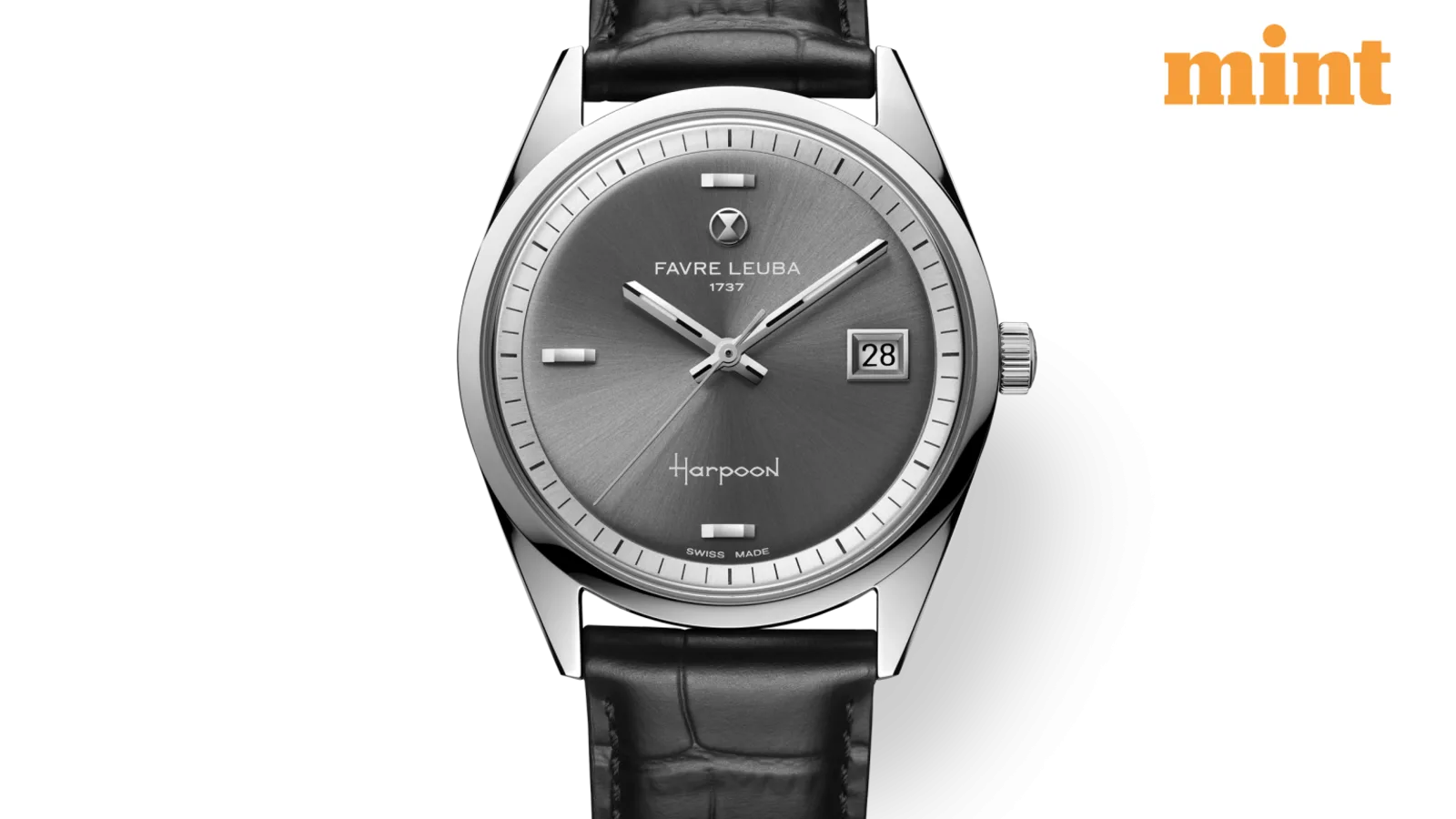
This shift in aesthetic preference is evident across various brands and price points. TAG Heuer, actively expanding its retail presence in India, including a new boutique in Noida, reports strong traction for its Carrera line within the 38-42 mm segment. While premium pieces such as the Monaco and special editions exceeding ₹8 lakh continue to attract dedicated collectors, the core business thrives within the ₹3-5 lakh bracket, indicating a healthy appetite for well-crafted, mid-luxury offerings. Other notable brands are aligning their product strategies accordingly. Tissot has introduced a 38 mm Gentleman collection tailored for the Indian market, while Baume & Mercier has enriched its Riviera line with elegant 39-mm models. Favre Leuba, showcased at Watches & Wonders Geneva, is championing compact, heritage-inspired designs. Blancpain’s ‘Golden Hour’ collection, with prices ranging from CHF 11,600 to CHF 24,400, features select models with refined gold cases and diamond-set bezels, epitomizing this blend of luxury and understated design.
These evolving watch preferences are intricately linked to wider shifts in global fashion and lifestyle trends. Pratiek Kapoor, managing director of Kapoor Watch Co., observes, "People want to be more discreet, it’s linked to how minimalist fashion has become." This contemporary interpretation of luxury eschews ostentation in favor of refined taste and personal expression. Complementing this, color preferences have also narrowed, with classic black, deep blue, and verdant green emerging as dominant and timeless shades across various collections, further reinforcing the move towards enduring elegance.
A younger demographic is playing a crucial role in accelerating this market evolution. Industry executives report that the core customer base now spans individuals between 24 and 45 years, with Generation Z and younger millennials engaging with the luxury watch category earlier than previous generations. This cohort, characterized by digital savviness and a global outlook, often conducts extensive research before making purchases, prioritizing authenticity and craftsmanship. "There is a big influx of younger consumers. They want to spend and experience more," Kapoor notes, highlighting not only increased spending power but also a desire for meaningful engagement with luxury goods. This expanding demand is also radiating beyond India’s major metropolitan centers, reaching into smaller cities and towns, signaling a broad-based democratization of luxury consumption.
The retail sector underscores the exceptional performance of the luxury watch category. Mall operators identify it as a consistent outperformer within the broader luxury retail landscape. Pushpa Bector, senior executive director and business head for DLF Retail, affirms, "The luxury watch category has been one of the standout performers, with high-quality footfall translating into meaningful conversions." Despite global economic uncertainties, Bector adds, "At the macro level, sentiment remains highly resilient. We have not seen any material impact on buying behaviour or ticket sizes," indicating a robust and unwavering demand within India.
While the Indian market exhibits remarkable resilience, some caution that prolonged geopolitical instability or inflationary pressures could eventually temper discretionary spending. However, India’s trajectory currently stands in stark contrast to global trends. In 2025, key markets such as China and Hong Kong experienced significant declines in Swiss watch imports due to various economic and political headwinds. India, in stark relief, emerged as a rare bright spot, registering double-digit growth. This exceptional performance has continued into 2026, with a substantial 26% growth in imports, according to Federation data, solidifying India’s position as a crucial growth engine for the global luxury watch industry. This resilience is attributed to a strong domestic economy, a burgeoning aspirational class, and a consumer base less reliant on tourism for luxury purchases compared to some other Asian markets.
Ultimately, the transformation of India’s luxury watch market transcends mere economic expansion or increasing affluence. It represents a profound cultural shift in how luxury is perceived and consumed. The discerning Indian buyer is no longer solely driven by the desire for ostentation but by a sophisticated appreciation for quiet designs, harmonious proportions, and, most importantly, the enduring substance and narrative that lie beneath the surface of a finely crafted timepiece. This evolving preference for "quiet luxury" signifies India’s arrival as a mature and influential force in the global horological landscape.