The global discourse surrounding artificial intelligence is increasingly dominated by concerns about job displacement, as numerous corporations cite AI-driven efficiencies as justification for workforce restructuring. While the potential for automation to reshape employment landscapes is undeniable, a more profound and arguably more significant transformation lies not in what AI can replace, but in its burgeoning capacity – and current limitations – to truly comprehend the human element underpinning every task and interaction. From the vantage point of the translation and AI sectors, this pursuit of understanding represents the true cutting edge of artificial intelligence.
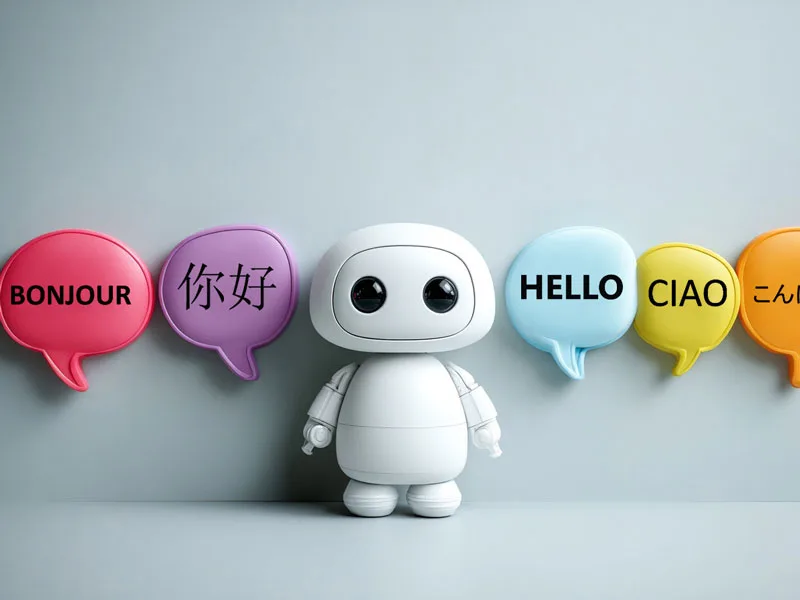
Language, a cornerstone of human evolution and societal development, has long been the focus of efforts to bridge cultural divides. My own journey, founding Translated in 1999, was driven by the conviction that enabling people to translate their words, and by extension their cultures, across the globe fosters universal understanding and connection. AI is now acting as a powerful catalyst in this endeavor, democratizing the ability for individuals and organizations to communicate and be understood across linguistic barriers. The translation industry, therefore, offers a unique perspective on the broader implications of AI’s development.
The initial widespread adoption of AI was intrinsically linked to language, notably through the emergence of sophisticated large language models (LLMs). These models, capable of generating coherent responses and tailoring output to user preferences, are the direct result of decades of dedicated research in machine translation and the fundamental study of language itself. While AI has significantly advanced the speed and accuracy of translation, a crucial insight for experts remains: it cannot, at its current stage, fully replicate human sensitivity. Instead, AI excels at automating repetitive and laborious tasks, thereby liberating skilled professionals to concentrate on the more intricate and nuanced aspects of their work. This includes, crucially, the elements of translation that are deeply imbued with emotion, cultural context, and the ineffable qualities that define human experience.
The prevailing conversation around AI within many business circles continues to center on productivity enhancements and the specter of job losses. Questions such as "Which jobs will become obsolete?" and "How many will endure?" are frequently posed, and rightly so. Providing clear answers is essential for individuals contemplating their career paths and for future generations seeking to navigate the evolving world of work. However, perhaps more pertinent are the questions: "What are humans uniquely adept at?" and "How can AI empower us to amplify these inherent human strengths?"
For AI to truly function as a collaborative partner alongside the human workforce, its next evolutionary leap must be towards a deeper, more intuitive understanding of human beings. To this end, Translated is spearheading a pioneering initiative known as DVPS (Diversibus Viis Plurima Solvo). This ambitious project, bolstered by a substantial €29 million in European seed funding and involving 20 partners across nine countries, is specifically designed to address this challenge. DVPS aims to transcend the capabilities of current language models, which primarily process historical text and image data. The project is focused on developing models that can integrate and interpret vision, audio, and sensor inputs, enabling real-time interaction with the physical world and fostering a more profound contextual awareness.
The rapid advancement of AI necessitates careful consideration and robust global dialogue to ensure responsible development and deployment. Recently, I had the privilege of participating in the World Meeting on Human Fraternity in Rome. This distinguished gathering brought together leading AI scientists, including Nobel Laureate Geoffrey Hinton, the highly cited Yoshua Bengio, and prominent author and professor Stuart Russell, to share their insights with His Holiness Pope Francis on the social, cultural, and ethical dimensions of artificial intelligence. The consensus was unequivocal: AI must be a force for human betterment, not a detriment to human dignity, and its development must be guided by principles of dialogue and care. It was unsurprising that this esteemed group identified "scientific discovery" and "global human understanding" as the two most significant potential positive impacts of AI.
For leaders and organizations navigating the current technological landscape, a fundamental shift in perspective is imperative. The critical question is no longer about identifying tasks that AI can perform, but rather about discerning how AI can be leveraged to elevate human potential. The companies poised for greatest success will be those that prioritize investment in understanding and context over mere efficiency gains. True leadership in the age of AI involves embedding empathy and ethical considerations at the very heart of innovation, ensuring that technology serves to amplify our most human attributes: our capacity for care, our interpretive abilities, and our innate drive to connect.
The coming decade will not be characterized solely by a reduction in job numbers or an increase in machine speed. Instead, it will be defined by machines that possess a nuanced understanding of context, emotion, and human values, and by humans who harness this understanding to excel in domains uniquely suited to our species. This includes fostering relationships, driving cultural innovation, and leading with purpose and meaning.
The true maturation of AI will be realized when machines grasp that a sentence is more than a collection of words; it is an expression of human intent. When they can discern not only the literal meaning but also the tone, the subtle cues of gesture, and the intricate tapestry of cultural context, we will transition from an era of automation to one of augmentation. This is the pivotal moment when AI truly becomes an indispensable partner in human progress. The ultimate measure of AI’s advancement will not be the number of jobs it renders obsolete, but the extent to which it enables the emergence of new forms of human value and flourishing.