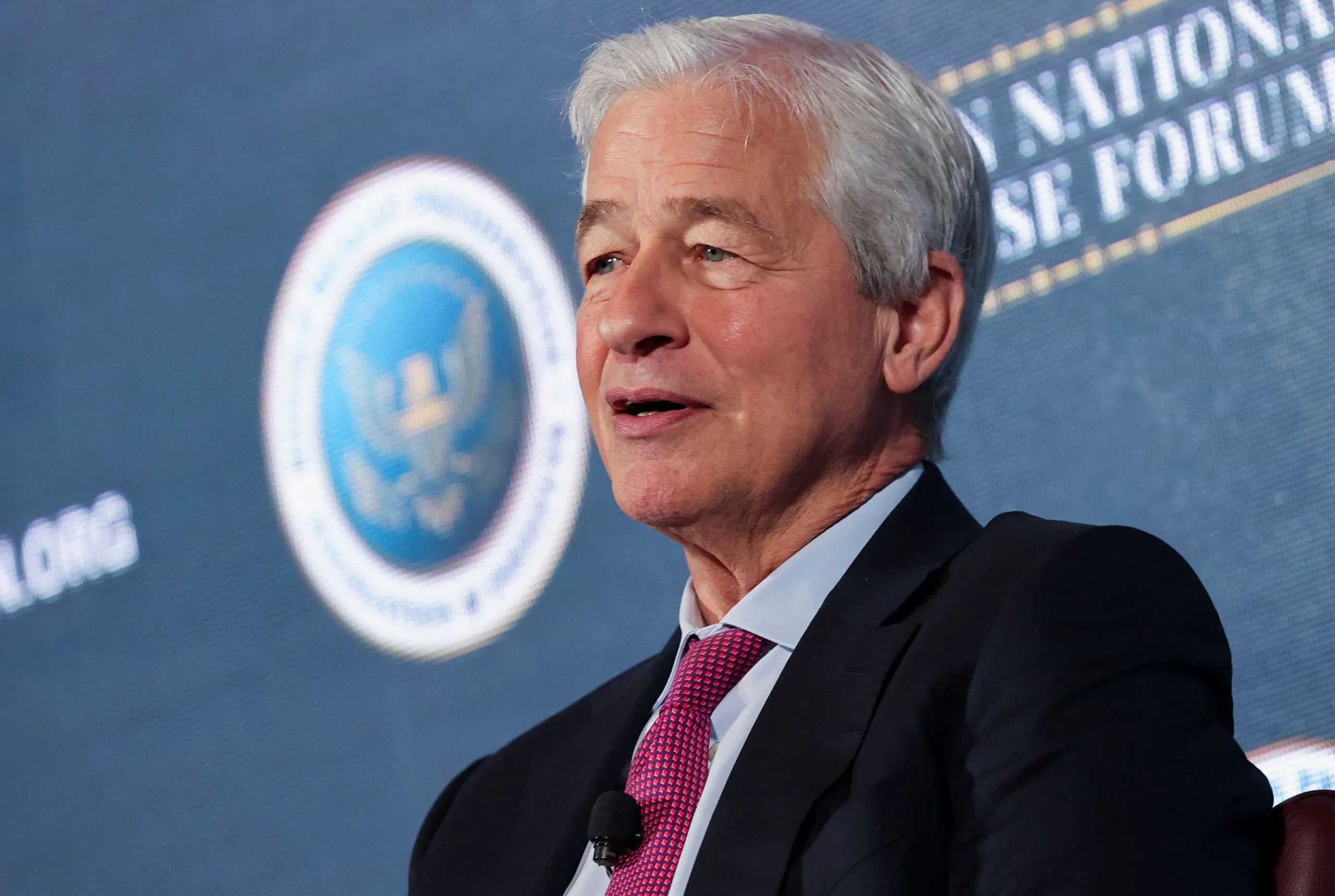
In his latest annual dispatch to shareholders, JPMorgan Chase Chairman and CEO Jamie Dimon has issued a clarion call for a fundamental recommitment to American institutional values, framing the current global landscape as one of the most complex and potentially treacherous in modern history. As the leader of the world’s largest bank by market capitalization, Dimon’s annual letters have evolved into a highly anticipated State of the Union for global finance, blending granular corporate performance data with sweeping geopolitical and macroeconomic critiques. This year, Dimon’s prose is marked by a sense of historical urgency, coinciding with the approaching 250th anniversary of the United States—a milestone he views as a pivotal moment for national rededication to the principles of liberty, opportunity, and global leadership.
The core of Dimon’s thesis rests on a "long list" of systemic challenges that threaten to destabilize the post-Cold War order. At the summit of these concerns are the intensifying geopolitical frictions that have moved from the periphery of market analysis to the very center of risk management. Dimon specifically highlighted the ongoing devastation in Ukraine, the escalating hostilities involving Iran and its proxies in the Middle East, and the deepening, multi-faceted tensions with China. He characterized the current environment as the "realm of uncertainty," suggesting that the resolution of these conflicts will likely dictate the architecture of the future global economic order for decades to come.
This geopolitical instability is not merely a diplomatic concern but a direct driver of economic friction. Dimon noted that the era of unfettered globalization is being superseded by a "realignment of economic relations," spurred largely by shifts in U.S. trade policy. With the resurgence of tariffs and protectionist measures as central pillars of domestic policy, many nations are now re-evaluating their supply chains and trade alliances. While Dimon acknowledged that some level of restructuring is essential for national security and supply chain resiliency, he warned that the long-term consequences of this fragmentation remain opaque and potentially inflationary.
The economic outlook is further complicated by what Dimon perceives as a disconnect between regulatory ambitions and market realities. A significant portion of his letter was dedicated to a scathing critique of the "Basel 3 Endgame" and the revised capital surcharges for Global Systemically Important Banks (GSIBs). Although U.S. regulators recently signaled a willingness to moderate the capital increases from their initial 2023 proposals, Dimon remains unconvinced. He argued that the current framework remains "nonsensical," forcing major institutions to hold significantly more capital against loans to U.S. consumers and businesses than smaller, non-GSIB competitors.
According to Dimon, these aggregate surcharges, which hover around 5%, could result in large banks being required to hold 50% more capital for the same set of loans compared to their smaller peers. He did not mince words in his assessment, labeling the disparity "un-American" and arguing that it penalizes the very institutions capable of providing the scale of credit necessary for national growth. From a broader economic perspective, Dimon contends that while post-2008 regulations achieved certain safety goals, the resulting "fragmented, slow-moving system" of overlapping rules has ultimately weakened the financial system’s ability to foster productive lending and absorb shocks.
Turning his attention to the technological horizon, Dimon addressed the meteoric rise of artificial intelligence (AI). Unlike many who view the current AI craze with skepticism, the JPMorgan chief executive asserted that the investment in AI is not a speculative bubble. Instead, he likened its potential impact to that of the steam engine or the internet, describing it as a transformational force that will deliver tangible benefits across the global economy. JPMorgan has already positioned itself at the vanguard of this shift, integrating "agentic AI" to streamline operations and enhance decision-making.

However, Dimon’s optimism was tempered by a recognition of the profound societal shifts AI will trigger. He revealed that the bank is already engaged in "huge redeployment plans" for its workforce, acknowledging that the technology will inevitably reshape the nature of labor. Beyond the immediate operational efficiencies, Dimon warned of "second- and third-order effects" that are currently unknown but could deeply impact social stability. For investors, the challenge remains picking the ultimate winners in an industry where the barrier to entry is high and the pace of evolution is unprecedented.
A newer area of concern for Dimon is the rapid expansion and recent volatility within private markets, particularly the private credit sector. As traditional bank lending has been constrained by the aforementioned regulatory pressures, private credit funds have surged to fill the void, often lending to high-growth sectors like software. However, Dimon pointed to a looming "upheaval" in these markets, exacerbated by a lack of transparency and a reliance on internal valuation "marks" rather than market-clearing prices.
This lack of rigorous mark-to-market accounting creates a "hidden" risk: if the economic environment deteriorates, investors may rush to redeem their holdings based on perceived rather than actual losses, potentially triggering a liquidity crunch. Dimon anticipates that insurance regulators, who are significant backers of these funds, will eventually demand more transparent ratings and higher capital buffers, a move that could significantly alter the economics of the private credit industry.
The CEO also touched upon the persistent threat of inflation and the limitations of the Federal Reserve’s tools. While the broader economy has shown resilience, Dimon suggested that underlying pressures—including massive government deficit spending, the costs of the green energy transition, and the militarization of global trade—could keep inflation higher for longer than market participants currently anticipate. This creates a precarious environment for the Federal Reserve’s stress tests, which Dimon criticized as being too rigid and failing to account for the dynamic ways in which banks and markets react to real-world crises.
Throughout the document, a recurring theme is the necessity of American leadership. Dimon argued that in a world defined by "terrible ongoing war and violence," the United States must serve as the anchor of the free world. This leadership, in his view, is inextricably linked to economic strength, which is currently being stifled by a combination of geopolitical risk and domestic regulatory friction. He called for a more collaborative relationship between the public and private sectors, suggesting that the "poorly handled" processes at agencies like the Federal Deposit Insurance Corp (FDIC) have only served to erode trust in the financial system.
In conclusion, Dimon’s annual letter serves as both a report card for JPMorgan Chase and a cautionary manifesto for the global elite. He paints a picture of a bank—and a nation—at a crossroads. On one path lies the potential for an AI-driven era of unprecedented productivity and a renewed commitment to democratic capitalism. On the other lies a fragmented global economy, bogged down by excessive regulation, geopolitical conflict, and the hidden risks of opaque private markets.
As JPMorgan continues to navigate these headwinds, Dimon’s message is clear: the bank will not "put its head in the sand." Whether it is through the aggressive deployment of AI, the vocal opposition to "un-American" capital requirements, or the strategic management of geopolitical exposure, the firm is preparing for a world where the old rules of engagement no longer apply. For the broader economy, Dimon’s insights suggest that while the challenges are significant, the fundamental strengths of the American system remain the best hope for navigating the "realm of uncertainty" that lies ahead. The coming years, leading up to the nation’s 250th anniversary, will likely determine whether those strengths are harnessed or squandered in the face of global transformation.