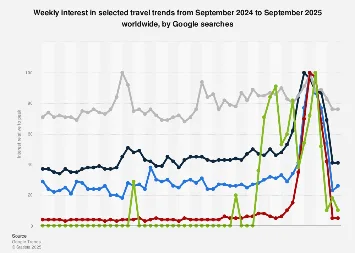
As the world navigates an ever-evolving economic landscape and embraces new work paradigms, the desire to explore remains a potent force. A deep dive into global search trends on Google, particularly those anticipated to shape the travel industry in 2025, reveals a fascinating tapestry of emerging preferences, technological influences, and a sustained hunger for unique experiences. While precise figures often require proprietary access, the overarching patterns of search intent provide invaluable insights for industry stakeholders, from airlines and hotels to tour operators and destination marketers. These digital signals, amplified by the sheer volume of information processed by Google, act as an early-warning system for seismic shifts in consumer behavior, offering a preview of where travelers will be directing their attention and their spending in the coming year.
The concept of the "digital nomad" has moved from a niche subculture to a significant demographic influencing travel patterns. This trend, reflected in increased search queries around remote work-friendly destinations, co-living spaces, and long-stay accommodations, is projected to continue its upward trajectory. Travelers are no longer bound by traditional vacation schedules, with many seeking opportunities to blend work and leisure for extended periods. This translates into a demand for destinations offering robust internet infrastructure, affordable living costs, and a vibrant local culture that can sustain longer visits. The rise of co-working spaces in previously less-trafficked locales, alongside hotels adapting their offerings to cater to remote workers with dedicated workspaces and high-speed connectivity, underscores this fundamental change. Data from various travel analytics firms consistently show a growing segment of travelers extending their trips, a phenomenon directly linked to the democratization of remote work. For instance, some reports indicate a 20-30% increase in booking durations for travelers identifying as remote workers compared to their leisure-only counterparts.
Beyond the digital nomad, broader shifts in traveler priorities are becoming evident. Sustainability and responsible tourism are no longer fringe concerns but increasingly mainstream expectations. Searches for "eco-lodges," "sustainable travel," "carbon-neutral flights," and "ethical tourism" are on a steady ascent globally. This indicates a growing awareness among consumers about the environmental and social impact of their travel choices. Destinations and businesses that can demonstrably showcase their commitment to these principles are likely to gain a competitive edge. This trend is not merely about altruism; it’s also about seeking authentic experiences that connect travelers with local communities and natural environments in a respectful and preserving manner. The economic implications are substantial, as destinations prioritizing conservation and community engagement often foster a more resilient and authentic tourism product, attracting a discerning clientele willing to invest in responsible travel.
The influence of technology continues to reshape the travel journey, from inspiration and planning to booking and on-the-ground experiences. Artificial intelligence (AI) is emerging as a powerful tool, with an increasing number of searches related to AI-powered travel recommendations, personalized itineraries, and virtual reality (VR) travel previews. Travelers are looking for seamless, intuitive planning processes that can cater to their specific preferences and constraints. This includes utilizing AI chatbots for instant customer service, personalized booking engines that learn from past behavior, and even AI-generated destination guides. The integration of augmented reality (AR) for navigation and immersive local experiences is also on the horizon, promising to enhance the on-site discovery phase of travel. Market research in the AI-powered travel sector predicts significant growth, with projections suggesting the market could reach tens of billions of dollars globally within the next five years, driven by advancements in natural language processing and machine learning.
Furthermore, the desire for unique and immersive experiences remains paramount. Searches for "adventure travel," "cultural immersion," "off-the-beaten-path destinations," and "wellness retreats" are consistently strong. Travelers are increasingly seeking to move beyond the conventional tourist trail, yearning for authentic encounters with local cultures, challenging physical activities, and opportunities for personal rejuvenation. This includes a surge in interest in niche activities such as culinary tourism, astrotourism, and historical exploration. The economic impact of this trend is a diversification of tourism offerings, pushing destinations to develop and promote specialized experiences that cater to these specific interests, often leading to higher spending per visitor. The "experiential economy" is booming, and travel is a primary beneficiary, with consumers willing to pay a premium for memorable and transformative journeys.
Geographically, while traditional hubs remain popular, emerging destinations are capturing significant attention. Searches for countries and regions offering a blend of affordability, unique cultural heritage, and natural beauty are on the rise. Southeast Asia, parts of Eastern Europe, and certain Latin American nations are frequently appearing in trending search data. This diversification of popular destinations suggests a more globalized and less concentrated travel market, where accessibility and value for money are key drivers. The economic implications for these emerging destinations are profound, offering opportunities for economic development, job creation, and infrastructure improvement, provided they can manage the influx of visitors sustainably.
The COVID-19 pandemic undoubtedly left an indelible mark on travel habits, accelerating certain trends and introducing new considerations. The emphasis on health and safety protocols continues to influence booking decisions, with travelers actively seeking information about sanitation standards and travel insurance. However, the pent-up demand for travel, coupled with the increasing ease of remote work, has created a potent cocktail for the industry. The ability of Google search trends to aggregate and analyze these vast quantities of data provides an unparalleled, real-time pulse on global wanderlust. For businesses operating within the travel ecosystem, understanding these digital whispers is not just advantageous; it’s increasingly essential for strategic planning, product development, and ensuring relevance in a dynamic and competitive marketplace. The year 2025 promises to be a year of continued adaptation and innovation, driven by a traveler who is more informed, more conscious, and more eager than ever to explore the world.