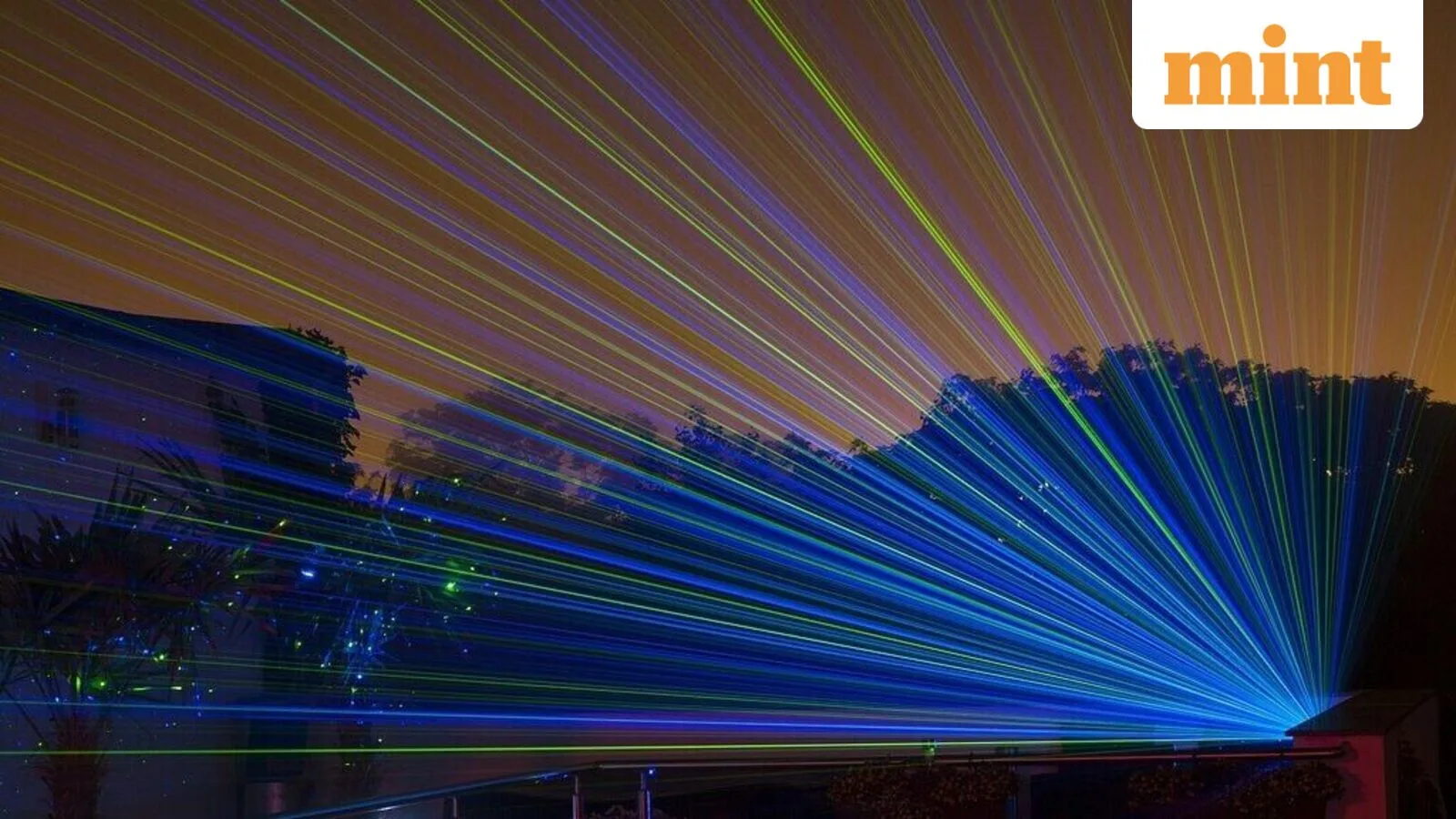
A recent incident involving a Cathay Pacific flight making its final approach into New Delhi’s Indira Gandhi International Airport earlier this year serves as a stark reminder of a growing menace: high-intensity laser beams targeting aircraft. Pilots of flight CX695, inbound from Hong Kong, reported being temporarily incapacitated by intense glare, impeding their ability to discern critical cockpit instrument readings during a crucial phase of flight. This alarming episode, subsequently documented in a safety report filed with the Directorate General of Civil Aviation (DGCA) and later debated in Parliament, underscores a concerning upward trend in laser strike incidents that directly threaten India’s burgeoning aviation sector and its ambitious growth trajectory.
The data presented to Parliament reveals a sharp escalation in reported laser-related disruptions across Indian airspace. From a recorded 122 incidents in 2023, the figures surged dramatically to 528 in 2024, before settling slightly to 502 cases across 22 airports in 2025. This nearly four-fold increase over two years highlights a systemic vulnerability within the country’s aviation safety framework. Delhi, India’s busiest aviation hub, consistently accounts for a significant proportion of these incidents, with reports climbing from 110 in 2023 to 144 in 2024 and reaching 147 in 2025, representing almost 30% of the national total. Mumbai, another critical gateway, which registered no such occurrences in 2023, subsequently reported 17 incidents in 2024 and a striking 33 in 2025. While Chennai and Kolkata saw marginal declines between 2024 and 2025—from 67 to 54 and 72 to 44 respectively—it is noteworthy that both airports had previously recorded zero incidents just two years prior. The issue is not confined to metropolitan giants; smaller but rapidly expanding regional airports such as Ahmedabad, Bhopal, and Kochi have also witnessed alarming spikes, with incidents escalating by 50% to over 150% between 2024 and 2025, reflecting a widespread and insidious problem.
The immediate danger posed by these laser strikes is unequivocal. During critical flight phases, particularly take-off and landing, pilots require unimpeded vision and complete focus. Laser exposure can induce temporary flash blindness, debilitating glare, and persistent afterimages, severely impairing a pilot’s ability to read crucial cockpit displays, maintain visual contact with runway approach lights, or monitor external conditions. Even momentary impairment can lead to spatial disorientation, delayed decision-making, or operational errors, drastically increasing the risk of an aviation accident. Beyond the immediate physical effects, there is a significant psychological toll on flight crews, who operate under immense pressure and for whom such deliberate acts of endangerment erode confidence and heighten stress levels. Aviation safety experts, like Sanjay Lazar of Avialaz Consulting, emphasize that existing solutions are insufficient without a more robust enforcement mechanism, echoing sentiments that the government is struggling to match the scale of the problem.

India’s aviation safety norms stipulate designated laser-restricted zones extending approximately 18.5 kilometres from airports, within which the display of laser lights is strictly prohibited. Rule 66 of the Aircraft Rules, 1937, explicitly restricts any lights that may dazzle or distract pilots or interfere with aircraft operations. Furthermore, the DGCA has issued Civil Aviation Requirements (CARs) outlining specific measures to protect aircraft from hazardous laser emissions, including the establishment of multi-layered protected zones. Junior Civil Aviation Minister Murlidhar Mohol affirmed these regulations in the Lok Sabha, citing the legislative framework. However, the efficacy of these regulations hinges on enforcement, which largely falls to local police forces. This decentralised approach often results in weak deterrence and inconsistent prosecution, allowing repeat violations to persist. While India’s Bharatiya Nyaya Sanhita, specifically Section 125, provides for penalties against acts endangering human life or safety—a broad criminal provision that includes laser dazzling—the absence of a dedicated aviation offence or specialized enforcement units means that these incidents often get lost in the broader criminal justice system, failing to deliver the swift and decisive action needed to curb the threat.
The economic ramifications of this escalating issue are substantial, threatening to impede India’s ambitious aviation growth plans. The nation is projected to become the world’s third-largest aviation market by 2026, with significant investments planned in new airports and fleet expansion under initiatives like the UDAN scheme aimed at enhancing regional connectivity. Laser strikes introduce direct and indirect costs that can undermine these goals. Direct costs include flight delays and diversions, leading to increased fuel consumption, operational inefficiencies for airlines, and passenger inconvenience. Airlines may face higher maintenance checks for aircraft and potentially increased insurance premiums due to perceived heightened risk. Pilot medical evaluations and potential time off duty also contribute to operational expenses. More critically, the indirect costs are insidious: reputational damage to airports and airlines, a potential decline in passenger confidence, and a chilling effect on foreign investment in India’s aviation infrastructure. For a country striving to establish itself as a global aviation hub, a perceived vulnerability in airspace security can deter both business and leisure travel, impacting tourism revenues and broader economic growth.
Globally, aviation regulators view laser strikes as a severe safety threat, implementing rigorous measures and public awareness campaigns. The United States Federal Aviation Administration (FAA), for instance, recorded 10,994 laser strike incidents reported by pilots in 2025, a 14% decrease from the previous year, demonstrating the impact of sustained enforcement and public education efforts. Since it began tracking cases in 2010, the FAA has documented 337 pilot injuries linked to laser exposure. Other nations, including the UK and Australia, have invested in sophisticated laser detection systems around major airports and have implemented stringent penalties, including imprisonment, for individuals caught engaging in such dangerous acts. International Civil Aviation Organization (ICAO) guidelines advocate for layered protection zones and robust legal frameworks, which India has adopted on paper, but the implementation gap remains a critical challenge. The global experience suggests that a multi-pronged strategy encompassing public education, strict enforcement, and technological solutions is essential for effective mitigation.
Moving forward, addressing this escalating threat requires a concerted, multi-agency effort. Enhanced coordination between the DGCA, airport authorities, local law enforcement, and the Ministry of Civil Aviation is paramount to ensure swift investigation and prosecution of offenders. Implementing public awareness campaigns, similar to those in the US and UK, can educate citizens about the severe dangers and legal consequences of pointing lasers at aircraft, transforming public perception from a harmless prank to a serious criminal offense. Investment in advanced surveillance technologies, such as laser detection and triangulation systems around airports, could help identify the source of these beams in real-time, facilitating immediate apprehension. Furthermore, strengthening the legal framework to include dedicated, stringent aviation-specific penalties, rather than relying solely on broader criminal provisions, could serve as a more effective deterrent. Equipping pilots with anti-laser protective eyewear and enhancing their training protocols for laser exposure incidents are also vital interim measures. Without decisive action to bolster enforcement and foster public responsibility, the shadow of laser strikes will continue to loom over India’s ambitious aviation landscape, jeopardising both safety and economic progress.