In the gilded halls of the Great Hall of the People and the manicured grounds of the Diaoyutai State Guesthouse, a new narrative is being meticulously crafted by China’s top leadership. Confronted with a complex mosaic of domestic economic challenges and a cooling of international sentiment, Beijing has launched a sophisticated diplomatic and economic campaign aimed at the world’s most powerful corporate leaders. The message is singular and resolute: despite the headlines of a slowing economy and geopolitical friction, China remains the world’s most reliable "harbour of stability" and an indispensable engine for global growth.
This high-stakes charm offensive comes at a critical juncture for the world’s second-largest economy. For decades, the social contract between the Chinese Communist Party and the global business community was built on the promise of hyper-growth and unfettered market expansion. However, as the post-pandemic recovery remains uneven and structural headwinds intensify, the Chinese leadership is pivoting its rhetoric. The focus has shifted from raw GDP expansion to what President Xi Jinping calls "high-quality development," a term intended to signal a transition toward a more sustainable, tech-driven, and stable economic model.
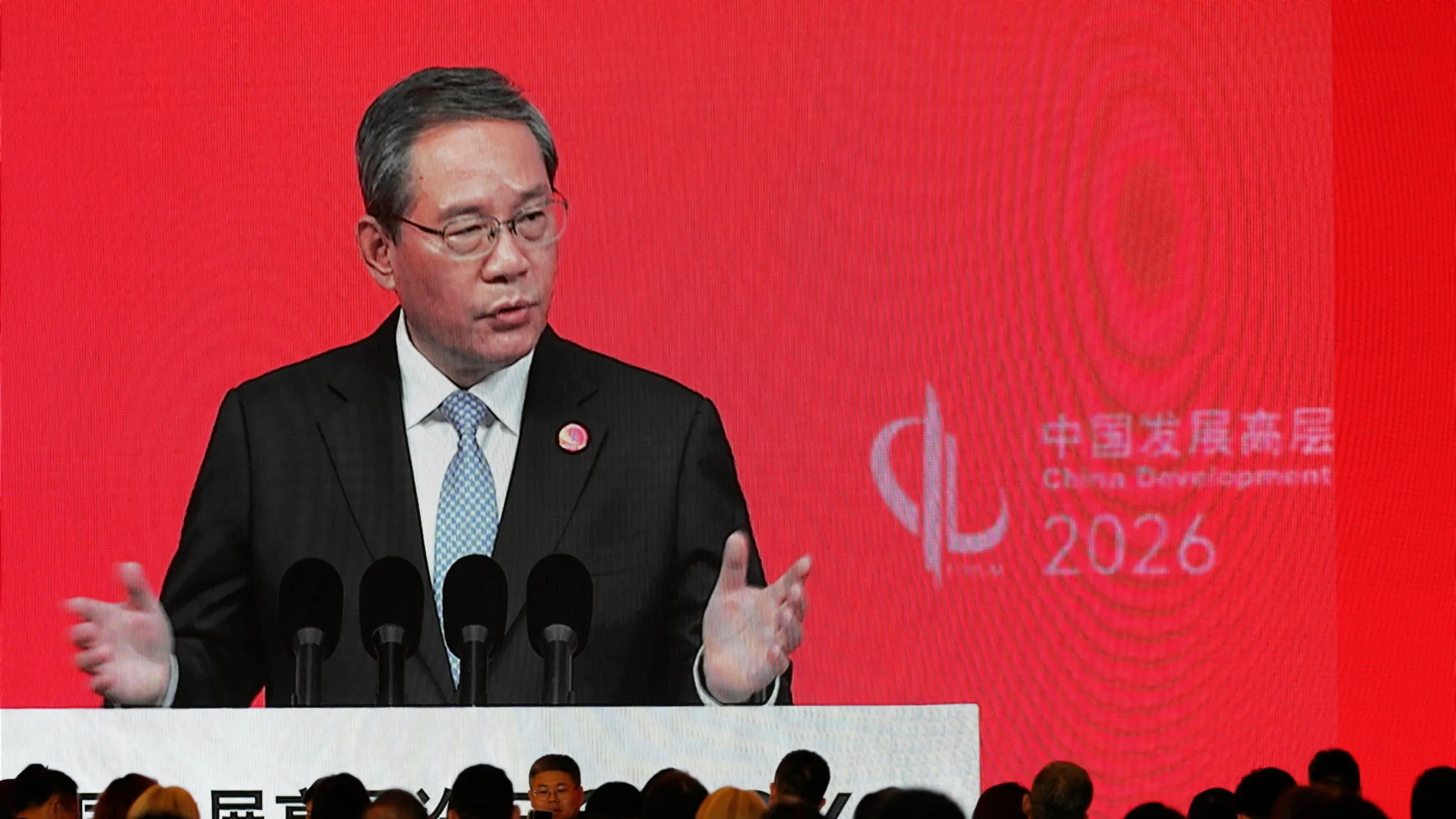
Central to this effort is the attempt to decouple the corporate world’s decision-making from the increasingly hawkish stances of Western governments. By hosting a series of high-level summits, including the China Development Forum and direct audiences with the Politburo, Beijing is seeking to bypass the "de-risking" narratives prevalent in Washington and Brussels. The strategy is to appeal directly to the fiduciary responsibilities of CEOs, highlighting China’s massive middle class, its unparalleled manufacturing ecosystem, and its newfound commitment to regulatory predictability.
The urgency of this rebranding effort is underscored by recent capital flow data. For the first time in decades, China has seen a significant cooling in Foreign Direct Investment (FDI). According to data from the State Administration of Foreign Exchange, China’s direct investment liabilities—a broad measure of FDI—dipped into negative territory in certain quarters of the past year, reflecting a cautiousness among global investors not seen since the late 1990s. This retreat is driven by a combination of factors: higher interest rates in the United States, which have narrowed the yield advantage of Chinese assets, and a heightened perception of regulatory risk following the multi-year crackdown on the domestic technology and education sectors.
To counter this, Chinese officials are emphasizing a "rule-of-law" environment and promising to further open sectors that were previously restricted. Premier Li Qiang has been vocal in assuring international executives that China will treat foreign companies as "equals" to domestic firms, particularly in government procurement and standard-setting processes. For many CEOs, these promises are a welcome change in tone, yet they are being weighed against the reality of a broader national security framework that has seen the expansion of anti-espionage laws and increased scrutiny of cross-border data transfers.
The "harbour of stability" narrative also seeks to contrast China’s centralized governance with the perceived volatility of Western democracies. In meetings with leaders from the pharmaceutical, financial, and technology sectors, Chinese officials often point to the country’s consistent policy direction and its ability to mobilize resources for long-term strategic goals, such as the green energy transition. While the West grapples with inflationary pressures and political polarization, Beijing is positioning its stability as a competitive advantage for long-term capital projects that require decades of planning.
However, the domestic landscape provides a sobering backdrop to these diplomatic overtures. The shadow of the property sector crisis continues to loom large over the economy. Real estate, which once accounted for nearly a quarter of China’s GDP, remains in a state of painful deleveraging. The defaults of giants like Evergrande and the ongoing struggles of Country Garden have not only dented domestic consumer confidence but have also raised questions about the stability of the broader financial system. Beijing’s refusal to launch a massive, "bazooka-style" stimulus—opting instead for targeted support—is a testament to its commitment to long-term stability over short-term fixes, but it also tests the patience of global markets looking for a quick rebound.
Furthermore, the demographic shift in China presents a structural challenge that no amount of rhetoric can easily mask. With a shrinking workforce and a rapidly aging population, the "demographic dividend" that powered China’s rise has largely evaporated. To maintain its status as a global hub, China is doubling down on "new productive forces"—a buzzword for AI, green energy, and advanced manufacturing. By moving up the value chain, Beijing hopes to offset labor shortages with high-tech productivity. For global CEOs in the semiconductor and EV sectors, China is no longer just a factory floor; it is a critical laboratory and a primary market.
The geopolitical dimension remains the most significant hurdle to China’s stability narrative. The "China Plus One" strategy, where companies diversify their supply chains into countries like Vietnam, India, or Mexico, has gained significant momentum. This trend is driven by a desire to mitigate the risks of potential trade sanctions or disruptions in the Taiwan Strait. In response, Beijing is attempting to make its market "un-ignorable." By integrating more deeply into the global supply chain for critical minerals and renewable energy components, China is ensuring that any attempt at total "decoupling" would be prohibitively expensive for the West.
Expert analysis suggests that the success of China’s charm offensive will depend on the gap between policy pronouncements and on-the-ground implementation. While the rhetoric of "stability" is appealing, international businesses are looking for concrete signs of market liberalization. This includes clearer guidelines on data security, the protection of intellectual property, and a reduction in the "blind boxes" of regulatory enforcement. The recent approval of several foreign financial institutions to operate wholly-owned units in China is seen as a positive step, but the broader sentiment remains one of "cautious engagement."
Global comparisons also play a role in this economic calculus. While India offers a younger demographic and rapid growth, it lacks China’s sophisticated infrastructure and deep-tier supply chain integration. While the United States offers high returns and innovation, it comes with political volatility and rising protectionism. China is betting that, in a world of fragmented growth and high uncertainty, its promise of a massive, predictable, and increasingly sophisticated market will eventually outweigh the geopolitical anxieties of the present moment.
As the 2024 economic calendar unfolds, the world will be watching closely to see if Beijing’s "harbour of stability" is a genuine safe haven or a carefully constructed facade. The 5% GDP growth target set by the government is ambitious, given the current headwinds, but it signals a determination to maintain a floor under the economy. For the global CEOs who have spent decades building their presence in the Middle Kingdom, the choice is no longer about whether to be in China, but how to navigate a relationship that has become fundamentally more complex.
In conclusion, the current charm offensive represents a sophisticated attempt by Beijing to recalibrate its relationship with global capital. By emphasizing stability, high-quality development, and a commitment to the global order, China is attempting to secure the foreign investment and expertise it needs to navigate its next phase of development. Whether this narrative can overcome the gravity of domestic structural issues and the friction of international politics remains the defining question for the global economy in the decade ahead. The harbour has been offered; now the world’s investors must decide if the waters are truly calm enough to dock.