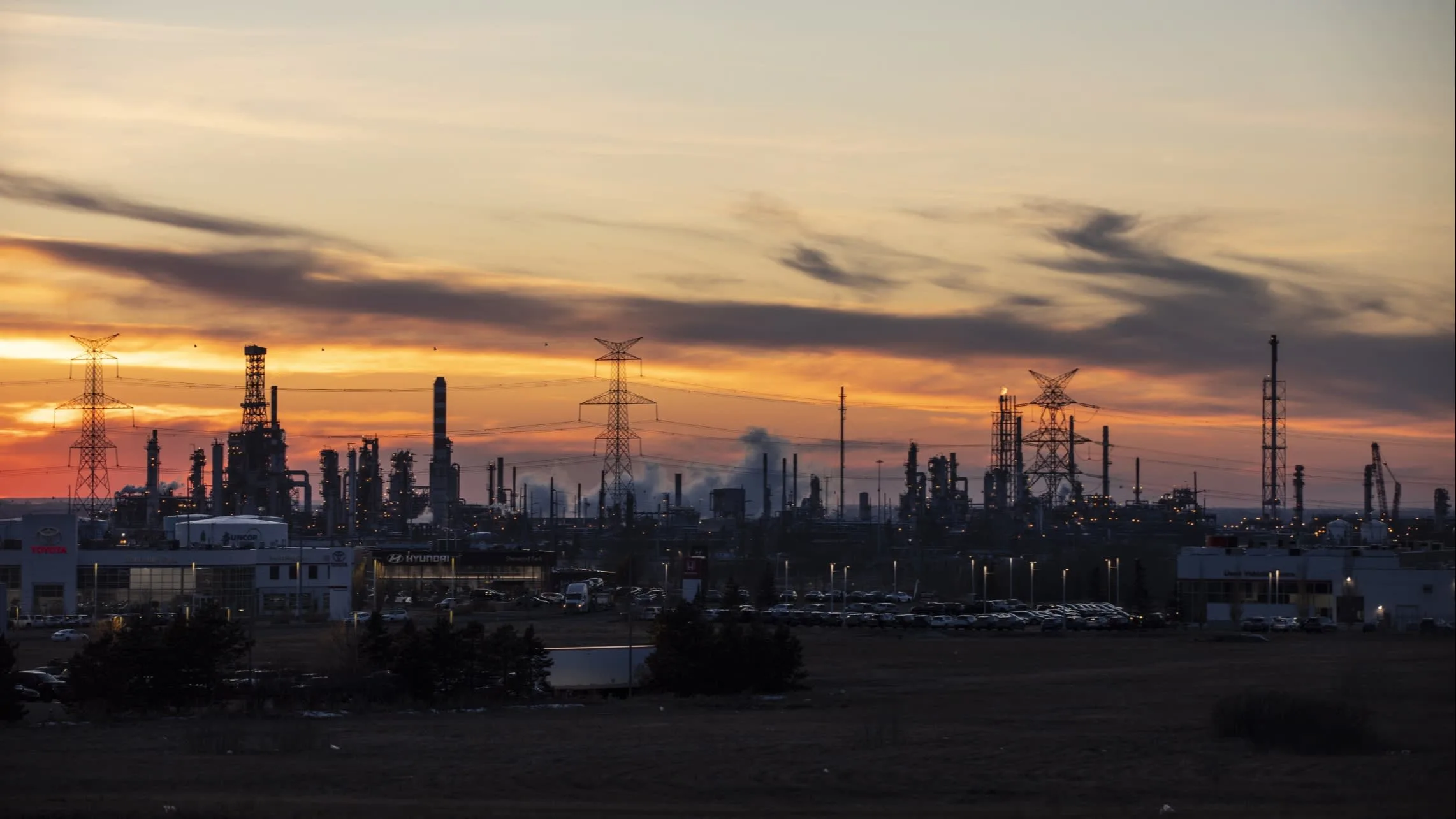
The global energy landscape is currently navigating a period of profound uncertainty as the specter of a broader conflict in the Middle East threatens to disrupt traditional supply chains. At the center of this volatility is the potential for a direct or protracted confrontation involving Iran, a scenario that energy analysts and economists suggest could inadvertently create a massive economic windfall for Canadian oil producers. Recent modeling suggests that a significant disruption to Persian Gulf supplies could redirect global capital and demand toward North America, potentially injecting as much as C$90 billion into the Canadian energy sector over the next several years. This projected surge in revenue comes at a pivotal moment for Canada, as the nation’s infrastructure capabilities have finally begun to align with its status as a global energy heavyweight.
For decades, the Canadian oil sands were often viewed as a "marginal" source of global supply—expensive to extract, carbon-intensive, and geographically isolated. However, the current geopolitical climate is rapidly shifting that perception. In an era where energy security has become synonymous with national security, Canada’s vast, stable, and democratically regulated reserves are increasingly seen as a premium asset. If a conflict involving Iran were to result in the closure of the Strait of Hormuz—through which approximately 20 percent of the world’s daily oil consumption passes—the resulting "geopolitical risk premium" would send Brent and West Texas Intermediate (WTI) prices into the triple digits. For Canadian producers, who have spent the last decade slashing costs and improving operational efficiency, such a price environment would represent an unprecedented era of free cash flow.
The mechanics of this windfall are rooted in the specific nature of Canadian crude and its evolving route to market. Traditionally, Canadian producers suffered from "stranded" supply, forced to sell Western Canadian Select (WCS) at a deep discount to WTI because of a lack of pipeline capacity. However, the recent completion and commencement of the Trans Mountain Expansion (TMX) project have fundamentally altered this dynamic. By nearly tripling the capacity of the original pipeline to 890,000 barrels per day, TMX allows Canadian heavy crude to reach tidewater on the Pacific Coast. This means that in the event of a Middle Eastern supply crunch, Canadian oil is no longer captive to the U.S. Midwest; it can be shipped directly to refineries in California and Asia that are thirsty for the heavy barrels typically supplied by regions now mired in instability.
Economic modeling of the C$90 billion figure accounts for both the direct price appreciation of crude and the narrowing of the WCS-WTI differential. When global supplies tighten, the discount on Canadian heavy oil tends to shrink as refiners compete for any available feedstock. Analysts estimate that if oil prices maintain a sustained elevation due to Middle East hostilities, the top tier of Canadian producers—including giants like Canadian Natural Resources Ltd (CNRL), Suncor Energy, and Cenovus Energy—could see their collective annual revenues jump by 25 to 30 percent. This capital is expected to be utilized in a "virtuous cycle" of debt reduction, increased dividends, and share buybacks, which would further bolster the Canadian financial markets and the broader TSX Index.
Beyond the corporate balance sheets, the ripple effects for the Canadian macroeconomy would be substantial. The energy sector remains a primary driver of Canada’s capital expenditures and a critical contributor to the national GDP. A C$90 billion windfall would translate into billions of dollars in additional royalties for provincial governments, particularly in Alberta and Saskatchewan. For Alberta, which has historically grappled with boom-and-bust cycles, such an influx could accelerate the transition of its Heritage Savings Trust Fund into a sovereign wealth vehicle comparable to those seen in Norway or the Gulf states. Furthermore, the federal government in Ottawa would see a significant boost in corporate tax receipts, providing much-needed fiscal breathing room as the country navigates its own domestic economic challenges, including housing shortages and infrastructure needs.
However, the prospect of an oil-driven windfall is not without its complexities and contradictions. The global community is currently in the midst of an ambitious transition toward net-zero emissions, and Canada has positioned itself as a leader in climate policy. A massive surge in oil revenue creates a paradoxical situation: while it provides the capital necessary to invest in carbon capture and storage (CCS) and hydrogen technologies, it also risks "locking in" fossil fuel dependency at a time when decarbonization is a stated national priority. Industry leaders argue that the windfall is actually the key to a green transition, as the C$16.5 billion Pathways Alliance project—a massive carbon capture initiative—requires the very capital that high oil prices provide. Without the profits from current production, the industry argues, the transition to lower-emission extraction becomes financially untenable.
From a global diplomatic perspective, a conflict-induced surge in Canadian production would alter the North American relationship with the OPEC+ bloc. For years, the U.S. and its allies have sought to balance their energy needs with the geopolitical realities of dealing with adversarial regimes. If Canada can demonstrably fill the void left by Iranian or broader Middle Eastern disruptions, it strengthens the argument for a "North American Energy Fortress." This concept envisions a self-sustaining energy ecosystem where Canada’s upstream production, combined with U.S. refining and shale capacity, insulates the continent from the price shocks generated in the Persian Gulf. In this context, the C$90 billion windfall is not just a financial gain but a metric of shifting global power dynamics.
The impact on the Canadian dollar, often referred to as a "commodity currency," would also be a critical factor for the national economy. Historically, a rise in oil prices leads to a strengthening of the loonie against the U.S. dollar. While this is a boon for Canadians traveling abroad or importing consumer goods, it can present challenges for the manufacturing sector in Ontario and Quebec by making Canadian exports more expensive. This "Dutch Disease" phenomenon—where one sector’s success inadvertently hampers others—remains a concern for central bankers. The Bank of Canada would likely have to navigate a complex inflationary environment where high energy prices drive up the cost of living while a stronger currency attempts to dampen those effects.
Market analysts also point to the "supply-side" resilience of the Canadian oil sands as a reason for investor optimism. Unlike U.S. shale wells, which have high decline rates and require constant reinvestment in drilling, Canadian oil sands projects are more akin to mining operations with decades-long production horizons and very low decline rates once the initial capital is spent. This makes them an ideal "hedge" against long-term geopolitical instability. If the Middle East enters a period of prolonged low-intensity conflict or "frozen" hostilities that keep Iranian oil off the market, Canada’s ability to provide a steady, predictable flow of millions of barrels per day becomes an invaluable asset to global energy security.
As the situation in the Middle East remains fluid, the global energy market stays on a knife-edge. While no nation desires the human or economic toll of war, the reality of the global commodities market is that risk is always priced in. For Canada, a country that holds the world’s third-largest oil reserves, the convergence of geopolitical strife and newly completed export infrastructure has created a unique economic moment. The projected C$90 billion windfall represents more than just profit; it represents a fundamental re-evaluation of Canada’s role in the global order. Whether this wealth is used to fortify the provincial treasuries, accelerate the green transition, or simply reward shareholders, the "Northern Surge" is poised to be one of the defining economic stories of the decade, underscoring the enduring—and perhaps growing—importance of traditional energy in an increasingly volatile world.