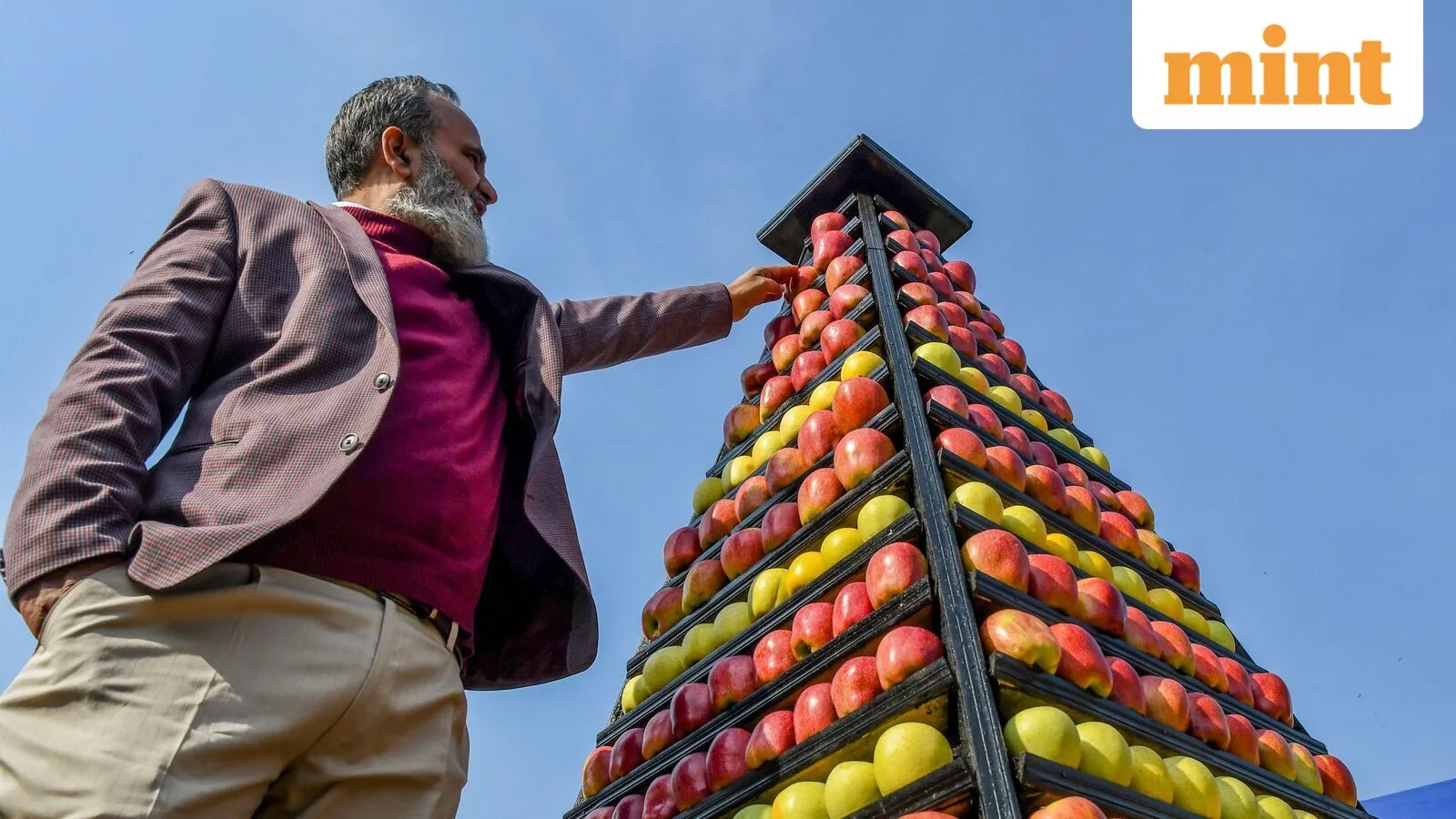
The verdant valleys of Kashmir, renowned globally for their premium apple harvests, are grappling with an unprecedented crisis as a severe winter drought disrupts the very foundations of its multi-billion-rupee horticulture sector. In Qaimoh, a burgeoning hub for fruit nurseries within south Kashmir’s Kulgam district, rows of grafted apple saplings lie dormant in nursery beds, weeks beyond their optimal planting window. This delay signals a profound distress across a critical agricultural supply chain, threatening future yields and the livelihoods of hundreds of thousands.
A Delayed Spring and Parched Earth
For industry stalwarts like Zahid Salam, a 33-year-old nursery owner who has dedicated a decade to cultivating apple saplings on his family’s ancestral lands in Qaimoh, the scene is starkly unusual. "Typically, the bulk of our stock is sold and dispatched by the first week of March," Salam explains, gesturing towards fields of unplanted young trees. "But this year, nearly 20-30% of our plants remain unsold. Farmers are simply waiting, desperately, for adequate rainfall before committing to planting." This hesitation is a direct consequence of what has been Kashmir’s warmest and driest winter in decades, characterized by a drastic reduction in snowfall and rain. The resultant sharp drop in soil moisture has compelled orchardists to defer new plantings, creating a bottleneck that reverberates throughout the region’s nursery industry, valued at over ₹100 crore. Salam estimates his own sales have plummeted by 25-30% this season, attributing it to the "hesitancy of fruit growers to plant trees in dry, unyielding soil."
Apples form the cornerstone of Kashmir’s horticulture economy, contributing significantly to India’s domestic supply. Official data projects the 2025 season’s production at approximately 2.05 million tonnes, a marginal decline of 0.4% from 2024. While the 2026 harvest is still many months away, the current planting delays could have far-reaching implications for future yields. The region supplies roughly 75% of India’s apples, making it an indispensable player in the national fruit market. Last season was already deemed "disastrous" by many growers, plagued by erratic weather, floods, landslides, and critical highway closures during the peak harvest period, leading to substantial losses both in orchards and during transportation to markets across India.
The Climate Anomaly: A Winter Without Snow
The current crisis stems from a series of meteorological anomalies that have gripped the Valley. Since mid-February, daytime temperatures have consistently hovered between 20°C and 21°C, a staggering 9-11 degrees Celsius above the seasonal normal. Concurrently, both rain and snowfall have been acutely deficient. Srinagar, the region’s capital, recorded a mere 5.3 millimetres of rainfall in February, marking the lowest precipitation for that month since 1960. This stark deviation from typical winter patterns has left the soil parched and hard, rendering it unsuitable for delicate young saplings.
Shabir Ahmad Kumar, a 46-year-old nursery grower with over 15 years in the business, underscores the gravity of the situation: "Land becomes incredibly hard during such prolonged dry spells. When the soil lacks moisture, young plants quickly dehydrate." He particularly highlights the vulnerability of high-density varieties like M9, which are increasingly popular but demand more consistent water supply. "Prolonged dry conditions can cause irreversible damage to these young plants even before they establish roots," Kumar cautions. Mohammad Ashraf Wani, a seasoned apple grower from Shopian, often referred to as Kashmir’s apple bowl, concurs: "There is virtually no moisture in the soil. Even if we were to plant saplings now, the high daytime temperatures would severely jeopardize their survival rate."
Economic Ripple Effects: From Nurseries to National Markets
The hesitation from orchardists translates directly into mounting unsold stock for the nursery sector, a high-stakes business requiring significant capital and a multi-year investment cycle. Over the past two decades, Qaimoh, once primarily a paddy cultivation area, has transformed into a vibrant hub for fruit nurseries and apple orchards. Today, over 400 nurseries across Qaimoh and its surrounding villages collectively produce millions of saplings annually, generating an estimated turnover of ₹100-150 crore. Mohd Ramzan War, the chief horticulture officer of Kulgam district, notes that "nearly 90% of the local population is engaged in nursery farming in some capacity." While around 200 nurseries are formally registered with the National Horticulture Board, many more operate informally, contributing to an extensive supply network that extends beyond Kashmir to horticulture regions in Himachal Pradesh and Uttarakhand. "Approximately 90% of the plants we cultivate are apple varieties," Zahid Salam adds, emphasizing the industry’s singular focus.
The production of these specialized apple saplings is a meticulous, capital-intensive endeavor. Growers import rootstocks, often from European countries such as Italy, Holland, and Serbia, which are then expertly grafted locally. It typically takes two to three years for a sapling to mature sufficiently for market. Salam illustrates the financial commitment: "On about 30 kanals (approximately 3.75 acres) of nursery land, we invest nearly ₹60 lakh. We anticipate returns of around ₹80 lakh or more. However, if sales drop by even 20%, it leads to substantial losses." For his operation, a 20% decline in sales would mean a loss of roughly ₹16 lakh in a single season. "For us, even a modest drop in sales has a significant financial impact because the investment cycle is so long," he stresses. "Unsold plants must be maintained for another year, incurring additional costs and often diminishing their quality and market value." Across the entire Valley, a conservative estimate suggests that a mere 20-30% decline in demand could translate into collective losses of ₹20-30 crore for the nursery sector alone, with cascading effects on local employment and ancillary businesses.
A Looming Climate Crisis: Long-Term Projections
The recent weather patterns are not isolated incidents but part of a discernible and alarming climatic shift. Faizan Arif, an independent weather analyst in Kashmir, confirms that February witnessed record-breaking warmth across several weather stations. "In Srinagar, the average maximum temperature reached 15.6°C, surpassing the previous record of 14.9°C set in 2016," Arif stated. Even the high-altitude tourist destination of Gulmarg experienced unusual warmth, recording 17.2°C in the first week of March—nearly 13.7°C above normal and approaching its all-time March record. This warmth has been accompanied by a severe precipitation deficit. Between December 2025 and February 2026, Jammu and Kashmir received a mere 100.6 millimetres of precipitation, a stark contrast to the normal 284.9 millimetres, representing a deficit of approximately 65%. February alone saw an 89% shortfall. Alarmingly, the region has now endured seven consecutive winters with deficient precipitation, signaling a worrying trend.
Scientists and agricultural experts warn that these immediate disruptions could have profound and longer-term consequences for Kashmir’s famed orchards. Sameera Qayoom, Professor and Head of the Division of Agrometeorology at SKUAST-Kashmir, explains: "The hot and dry winter conditions critically disturb chilling accumulation, soil moisture levels, and the phenological timing vital for apple saplings." Chilling hours—the cumulative period of cold temperatures required for proper bud break and fruit development—are essential for apple trees. Insufficient chilling can lead to irregular flowering, poor fruit set, and reduced fruit quality in subsequent seasons.
If the current slowdown in planting persists, it could create significant gaps in orchard establishment and, over time, negatively impact overall productivity and the age structure of the orchards. Vikas Anand, Director of Horticulture Kashmir, cautions that planting outside the optimal March window could disrupt the entire production cycle. "Furthermore, sudden climatic events later in the season, such as hail storms or unseasonal heavy rains, could inflict further damage on already vulnerable young plants," he adds. Yasir Altaf, Assistant Professor in the Department of Environment Sustainability and Climate Change at the Islamic University of Science and Technology (IUST) Kashmir, emphasizes the physiological stress: "From an agrometeorological perspective, these unusually warm and dry late winter conditions severely stress young apple saplings. Apple trees require cool conditions and adequate soil moisture for early establishment. Prolonged dryness increases evapotranspiration, hindering root establishment and making young plants highly susceptible to transplant shock."
Adaptation and the Path Forward
The scientific consensus points towards an urgent need for adaptive strategies. Professor Qayoom suggests that growers must pivot towards more resilient agricultural practices, including widespread adoption of drip irrigation systems, enhanced soil-moisture conservation techniques such as mulching, and improved overall water management protocols. Climate policy consultant Mutaharra A.W. Deva views the current pattern as an unequivocal early warning. "Apple trees depend on a delicate balance of winter chilling, sufficient soil moisture, and moderate spring temperatures," Deva states. "If this pattern of warmer winters and erratic precipitation continues, Kashmir’s entire apple production system faces formidable challenges, including irregular flowering, poor fruit set, and a persistent decline in fruit quality."
In recent days, the Valley has received some light to moderate rainfall, offering a glimmer of hope to beleaguered farmers and nursery owners. However, these rains have arrived late. The critical planting window is rapidly narrowing, and these delays are expected to ripple through future harvests. Mohammad Ashraf Wani notes the urgency: "If saplings are planted too late, orchard development may be significantly slowed, pushing back fruit formation and potentially affecting harvest timing for years to come." While late rains might partially restore soil moisture, the planting cycle has already forfeited invaluable days, underscoring the profound vulnerability of a region whose economic future is intrinsically linked to the delicate balance of its climate. The present crisis serves as a stark reminder of the urgent need for sustainable, climate-resilient agricultural policies to safeguard Kashmir’s iconic apple industry.