The Federal Reserve’s latest policy gathering has underscored a period of profound uncertainty for the American economy, as the central bank attempts to balance a resilient labor market against a backdrop of geopolitical instability and resurging energy costs. Despite a significant spike in global oil prices fueled by the escalating conflict involving Iran, the Federal Open Market Committee (FOMC) maintained its projection for a single interest rate reduction before the end of 2026. This decision, while signaling a continued pivot toward eventual easing, reflects a much more cautious stance than many market participants had anticipated only a few months ago.
In its most recent session, the FOMC voted 11-1 to hold the benchmark federal funds rate steady within the range of 3.5% to 3.75%. This pause allows the central bank more time to assess the "long and variable lags" with which monetary policy affects the broader economy. However, the true narrative of the meeting was found not in the rate hold itself, but in the updated Summary of Economic Projections, colloquially known as the "dot plot." This chart, which maps out the anonymous interest rate expectations of the 19 individual members of the committee, revealed a subtle but significant hawkish shift. While the median estimate for the federal funds rate at the end of 2026 remained anchored at 3.4%, the internal distribution of those "dots" showed a marked migration toward fewer cuts.
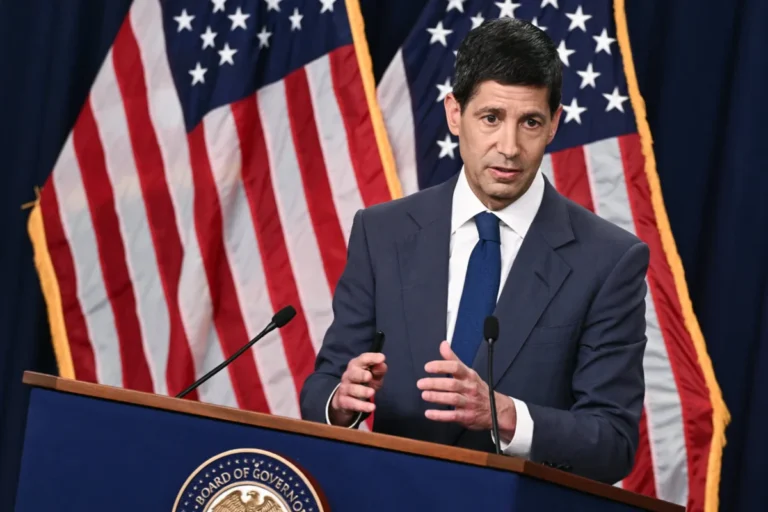
Federal Reserve Chair Jerome Powell, in his post-meeting press conference, acknowledged this internal recalibration. He noted that while the median figure held firm, four or five committee members who had previously forecasted two rate reductions for the year had revised their outlook to just one. This shift suggests that the "higher-for-longer" mantra remains the dominant philosophy within the Marriner S. Eccles Building, even as the sunset of Powell’s leadership approaches.
The primary catalyst for this renewed caution is a cocktail of stubborn inflation and a sudden surge in energy prices. The conflict in the Middle East, specifically involving Iran, has introduced a significant "geopolitical risk premium" into the oil markets. As crude prices climb, the specter of "cost-push" inflation looms large. Higher energy costs do not merely affect the price at the pump; they permeate the entire supply chain, increasing the cost of manufacturing, logistics, and agricultural production. For a Fed that is laser-focused on returning inflation to its 2% target, these external shocks represent a significant hurdle.
The Fed’s updated economic forecasts provide a window into why the central bank is hesitant to move more aggressively. The projection for Personal Consumption Expenditures (PCE) inflation—the Fed’s preferred gauge of price stability—was revised upward to 2.7% for 2026, a notable increase from the 2.4% projected in December. Perhaps more concerning for policymakers was the rise in "core" inflation expectations. Excluding the volatile food and energy sectors, core PCE is now also expected to hit 2.7%, up from a previous estimate of 2.5%. This suggests that inflationary pressures are no longer confined to specific sectors but are becoming more broad-based and "sticky" across the services economy.
Paradoxically, the American economy continues to display surprising vigor despite the most aggressive tightening cycle in four decades. The Fed’s forecast for real Gross Domestic Product (GDP) growth was nudged higher to 2.4%, up from the 2.3% estimated late last year. This combination of higher inflation and stronger-than-expected growth presents a classic central banking dilemma: cutting rates too early could reignite inflationary fires, while waiting too long could risk a hard landing for the economy.
Adding another layer of complexity to the Fed’s trajectory is the impending leadership transition. Jerome Powell’s term as Chair is set to conclude in May, and the transition of power is already casting a shadow over monetary policy. Former Fed Governor Kevin Warsh, handpicked by President Donald Trump to succeed Powell, is widely viewed as a figure who might favor a more accommodative stance. Warsh has historically expressed support for lower interest rates to stimulate domestic investment, and his arrival could herald a shift in the FOMC’s internal dynamics. However, the current data-dependent Fed appears determined to set a course based on present economic realities rather than future political cycles.
Market participants, who began the year with optimistic bets for multiple rate cuts, have been forced to undergo a painful repricing of risk. The CME FedWatch Tool, which tracks federal funds futures, now indicates that traders are pricing in only a single cut for the remainder of 2026. In some corners of the market, there is even growing speculation that the Fed may remain entirely on hold if the energy crisis deepens or if the labor market remains too tight to allow for cooling wages.
The global context further complicates the Federal Reserve’s mission. While the U.S. economy remains resilient, other major economies are showing signs of strain. The European Central Bank (ECB) and the Bank of England (BoE) are facing their own battles with stagflation—stagnant growth coupled with high inflation. If the Fed maintains high rates while other central banks begin to cut, the U.S. dollar could see further appreciation. A stronger dollar makes American exports more expensive and can create liquidity challenges in emerging markets that hold significant amounts of dollar-denominated debt. Conversely, it helps dampen domestic inflation by making imports cheaper, providing the Fed with a double-edged sword in its policy toolkit.
The "once and done" projection for 2026 also reflects a change in how the Fed views the "neutral rate"—the interest rate level that neither stimulates nor restrains economic growth. For years, economists believed the neutral rate was quite low, perhaps around 2% or 2.5%. However, the economy’s ability to absorb rates above 5% without collapsing suggests that the neutral rate may have moved higher. If the "new normal" for interest rates is higher than it was in the pre-pandemic era, then the Fed’s current stance of 3.5% to 3.75% might not be as restrictive as it appears on paper.
As the Fed navigates the final months of the Powell era, the focus will remain squarely on the "last mile" of the inflation fight. Bringing inflation down from 9% to 4% was the relatively easy part of the cycle; moving it from 3% to the 2% target is proving to be far more arduous. The spike in oil prices acts as a reminder that the central bank cannot control the supply side of the economy, only the demand side. By keeping rates elevated, the Fed aims to temper consumer spending and corporate investment enough to offset the inflationary pressures coming from the energy sector.
The 11-1 vote to hold rates steady also indicates a high degree of consensus within the committee, despite the minor shifts in the dot plot. The lone dissenter likely represents the growing tension between those who fear the "long-term scarring" of high interest rates on the housing and manufacturing sectors and those who believe that the credibility of the Fed depends entirely on its ability to crush inflation once and for all.
Looking ahead, the road to the end of 2026 remains fraught with volatility. The outcome of the Iran conflict, the trajectory of global supply chains, and the specific policy leanings of the incoming Chair Kevin Warsh will all play pivotal roles in determining whether that single projected rate cut actually materializes. For now, the Federal Reserve is sending a clear message to the world: it will not be bullied by market expectations or political cycles. Its primary allegiance remains to the data, and currently, the data suggests that the era of cheap money is not returning anytime soon. Investors and consumers alike must now prepare for a prolonged period of economic recalibration, where the cost of capital remains a significant factor in every financial decision.