India’s ambitious endeavor to establish a domestic carbon credit trading market for its crucial steel industry has encountered a significant roadblock, as widespread inconsistencies in emissions data reported by manufacturing facilities necessitate a comprehensive recalibration of foundational metrics. This setback not only delays the rollout of a pivotal climate policy but also complicates India’s strategic response to the European Union’s impending Carbon Border Adjustment Mechanism (CBAM), potentially exposing Indian exporters to substantial compliance costs. The Ministry of Steel, tasked with steering this transition, has been forced to initiate a rigorous reverification process of the baseline data, a critical step for setting emission reduction targets and allocating carbon credits under the nascent scheme.
The core of the problem lies in the disparate and often conflicting emissions data submitted by approximately 70 steel plants across the country. A preliminary review unearthed glaring mismatches between declared emissions, corresponding fuel consumption, and actual production volumes at several units. Further complicating matters were the varying methodologies employed by different companies for calculating their carbon footprint, alongside expressed concerns from steel producers regarding the accuracy of emission level determinations. This lack of standardization and reliability in reporting undermines the very foundation upon which a credible and equitable carbon trading system must be built. Without an accurate and verifiable baseline, policymakers cannot effectively establish fair emission limits or allocate tradable credits, risking market inefficiency and inequity among producers.
This data conundrum directly impacts the operationalization of India’s Carbon Credit Trading Scheme (CCTS), enacted under the Energy Conservation (Amendment) Act, 2022. The CCTS is designed to foster a domestic market where entities that successfully reduce their emissions below a mandated cap earn carbon credits, each representing one tonne of carbon dioxide equivalent, which can then be sold to those exceeding their limits. This market-based mechanism is a cornerstone of India’s broader climate strategy, aiming to incentivize industrial decarbonization while maintaining economic growth. However, the integrity of such a system hinges entirely on robust monitoring, reporting, and verification (MRV) protocols, areas where the current data collection has exposed significant gaps.
The urgency to rectify these data issues is further amplified by the phased implementation of the European Union’s CBAM, which entered its transitional reporting phase in October 2023 and will impose financial levies on embedded emissions in imported goods, including steel, starting January 2026. For India, the world’s second-largest crude steel producer, with significant export ties to the EU, developing a robust domestic carbon pricing mechanism is not merely an environmental imperative but a critical trade strategy. Indian policymakers are keenly aware that a functioning domestic carbon accounting and trading framework is essential for negotiating with the EU to prevent Indian exporters from incurring overlapping compliance costs – effectively paying twice for the same emissions. The absence of a certified domestic carbon price could place Indian steel at a competitive disadvantage, eroding profit margins and potentially impacting export volumes to a key market.
Indian steel production is notoriously carbon-intensive, emitting an average of about 2.5 tonnes of carbon dioxide for every tonne of crude steel produced. This figure significantly surpasses the global average of approximately 1.9 tonnes, underscoring the formidable challenge of decarbonization for the sector. The government has set an indicative target to reduce this intensity to roughly 2.2 tonnes by 2029-30, a goal that necessitates substantial technological upgrades and process overhauls. Achieving deeper cuts to align with India’s long-term net-zero commitment by 2070 will require even more radical shifts, including a greater adoption of green hydrogen-based direct reduced iron (DRI) processes, increased scrap utilization, and potentially carbon capture, utilization, and storage (CCUS) technologies – all capital-intensive endeavors.

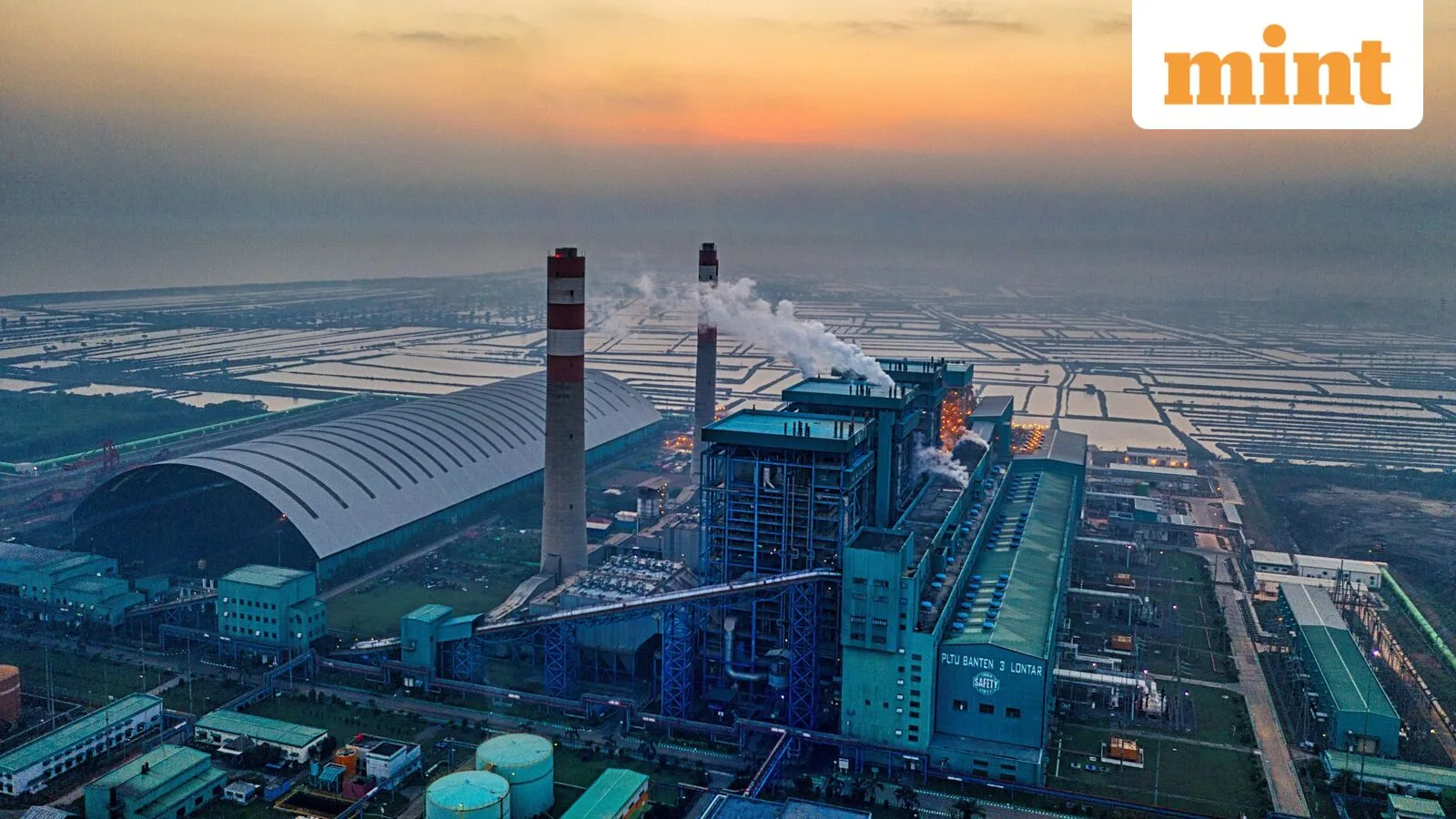
To navigate the immediate challenges, interim guidelines are expected to be issued by the Ministry of Steel. These guidelines will likely focus on enhanced emissions reporting standards, promoting energy efficiency improvements, and encouraging the gradual adoption of cleaner technologies. Critically, the long-term emission reduction targets are anticipated to be differentiated based on production technology. This nuanced approach aims to establish separate benchmarks for blast furnace-based plants, which typically rely on coal and are highly emission-intensive, versus electric arc furnace (EAF) units, which predominantly use scrap and have a lower carbon footprint. Such differentiation is crucial for ensuring fairness and feasibility, preventing undue burden on facilities with inherently higher emissions while rewarding those already employing greener processes.
Industry experts underscore that while the government’s intent to introduce carbon emission limits aligns with global decarbonization trends, the real test lies in the efficacy of its monitoring, reporting, and verification (MRV) infrastructure. Dhruv Goel, CEO of commodities intelligence firm BigMint, highlights that current disclosures are largely self-declared, and the verification mechanisms are still in their nascent stages. India presently lacks fully developed systems for independent, physical verification of emissions at the plant level. The framework for nodal agencies exists, but the on-ground infrastructure and technical expertise required to audit and confirm company-declared emissions remain underdeveloped, posing the biggest challenge to the credibility and effectiveness of the carbon market. Without robust MRV, the market risks being undermined by data inaccuracies, leading to an inefficient allocation of credits and a failure to drive genuine emissions reductions.
The Indian steel industry, a significant contributor to the nation’s industrial output and employment, generally supports the transition towards cleaner production. However, industry leaders caution that achieving the ambitious emission reduction targets will demand colossal investments and fundamental structural changes. While incremental technology upgrades can yield efficiency gains and reduce emissions by 4-5%, transforming the core steelmaking process itself is a monumental undertaking that will span decades and require substantial capital outlay. Estimates suggest that decarbonizing the Indian steel sector could require investments running into trillions of rupees over the coming decades, necessitating innovative financing mechanisms, technological transfer, and supportive policy frameworks.
Global comparisons illustrate the scale of the challenge and the potential for a robust carbon market. The European Union’s Emissions Trading System (EU ETS), for example, has seen carbon prices fluctuate but often hover around €60-80 per tonne of CO2, signaling a strong financial incentive for decarbonization. India’s eventual carbon price will need to be calibrated to effectively drive investments in cleaner technologies without unduly impacting the competitiveness of its industries. The successful implementation of the CCTS, starting with the steel sector, could also serve as a blueprint for extending carbon pricing to other carbon-intensive industries like cement, aluminum, and petrochemicals, thereby catalyzing a broader green transition across the Indian economy.
For now, India’s carbon market remains in a preparatory phase, with no active trading yet underway. The immediate priority is the successful completion and verification of the revised baseline survey. Once this foundational data integrity is established, and comprehensive compliance rules are formally notified, the steel sector is poised to become one of the first major industries to operate under a domestic carbon pricing regime. The journey ahead will demand not only technical expertise in data management and verification but also sustained policy commitment, financial innovation, and collaborative engagement between government and industry. Overcoming these initial hurdles is paramount for India to simultaneously advance its climate action agenda, ensure the global competitiveness of its key industries, and firmly establish its leadership in sustainable development on the international stage.