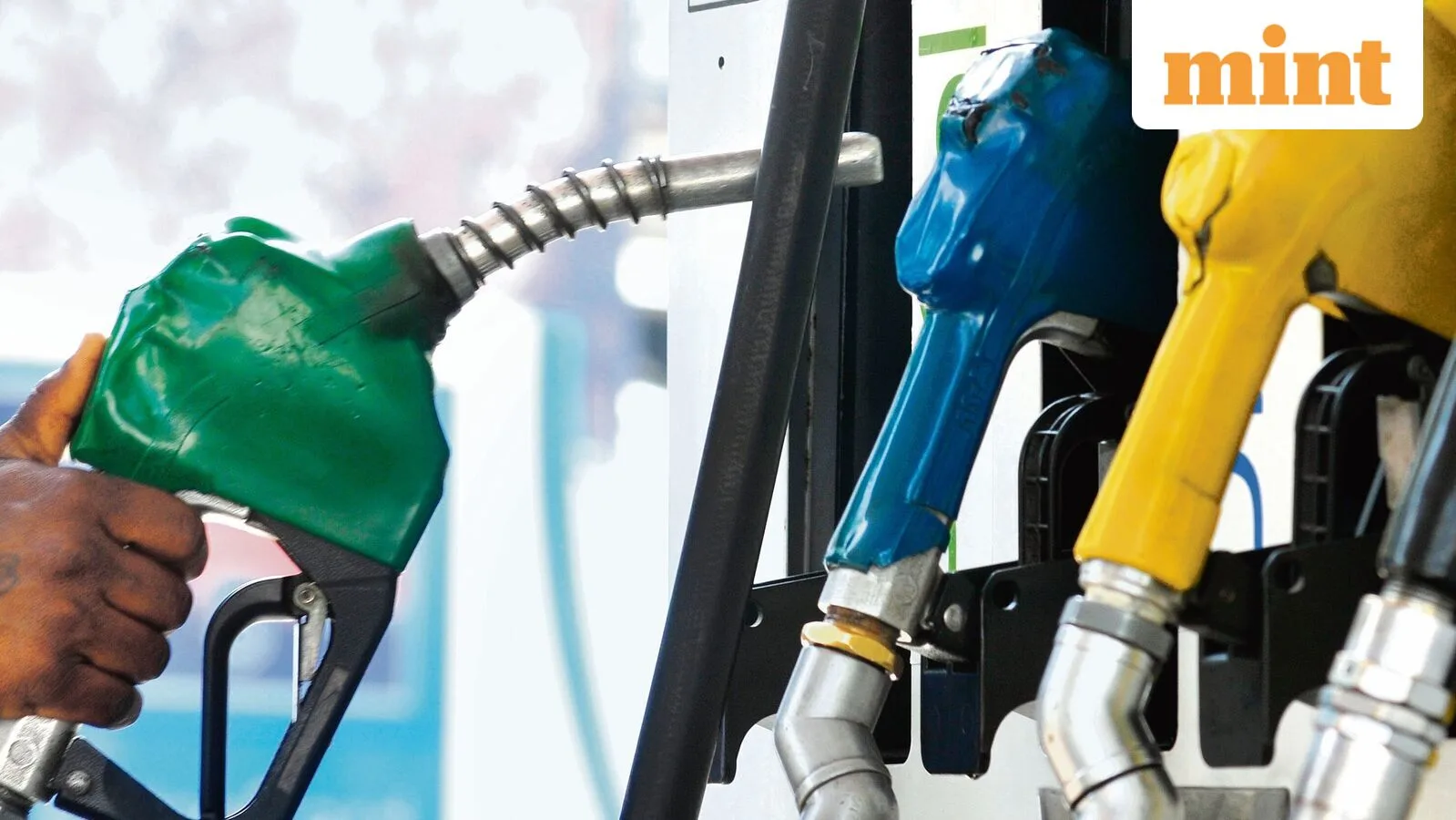
In a global economic landscape increasingly defined by geopolitical volatility and supply chain fragilities, India finds itself at a critical juncture, attempting to insulate its vast consumer base from the sharp escalation in international crude oil prices. While major economies from the United States to China have already passed on the burden of higher energy costs to their citizens, New Delhi has largely maintained domestic fuel price stability, a strategy that, while offering immediate relief, places immense strain on its state-owned oil marketing companies (OMCs) and raises profound questions about long-term fiscal sustainability and market efficiency. The recent surge, pushing crude benchmarks well past the $100 per barrel mark, primarily fueled by intensified geopolitical conflicts, underscores the precariousness of this delicate balancing act.
The current escalation in global crude oil prices is deeply rooted in the exacerbation of the West Asian crisis. What initially manifested as a potential supply disruption, largely due to the strategic significance of the Strait of Hormuz – a critical chokepoint for roughly a fifth of the world’s total petroleum consumption – has rapidly evolved into a scenario bordering on supply destruction. As the conflict entered its third week, the targeting of critical oil and gas infrastructure, previously considered off-limits, marked a dangerous new phase. Reports of Israeli strikes on Iran’s South Pars gas facility, one of the world’s largest non-associated gas fields, and subsequent retaliatory actions by Iran, including the bombing of Qatar’s Ras Laffan gas facility, have sent ripples of alarm through international energy markets. These incidents directly threaten regional energy production and export capabilities, further tightening an already stretched global supply chain and pushing crude prices to approximately $110 per barrel, with Brent futures briefly touching $115.
Against this backdrop, India’s policy response has been notably nuanced and selective. While the government did implement an increase in the prices of Liquid Petroleum Gas (LPG) on March 7, following the initial spike in crude, this measure was carefully calibrated. Domestic 14.2 kg LPG cylinders saw a modest ₹60 increase, while 19 kg commercial cylinders experienced a ₹115 hike. Crucially, the government reiterated its commitment to social welfare by retaining the ₹300 per domestic cylinder subsidy under the Pradhan Mantri Ujjwala Yojana, applicable for up to 12 refills annually. This targeted approach aimed to mitigate the impact on vulnerable households. However, the more politically sensitive prices of petrol and diesel have remained untouched. With elections recently announced in several key states and a Union Territory, any decision to raise petrol and diesel prices has been postponed, morphing from an economic imperative into a significant political calculation.
The stark contrast between India’s approach and that of other nations highlights the exceptional nature of its current strategy. Globally, the transmission of higher international crude prices to domestic consumers has been widespread and often substantial. In the United States, average petrol prices have witnessed an increase of approximately 20% in recent months, directly impacting household budgets and contributing to broader inflationary pressures. China, a major energy consumer, announced its largest fuel price hike since March 2022, with petrol and diesel prices rising by about 3.7%. Across the Atlantic, fuel prices in the United Kingdom have reached an 18-month high, adding to the ongoing cost-of-living crisis exacerbated by broader energy shocks. Even economically distressed nations have been compelled to adjust. Pakistan, grappling with severe fiscal challenges, raised petrol and diesel prices by up to 20%, a painful but necessary step towards economic stabilization. Similarly, Sri Lanka, still recovering from its unprecedented economic crisis, implemented an 8% increase as part of its structural reforms. These global examples underscore the immediate economic realities faced by most nations, making India’s sustained price stability an outlier.
The primary beneficiaries of this stability are Indian consumers, but the hidden costs are largely borne by the nation’s public sector OMCs: Indian Oil Corporation (IOCL), Bharat Petroleum Corporation Limited (BPCL), and Hindustan Petroleum Corporation Limited (HPCL). These companies import crude at prevailing international rates, refine it, and then sell the products domestically at prices that do not fully reflect their acquisition costs. A recent analysis by Elara Securities vividly illustrates this squeeze: every $10 per barrel increase in crude oil prices is estimated to shave off ₹6.3 per litre from the marketing margins for petrol and diesel. For LPG, the impact is even more pronounced, with margins eroding by ₹10.2 per kilogram. Given that crude oil prices have surged by over $45 per barrel in a relatively short period, the cumulative hit to OMCs’ profitability is staggering. The recent LPG price hike, while significant for consumers, reportedly covers only about 50% of the actual increase in costs, leaving the remaining deficit to be absorbed by these companies. The study further projects that if crude prices hover around $100 per barrel without a corresponding retail price adjustment, OMCs’ earnings could erode by an alarming 90% to 190%. Such under-recoveries severely impact their balance sheets, hindering their ability to invest in critical infrastructure upgrades, green energy transitions, and even sustain dividend payouts, potentially jeopardizing their long-term financial health and India’s energy security.
The Indian government, recognizing this pressure, does possess a fiscal lever to temporarily cushion the blow: excise duty. Currently, the central government levies an excise duty of ₹19.9 per litre on petrol and ₹15.8 per litre on diesel. Experts suggest that a strategic reduction in these duties could protect retail petrol and diesel prices even if crude oil were to reach $110 a barrel. This mechanism was effectively utilized during previous crude spikes, where duty cuts helped absorb a significant portion of the international price increases. However, such a move comes with its own set of trade-offs. Excise duty collections form a substantial part of the central government’s revenue, funding critical infrastructure projects, social welfare schemes, and managing the fiscal deficit. Any significant cut would necessitate a re-evaluation of budgetary allocations or risk widening the fiscal gap, potentially impacting India’s macroeconomic stability and credit ratings. For now, the government has not signaled any immediate plans to reduce excise duties, leaving OMCs to absorb the financial shock.
This unsustainable arrangement cannot persist indefinitely. As global crude prices continue their upward trajectory, driven by persistent geopolitical instability, OPEC+ supply management, and recovering global demand, the pressure on India’s policymakers will intensify. The options are narrowing: either the government intervenes directly with substantial subsidies, which would strain the national exchequer and exacerbate the fiscal deficit, or it will eventually have to shift the burden from OMCs to consumers through a retail fuel price hike. Delaying this decision further risks not only the financial viability of OMCs but also creates market distortions, discourages private sector participation, and hinders the efficient allocation of resources within the energy sector.
The broader economic implications for India are multifaceted. Sustained high crude prices, if eventually passed on, would inevitably fuel headline inflation, putting upward pressure on the Reserve Bank of India (RBI) to maintain or even hike interest rates, potentially dampening economic growth. As a net importer of over 85% of its crude oil requirements, India’s current account deficit (CAD) is highly sensitive to international oil prices; every $10 increase in crude prices can widen the CAD by $12-15 billion annually, putting pressure on the Indian rupee and foreign exchange reserves. Furthermore, higher fuel costs directly impact logistics and transportation, leading to increased input costs for manufacturing and agriculture, ultimately affecting consumer prices across various goods and services. The current strategy of internalizing the shock, while providing short-term relief, effectively postpones these economic repercussions.
In conclusion, India’s current policy of largely insulating consumers from soaring global fuel prices is a delicate and increasingly unsustainable balancing act. While driven by legitimate concerns for consumer welfare and political expediency, it places immense financial stress on state-owned OMCs and defers a looming fiscal challenge. The geopolitical landscape remains volatile, and global energy markets are unlikely to stabilize in the near term. As the pressures mount, policymakers will face an increasingly difficult decision: either to deploy precious fiscal resources to subsidize fuel, thereby risking macroeconomic stability, or to implement necessary price adjustments, navigating the political and social ramifications. A long-term, sustainable solution for India’s energy security and fiscal health will likely require a strategic blend of gradual market-based price adjustments, continued efforts towards energy diversification, and a transparent subsidy mechanism that shields the most vulnerable without distorting the entire energy market. The clock is ticking on how long India can truly delay the inevitable.