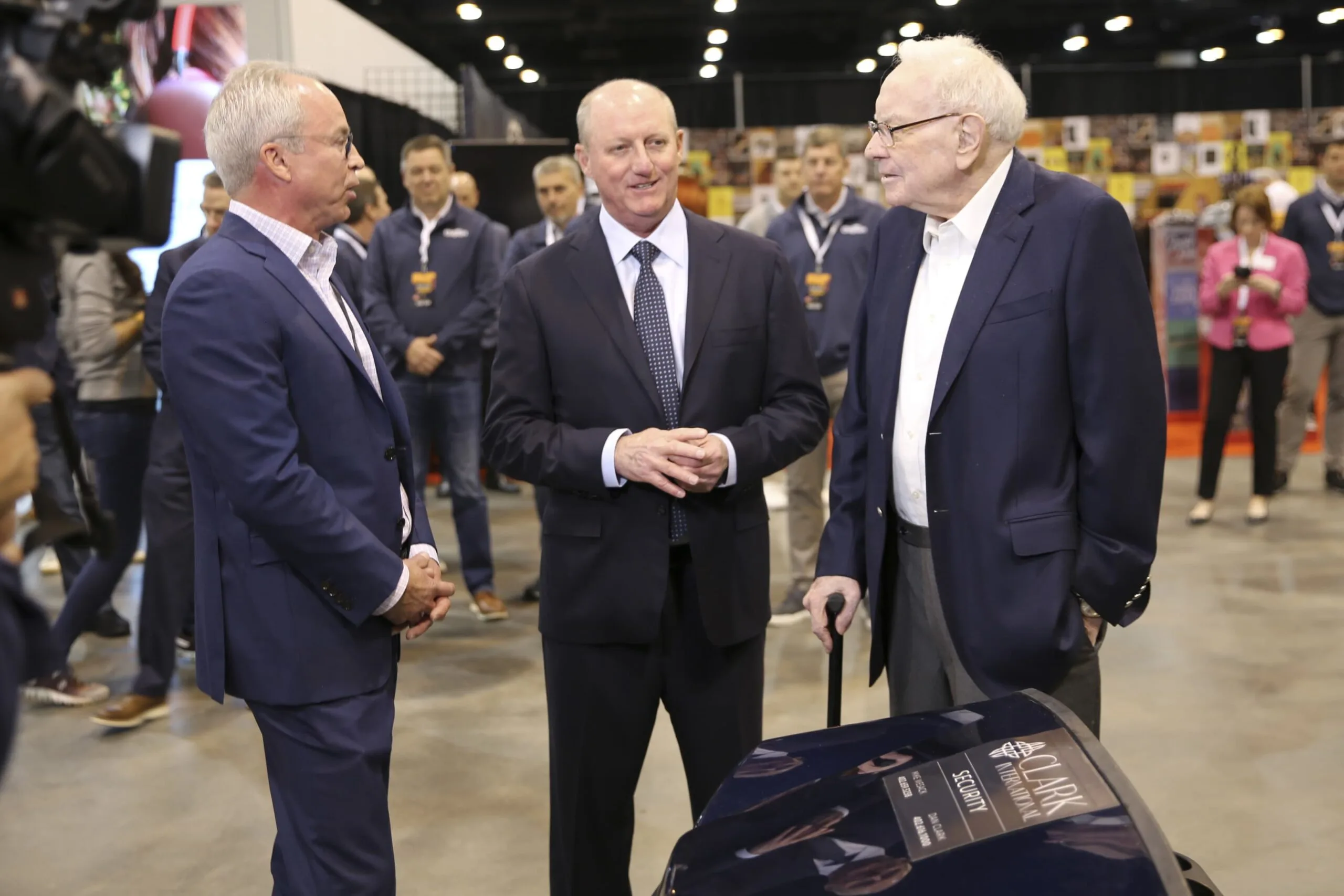
The transition of power at Berkshire Hathaway, a sprawling conglomerate that serves as a cornerstone of the American economy, is perhaps the most scrutinized succession in corporate history. As Greg Abel settles into the role of Chief Executive Officer, a position held by Warren Buffett for over half a century, the market has looked for signals of whether the "Omaha Way" will endure or evolve. In a recent disclosure that has provided significant comfort to the global investment community, Abel confirmed that the legendary "Oracle of Omaha" remains a pervasive presence in the company’s daily operations. Speaking with an openness that reflects the company’s culture of transparency, Abel revealed that he continues to consult with Buffett nearly every day, ensuring that the institutional wisdom gathered over six decades remains integrated into the firm’s current decision-making processes.
This ongoing dialogue between the new CEO and the 94-year-old Chairman is more than just a mentorship; it is a strategic bridge during a period of monumental shift. Since officially assuming the CEO mantle at the start of the year, Abel has been tasked with managing a portfolio that includes everything from the BNSF Railway and Geico insurance to significant stakes in blue-chip giants like Apple and Coca-Cola. Buffett, despite stepping back from the chief executive role, continues to frequent the company’s modest headquarters in Omaha, Nebraska. For Abel, these daily interactions—whether in person or via telephone when traveling—serve as a sounding board for the complex capital allocation decisions that define Berkshire’s unique business model.
The significance of this collaborative phase cannot be overstated. Berkshire Hathaway is not merely a company; it is a $1 trillion financial fortress that often acts as a proxy for the health of the United States economy. With a cash pile that recently reached a record-shattering $325 billion, the decisions made by Abel and Buffett regarding where to deploy this capital have global implications. By maintaining a near-daily cadence of communication, Abel is signaling to shareholders that the disciplined, long-term philosophy that turned a failing textile mill into a global powerhouse remains the North Star of the organization.
One of the most daunting aspects of the transition, as Abel candidly admitted, has been the role of "Chief Communicator." For decades, Warren Buffett’s annual letter to shareholders has been regarded as the "Bible" of value investing, read by millions for its wit, folksy wisdom, and profound economic insights. Stepping into those shoes to pen his first annual letter was, according to Abel, the most challenging task of his early tenure. The difficulty lies in balancing the need for technical precision with the accessible, philosophical tone that Buffett mastered. When Abel sought advice on the matter, Buffett’s response was characteristically blunt: the second letter would not be any easier. This underscores the high standard of intellectual rigor and clarity that Berkshire expects from its leadership—a standard that goes beyond mere financial reporting.
In his inaugural communications, Abel has made a concerted effort to outline a framework centered on financial resilience and the preservation of Berkshire’s unique corporate culture. This culture is predicated on extreme decentralization, where individual business units operate with high degrees of autonomy, while the central office focuses on capital allocation and risk management. Abel has vowed to maintain this blueprint, which Buffett carefully orchestrated since the 1960s. However, while the foundational values remain static, the strategic focus of the firm is showing signs of subtle, necessary evolution.
A primary area of interest for investors is how Berkshire will navigate the rapidly changing technological landscape. Historically, Buffett was famous for avoiding technology stocks, famously stating that he did not invest in businesses he did not understand. This stance softened in the last decade, most notably with Berkshire’s massive investment in Apple, which Buffett eventually came to view more as a consumer products company with an impenetrable "moat" than a pure-play tech firm. Abel appears poised to take this evolution a step further. While he reiterated the company’s staunch refusal to engage with cryptocurrencies—echoing Buffett’s long-standing view of Bitcoin as "rat poison squared"—he left the door wide open for deeper investments in technology.

Abel’s background as the former head of Berkshire Hathaway Energy (BHE) provides a clue into his perspective on technology and infrastructure. He views technology not just as an investment sector, but as an operational necessity that informs the company’s views on broader market trends. As artificial intelligence and advanced data analytics begin to reshape industries from logistics to insurance, Abel’s willingness to develop a "better knowledge base" around technology companies suggests that the Berkshire of the 2030s may be more tech-forward than the Berkshire of the 1990s. This is a pragmatic shift; in an era where five of the world’s largest companies are tech-driven, a total avoidance of the sector would be a strategic liability.
The economic impact of Berkshire’s leadership transition is also being felt in the way the company manages its massive liquidity. Under Abel’s watch, and with Buffett’s guidance, the company has recently been a net seller of stocks, paring back its massive position in Apple and exiting its long-held stake in Bank of America. This move toward cash suggests a cautious outlook on current market valuations. For the broader market, Berkshire’s move to the sidelines is often interpreted as a signal that the "smart money" finds few attractive opportunities in an overextended bull market. It reinforces the company’s identity as a "lender of last resort" and a patient predator, waiting for the inevitable market correction to deploy its hundreds of billions in capital.
Globally, the Abel-Buffett transition offers a stark contrast to other high-profile corporate successions. Unlike the abrupt or tumultuous changes seen at companies like Disney or the rapid cultural shifts at Apple following Steve Jobs, the Berkshire transition has been a multi-year, highly choreographed process. This stability is vital for a company that holds the insurance liabilities of millions and the retirement savings of countless individual investors. The "daily call" between Abel and Buffett serves as a psychological anchor for the market, proving that while the name on the door has changed, the brain trust remains intact.
Furthermore, Abel’s leadership style is being defined by a rigorous focus on operational efficiency. While Buffett was the visionary architect, Abel is often described as a detail-oriented operator. This combination—Buffett’s historical perspective and Abel’s operational "grip"—could prove to be a potent mix for Berkshire’s next chapter. The company’s diverse holdings require a leader who can navigate the complexities of regulatory environments in the energy sector, the labor dynamics of the railroad industry, and the competitive pressures of the retail and insurance markets. Abel’s daily check-ins with Buffett likely cover these granular details as much as they do the high-level investment strategy.
As the global economy faces headwinds from geopolitical instability, fluctuating interest rates, and the transition to green energy, Berkshire Hathaway’s role as a stabilizing force is more critical than ever. The company’s ability to generate tens of billions in free cash flow annually provides it with a unique advantage: the luxury of time. Greg Abel’s commitment to the "Buffett blueprint" ensures that this advantage will not be squandered on short-term trends or speculative bubbles.
In the final analysis, the news that Greg Abel and Warren Buffett speak nearly every day is a testament to a rare form of corporate stewardship. It reflects a transition built on mutual respect and a shared commitment to a singular vision. For the investors who gather in Omaha every May for the "Woodstock for Capitalists," the message is clear: the leadership has changed, but the principles are immutable. As Abel navigates the complexities of the 21st-century economy, he does so with the most experienced advisor in financial history by his side, ensuring that the transition from the Buffett era to the Abel era is not a disruption, but a seamless continuation of a legendary legacy.