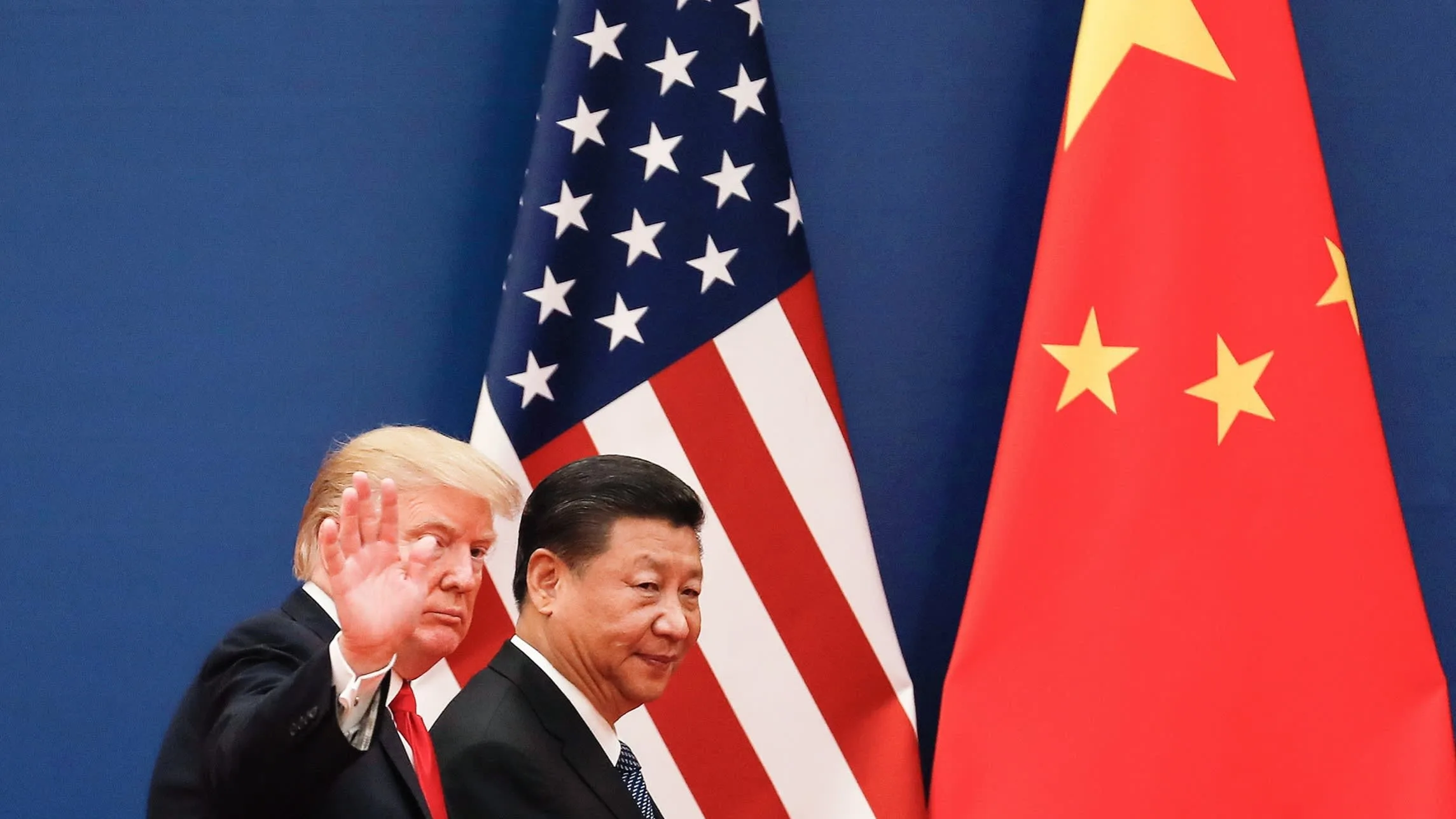
As the global political landscape braces for the potential return of a transactional and protectionist American foreign policy, the leadership in Beijing is signaling a profound shift in its approach to Washington. Unlike the early years of the Trump administration, when Chinese officials often sought to appease the White House with large-scale purchase agreements and symbolic market openings, the current sentiment in the Zhongnanhai leadership compound suggests a hardening of resolve. China is no longer looking to provide a "bailout" or a face-saving trade victory for American leadership; instead, it is preparing for a protracted era of systemic competition characterized by high tariffs, technological containment, and a fundamental decoupling of the world’s two largest economies.
The economic landscape of 2024 is vastly different from that of 2017. When Donald Trump first assumed office, China was riding a wave of robust growth and was deeply integrated into the global supply chain in a way that made total severance seem unthinkable. The "Phase One" trade deal, signed in early 2020, was the hallmark of that era—a massive commitment by Beijing to purchase $200 billion in additional U.S. goods and services. However, that agreement is now viewed by many in Beijing as a cautionary tale. Not only did the COVID-19 pandemic make those targets impossible to hit, but the deal also failed to stop the subsequent escalation of U.S. sanctions against Chinese tech giants like Huawei or the tightening of export controls on advanced semiconductors.
Today, the Chinese government views such grand bargains as futile. From the perspective of the Chinese Communist Party (CCP), the United States has reached a bipartisan consensus that China is an existential threat to American hegemony. Consequently, Beijing believes that no amount of agricultural purchases or financial sector liberalization will satisfy a Washington establishment that is now focused on "de-risking" and "friend-shoring." This realization has led to a strategic pivot: rather than trying to manage the relationship through concessions, China is doubling down on self-reliance and the diversification of its economic partnerships.
Central to this new strategy is the concept of "New Productive Forces," a term popularized by President Xi Jinping. This policy directs state capital and industrial focus toward high-tech manufacturing, including electric vehicles (EVs), lithium-ion batteries, and renewable energy technologies. By dominating these "three new" industries, China aims to create a "moat" around its economy. If the U.S. moves forward with the proposed 60% universal tariff on Chinese imports—a core pillar of the second-term Trump platform—Beijing’s response will likely not be a seat at the negotiating table, but rather an acceleration of its pivot toward the Global South and a further weaponization of its control over critical mineral supply chains.
The economic stakes are historic in scale. Currently, China controls approximately 80% of the world’s solar supply chain and a dominant share of the processing for minerals like cobalt, lithium, and rare earths, which are essential for everything from smartphones to fighter jets. In recent months, Beijing has already begun testing its leverage by imposing export restrictions on gallium and germanium, metals critical to semiconductor production. Analysts suggest that if a renewed trade war breaks out, China will use these "choke points" far more aggressively than it did during the 2018–2019 skirmishes.
Furthermore, China’s domestic economic situation significantly limits its ability to offer the kind of "win-win" deals that characterized the previous decade. The Chinese economy is currently grappling with a structural slowdown, a protracted property market crisis, and deflationary pressures. With youth unemployment reaching record highs and local government debt mounting, Beijing has less fiscal and political room to offer concessions that might harm its own industrial base. Any deal that involves significantly increasing imports from the U.S. would likely come at the expense of China’s own manufacturers at a time when the state is desperately trying to keep its factories humming to maintain social stability.
The shift in trade patterns already reflects this "US-proof" mentality. For the first time in decades, China’s trade with ASEAN countries and the nations involved in the Belt and Road Initiative (BRI) has surpassed its trade with the United States. This geographical diversification is a deliberate effort to insulate the Chinese economy from American policy shifts. By building deep infrastructure and financial ties in Southeast Asia, Central Asia, and Africa, Beijing is creating a parallel economic ecosystem where the U.S. dollar and U.S. trade policy have diminishing influence.
The role of the U.S. dollar is another front where Beijing is preparing for a long-term standoff. The weaponization of the SWIFT banking system against Russia following the invasion of Ukraine served as a wake-up call for Chinese policymakers. In response, China has accelerated the internationalization of the yuan and the development of its Cross-Border Interbank Payment System (CIPS). While the yuan still accounts for a small fraction of global reserves compared to the dollar, its use in bilateral trade—particularly for energy imports from Russia, Saudi Arabia, and Brazil—is steadily rising. This financial decoupling is designed to ensure that even in a scenario of extreme sanctions, the Chinese economy can continue to function.
The impact of a potential 60% tariff on Chinese goods would be felt far beyond the borders of the two nations. Global supply chains, which have already been strained by the pandemic and the war in Ukraine, would face another systemic shock. Economists warn that such a move would likely lead to a "re-inflationary" spike in the United States, as retailers pass on the costs of higher duties to consumers. For China, while the immediate impact on GDP growth would be negative—some estimates suggest a drag of 1 to 2 percentage points—the long-term effect might be to solidify its status as the leader of an alternative, non-Western economic bloc.
Expert insights suggest that the diplomatic "theatre" of the past is also being discarded. During the first Trump term, there was a belief that personal chemistry between leaders could bridge policy gaps. Today, that optimism has evaporated. Beijing views the U.S. political system as inherently unstable and prone to radical shifts every four years. This perception of "American decline" and "political volatility" has convinced Chinese strategists that long-term agreements with Washington are not worth the paper they are written on. Instead, they are opting for a "principled struggle," a term often used in state media to describe a policy of standing firm against perceived American bullying.
As the 2024 election approaches, the world is witnessing the end of an era. The period of "Chimerica"—the deep economic symbiosis that defined the early 21st century—is being replaced by a fragmented global order. China’s refusal to "bail out" or provide easy victories for U.S. politicians is not merely a tactical move; it is a declaration of a new strategic reality. Beijing is no longer playing a game of catch-up; it is playing a game of endurance.
In this high-stakes environment, the risk of miscalculation is significant. Without the "ballast" of a functional trade relationship, the friction between the two superpowers could more easily spill over into security domains, particularly regarding Taiwan and the South China Sea. However, from Beijing’s perspective, the cost of submission is now higher than the cost of confrontation. By fortifying its domestic economy, diversifying its trade partners, and securing its technological frontiers, China is signaling that it is prepared for whatever version of "America First" emerges from the ballot box. The message is clear: the days of easy concessions are over, and the path forward will be defined by competition, not cooperation.