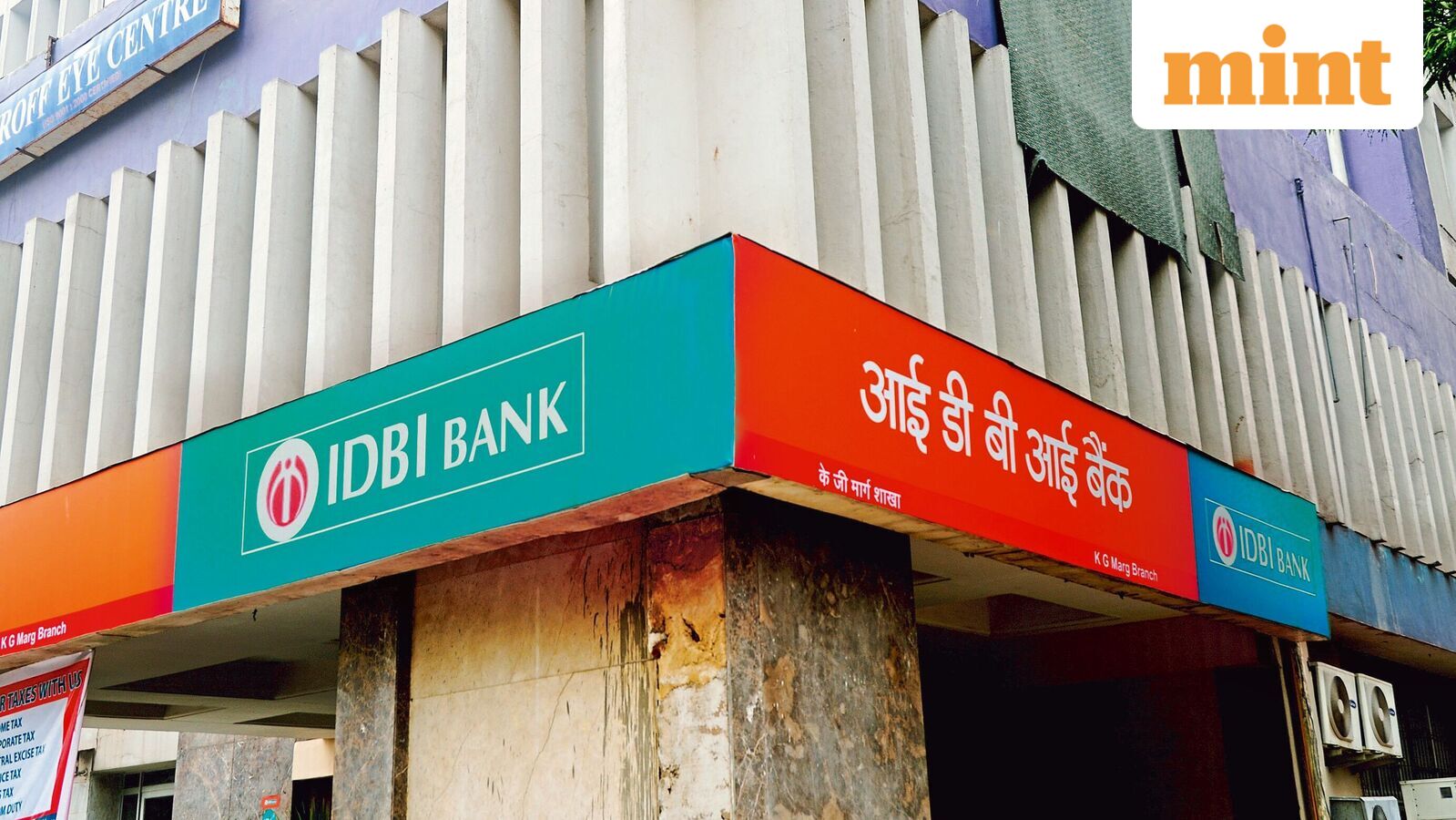
The Indian government’s ambitious plan to strategically divest a majority stake in IDBI Bank has encountered a significant roadblock, with the proposed share sale being scrapped after bids from prospective investors reportedly fell substantially short of official price expectations. This halt underscores the complex challenges inherent in state-backed asset sales, particularly when market realities clash with governmental valuation benchmarks and fiscal imperatives. The decision, though not officially confirmed by the Ministry of Finance or IDBI Bank, has sent ripples through the market, raising questions about India’s broader privatisation agenda and its future trajectory.
The Unmet Valuation and Investor Apprehension
At the heart of the matter was a valuation mismatch. The government, alongside the Life Insurance Corporation of India (LIC), aimed to offload a combined 61% stake in IDBI Bank, seeking an aggregate sum of over ₹70,000 crore. This target implicitly valued the lender at approximately ₹1.2 trillion, translating to an expected share price of around ₹110. However, sources familiar with the confidential bidding process indicate that offers received from the two primary interested parties – Canada’s Fairfax Financial Holdings Ltd. and Dubai’s Emirates NBD – did not align with this anticipated figure. The inability to bridge this valuation gap ultimately led to the suspension of the bidding.
IDBI Bank’s journey has been unique. Established originally as a development financial institution (DFI), it transitioned into a commercial bank, facing significant asset quality challenges in its past. LIC, itself a state-owned behemoth, stepped in to recapitalise the bank in 2018-19, acquiring a majority stake and effectively bailing it out. This history, coupled with the bank’s classification as a "promoter" for both the government (45.48% stake) and LIC (49.24% as of recent filings), adds layers of complexity to its divestment. The strategic sale, if successful, would have reclassified both entities as public shareholders, a significant shift in the bank’s ownership structure and regulatory oversight.
The market’s reaction to the news was immediate and sharp. IDBI Bank’s shares, which had settled lower in the days leading up to the announcement, plummeted by an additional 16.5% to ₹77 apiece on the Bombay Stock Exchange following reports of the halted sale. This steep decline erased a significant portion of the "privatisation premium" that often attaches to state-owned enterprises slated for divestment, reflecting investor uncertainty and a re-evaluation of the bank’s intrinsic worth in the absence of a clear path to private ownership.
The Rigidity of Divestment Guidelines
A critical factor in the government’s decision to halt the sale rather than adjust its price expectations lies in the stringent guidelines governing public asset sales in India. The Department of Investment and Public Asset Management (DIPAM), the nodal agency for divestment, operates under a framework designed to safeguard public interest and ensure fair value for taxpayers. This framework mandates the establishment of a "reserve price" or minimum acceptable price, determined through a rigorous valuation process involving external advisors and financial consultants.
Legal experts underscore the procedural inflexibility once a reserve price is set. "This price is fixed pre-bidding and cannot be casually altered mid-process based on market sentiment," explained a senior partner at a Delhi-based law firm, speaking on condition of anonymity due to the sensitivity of ongoing government processes. "Revisions would necessitate restarting the entire approval cycle, involving fresh endorsements from an inter-ministerial group, a core group of secretaries, and potentially a re-evaluation by the Cabinet Committee on Economic Affairs (CCEA). Such a move could also invite legal challenges for arbitrariness, as it lacks explicit procedural flexibility for mid-course adjustments."
This procedural rigidity, while intended to prevent undervaluation and maintain transparency, creates a challenging environment when market conditions or investor appetite do not align with official projections. The government, through the CCEA, which had granted in-principle approval for the strategic disinvestment in 2021, retains full discretion to cancel, defer, or restructure a sale if bids do not meet its expectations, particularly before binding agreements are executed. This protective mechanism, however, can also lead to missed opportunities or prolonged delays, as evidenced by the IDBI Bank situation.
Broader Implications for India’s Privatisation Drive
The IDBI Bank episode casts a shadow over India’s broader privatisation programme, a cornerstone of the government’s economic reform agenda aimed at boosting efficiency, unlocking capital, and generating non-tax revenues. The government has consistently relied on divestment receipts to bridge its fiscal deficit and fund infrastructure projects. For the current fiscal year, the target for disinvestment revenue stands at ₹65,000 crore, a figure that now appears more challenging to achieve in light of the IDBI Bank setback. Previous years have also seen significant shortfalls against ambitious targets, highlighting the recurring difficulties in executing these complex transactions.
The IDBI sale was particularly significant, representing what could have been the largest foreign investment in India’s banking sector. Its failure could temper foreign investor enthusiasm for future state asset sales, prompting a more cautious approach and closer scrutiny of government valuation methodologies. This is especially pertinent as India eyes the privatisation of other public sector entities, including the Shipping Corporation of India, Container Corporation of India, and potentially two other public sector banks.
The current global economic climate, characterised by elevated inflation, rising interest rates, and geopolitical uncertainties, further complicates the divestment landscape. Investors are more risk-averse, demanding higher returns and greater clarity on asset quality and future growth prospects. For a bank like IDBI, with its history of regulatory interventions and ongoing transformation, these factors likely played a role in the conservative bids received.
Alternative Pathways and Future Outlook
With the immediate sale halted, the government is reportedly exploring alternative options for its significant stake in IDBI Bank. One potential path involves holding onto the stake for a longer duration, awaiting an improvement in market conditions and a more favourable valuation environment. This "wait and watch" approach, while delaying fiscal receipts, could preserve potential value for taxpayers if the bank’s performance improves and market sentiment brightens.
Another option reportedly under consideration is the merger of IDBI Bank with other smaller public sector banks (PSBs). India has a history of consolidating its state-owned banking sector, aiming to create larger, more resilient entities capable of competing more effectively. Such a merger could offer synergies, reduce operational costs, and potentially create a more attractive proposition for a future divestment. However, bank mergers are complex, often involving significant integration challenges, cultural assimilation, and potential short-term disruptions. Moreover, it would shift the burden of IDBI’s integration onto another state-owned entity, rather than achieving outright privatisation.
The IDBI Bank situation underscores the delicate balance governments must strike between fiscal needs, market realities, and political accountability in asset sales. While the commitment to divestment remains a long-term strategic goal for India, the experience with IDBI Bank highlights the imperative for greater flexibility in valuation strategies, clearer communication with potential investors, and a pragmatic assessment of market appetite. The coming months will reveal whether this pause is a temporary recalibration or a signal for a more fundamental rethinking of India’s approach to strategic disinvestments in its vital financial sector. The global investment community will be closely watching for the government’s next move, as it navigates the complex interplay of economic policy, market dynamics, and public interest.