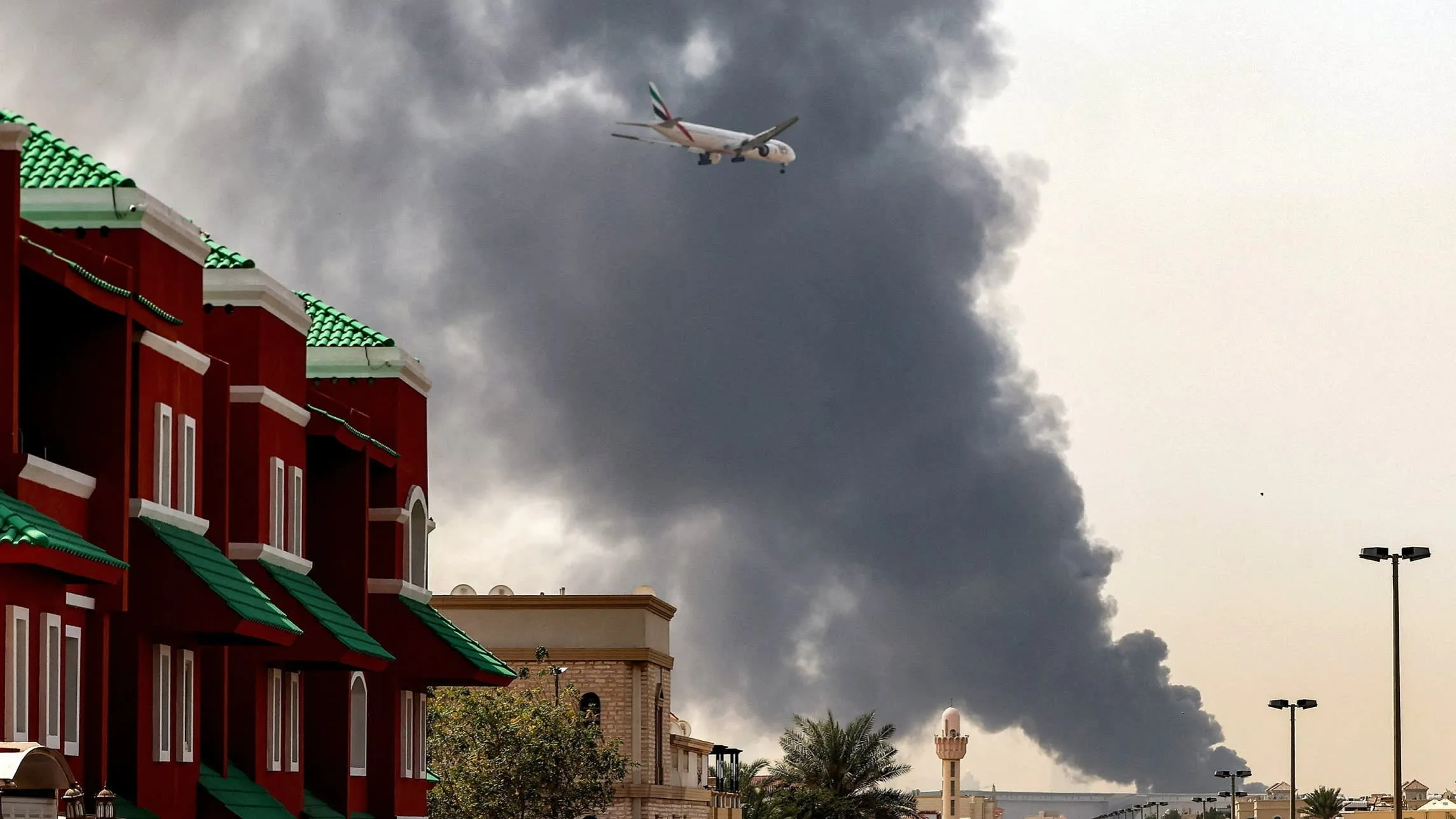
The strategic equilibrium of the Middle East’s primary transit corridor faced a significant test this week as Dubai International Airport (DXB), the world’s busiest hub for international passenger traffic, grappled with a wave of flight delays and cancellations. The disruptions followed a series of drone and missile incursions into regional airspace, underscoring the persistent vulnerability of high-value civil infrastructure to the evolving landscape of asymmetric warfare. While the United Arab Emirates’ advanced air defense systems successfully intercepted the majority of the threats, the operational ripple effects have sent tremors through the global aviation industry and raised fresh concerns regarding the stability of the "open skies" model that underpins Dubai’s economic miracle.
For travelers and logistics providers, the immediate impact was stark. Hundreds of flights operated by flagship carrier Emirates and its budget partner flydubai were grounded or diverted to secondary airports in the region, including Al Maktoum International and neighboring facilities in Oman. The sudden closure of specific air corridors forced flight dispatchers into a complex logistical puzzle, rerouting long-haul journeys over Iranian or Saudi airspace, which in turn increased fuel consumption and extended flight times for routes connecting Europe with Asia and Australia.
The economic stakes of such disruptions cannot be overstated. Aviation is not merely a sector of the Dubai economy; it is its central nervous system. According to data from Oxford Economics, the aviation sector, including the tourism activities it enables, contributes approximately 27% to Dubai’s Gross Domestic Product (GDP), a figure projected to rise as the city-state expands its capacity to handle over 100 million passengers annually. Even a 24-hour disruption at DXB carries a multimillion-dollar price tag in lost operational revenue, passenger compensation, and broader reputational risk to the emirate’s status as a safe haven for global capital and tourism.
This latest escalation occurs against a backdrop of heightened regional tensions, primarily driven by the ongoing conflict in Yemen and the broader "shadow war" between regional powers. Analysts point to the increasing sophistication of unmanned aerial vehicles (UAVs) and cruise missiles utilized by non-state actors, which are often deployed to exert political pressure on the UAE for its involvement in regional coalitions. While the UAE has invested billions in sophisticated defense tiers—including the U.S.-made Terminal High Altitude Area Defense (THAAD) and Patriot systems—the sheer volume and low cost of drone technology present a continuous challenge to traditional defense economics.
Market analysts have noted that the persistence of these threats is beginning to influence the risk premiums associated with regional aviation. Marine and aviation insurance markets, which had already seen a hardening of rates following the Red Sea shipping crisis, are now closely monitoring the safety of Gulf corridors. "The shift from maritime threats to aviation threats represents a significant escalation in the regional risk profile," noted a senior analyst at a London-based geopolitical risk consultancy. "If the frequency of these incursions increases, we could see a permanent adjustment in insurance premiums for carriers operating out of the Persian Gulf, which would inevitably be passed on to the consumer."
The impact also extends to the global supply chain. Dubai is a critical node in the "sea-to-air" logistics model, where goods arriving at Jebel Ali Port are rapidly transferred to DXB for onward air shipment to Europe or the Americas. This multimodal efficiency is a cornerstone of global just-in-time manufacturing. Disruptions at the airport threaten to bottleneck high-value electronics, pharmaceuticals, and perishable goods that rely on the precision of Dubai’s logistics infrastructure. As regional instability persists, some logistics firms are reportedly exploring contingency routes through Central Asian corridors or the Cape of Good Hope, despite the significantly higher costs and longer lead times.
From a broader economic perspective, the UAE government has remained steadfast in its commitment to maintaining an open and attractive business environment. The response to the recent attacks has been characterized by a blend of military vigilance and a "business as usual" diplomatic posture. However, the psychological impact on the tourism sector—a pillar of the UAE’s post-oil diversification strategy—remains a sensitive variable. Dubai welcomed more than 17 million international overnight visitors in 2023, and any perception of a compromised security environment could dampen the double-digit growth rates the sector has enjoyed since the pandemic.
Global comparisons illustrate the unique challenges faced by the UAE. Unlike European hubs like Heathrow or Frankfurt, which are surrounded by stable neighboring airspaces, Dubai operates in a "congested and contested" environment. To the north lies Iranian airspace, often subject to diplomatic volatility, and to the south lies the ongoing conflict in Yemen. This leaves a narrow geographic window for the thousands of daily movements that define DXB’s operations. The UAE’s ability to manage this "geopolitical squeeze" has long been a testament to its diplomatic finesse, but the recent uptick in kinetic activity suggests that the margin for error is narrowing.
Furthermore, the technological nature of the threat is forcing a pivot in defense spending. The UAE has recently signaled an interest in diversifying its defense procurement, looking toward laser-based "directed energy" weapons and electronic warfare systems capable of neutralizing drone swarms at a lower cost-per-kill than traditional interceptor missiles. This shift is not just a military necessity but a fiscal one; using a million-dollar interceptor to down a ten-thousand-dollar drone is an unsustainable economic proposition in the long term.
Despite these headwinds, the resilience of the Dubai model remains evident. Within hours of the initial alerts, Emirates resumed its schedule, utilizing its massive fleet of Airbus A380s and Boeing 777s to clear the backlog of stranded passengers. The airport’s management demonstrated a high degree of crisis readiness, deploying additional staff to terminals to manage the influx of displaced travelers and coordinate with international carriers. This operational agility is a key reason why Dubai continues to hold its position as a global leader, even as the regional landscape becomes increasingly complex.
Looking ahead, the intersection of geopolitics and aviation will remain the defining challenge for the Gulf’s economic hubs. The UAE’s "Vision 2031" and the continued expansion of the Al Maktoum International Airport project—set to become the world’s largest airport upon completion—are predicated on the assumption of a secure and accessible sky. For the global investment community, the priority will be observing how the UAE balances its ambitious growth targets with the reality of a regional security environment that is increasingly unpredictable.
In the short term, investors and travelers should expect continued volatility. The aviation industry is likely to see a period of "tactical rerouting," where flight paths are adjusted daily based on real-time intelligence briefings. While this adds to the complexity of global travel, it also showcases the sophisticated integration of intelligence and commercial operations that now defines modern aviation.
Ultimately, the disruption at Dubai International serves as a potent reminder that in a hyper-connected global economy, local conflicts can have immediate and far-reaching consequences. As the UAE continues to navigate these turbulent skies, its success will depend not only on the strength of its air defenses but on its ability to convince the world that its hubs remain the indispensable bridges between East and West. The coming months will be a critical period for the emirate as it seeks to reinforce its security protocols while maintaining the seamless connectivity that has made it a central pillar of the 21st-century global economy.