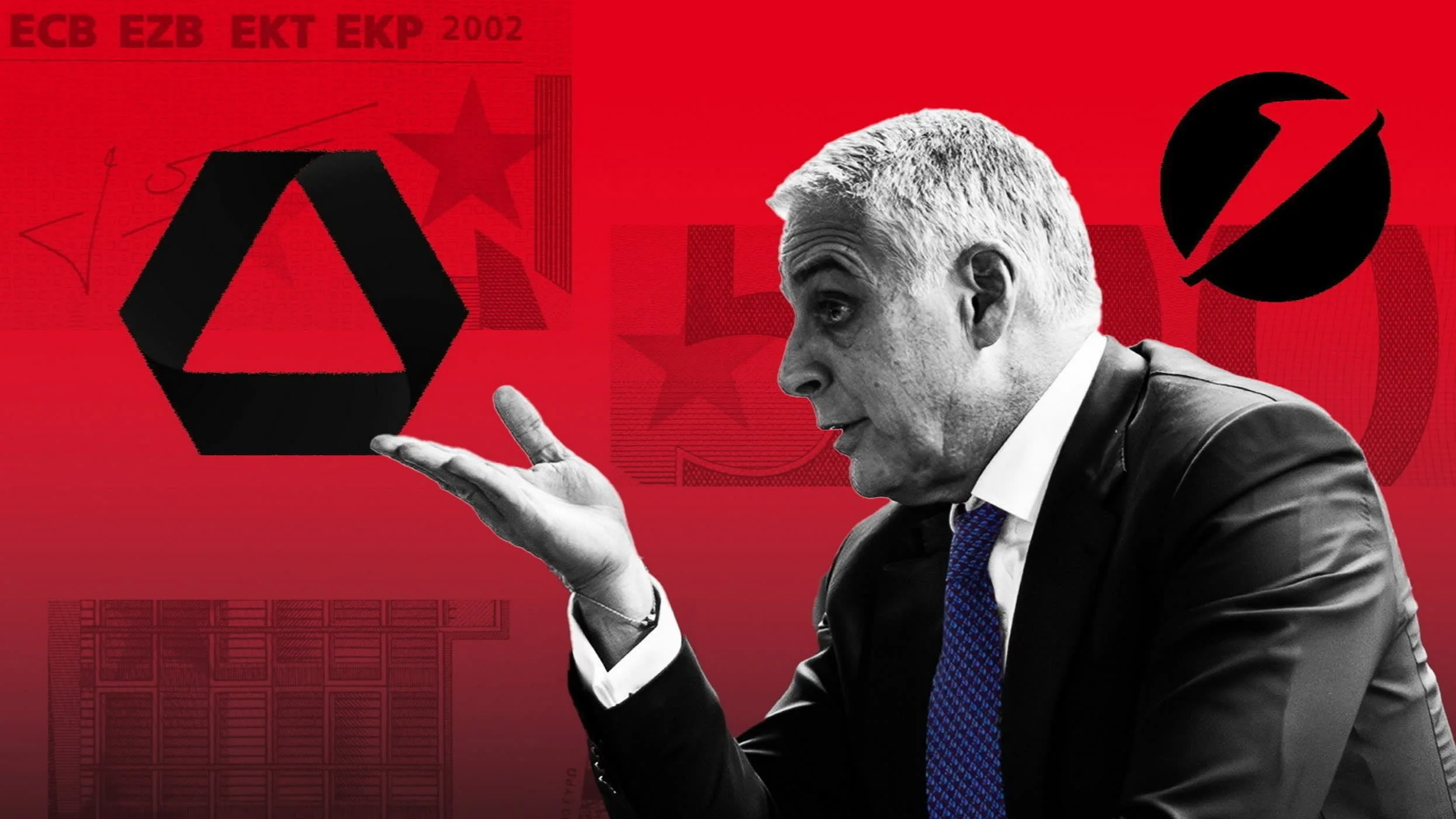
The European banking sector is currently witnessing its most significant upheaval in over a decade as UniCredit, the Italian banking powerhouse, intensifies its pursuit of Germany’s Commerzbank. This bold move, orchestrated by UniCredit’s Chief Executive Andrea Orcel, has not only sent shockwaves through the financial hubs of Frankfurt and Milan but has also ignited a high-stakes political debate regarding the sovereignty of national financial institutions versus the long-held dream of a unified European banking market. By acquiring a substantial stake through a combination of direct share purchases and complex derivative instruments, UniCredit has effectively forced a conversation that many in Berlin hoped to delay indefinitely: the inevitable consolidation of the Eurozone’s fragmented banking landscape.
At the heart of this maneuver is a strategic vision to create a pan-European banking titan capable of rivaling the scale and profitability of American and Chinese giants. For years, European lenders have struggled with suppressed valuations, sluggish growth, and a regulatory environment that remains siloed along national borders despite the existence of the Euro. UniCredit’s aggressive entry into Commerzbank’s capital structure represents a calculated bet that the time for "national champions" is giving way to a new era of "continental champions." However, the path to a full merger is fraught with regulatory hurdles, fierce political opposition, and the complexities of cross-border cultural integration.
The initial phase of UniCredit’s play was executed with surgical precision. In September, the Italian lender capitalized on the German government’s decision to begin paring back its 16.5% rescue stake in Commerzbank, which dated back to the 2008 financial crisis. While Berlin expected a routine institutional placement, UniCredit swooped in to secure a 4.5% stake directly from the state, while simultaneously acquiring another 4.5% on the open market. Not content with a minority position, UniCredit later revealed it had used derivatives to increase its potential holding to approximately 21%, pending regulatory approval from the European Central Bank (ECB). This "stealth" accumulation caught the German Chancellery off guard, prompting Chancellor Olaf Scholz to label the move an "unfriendly attack" and an inappropriate method for consolidating a sensitive domestic industry.
From an economic perspective, the rationale for a UniCredit-Commerzbank tie-up is compelling, particularly when viewed through the lens of cost synergies and market share. UniCredit already possesses a massive footprint in Germany through its ownership of HypoVereinsbank (HVB), a major lender in the wealthy southern regions of Bavaria. Merging HVB with Commerzbank would create Germany’s largest private-sector bank by assets, potentially surpassing Deutsche Bank in domestic retail and corporate lending. The combined entity would dominate the "Mittelstand" sector—the small and medium-sized enterprises that form the backbone of the German economy. Analysts suggest that the overlap in branch networks and back-office operations could yield billions in annual cost savings, a necessity at a time when traditional banking margins are being squeezed by the ECB’s shifting interest rate policies.
However, the "Mittelstand" argument is a double-edged sword. While UniCredit sees efficiency, German labor unions and politicians see a threat to credit availability and employment. The union Verdi has been vocal in its opposition, warning that a takeover could lead to the shuttering of hundreds of branches and the loss of thousands of jobs. There is also a deeper, more existential fear in Berlin: that the "center of gravity" for German corporate lending would shift to Milan. Opponents argue that in times of economic crisis, an Italian-headquartered bank might prioritize its home market or be forced to retrench from Germany to shore up its capital position elsewhere, potentially starving German industry of vital liquidity.
The reaction from the European Central Bank has been notably more nuanced than that of the politicians. For years, ECB officials, including President Christine Lagarde, have called for cross-border consolidation to make the European banking system more resilient and efficient. A unified banking market would theoretically allow capital to flow more freely across the Eurozone, absorbing local shocks and providing a more stable foundation for the single currency. From the ECB’s vantage point, the UniCredit-Commerzbank deal is a litmus test for the Banking Union. If a healthy, well-capitalized bank from one Eurozone member state is blocked from acquiring a peer in another for purely political reasons, it signals that the European market remains fundamentally fractured.
Market data underscores the urgency of this consolidation. European banks currently trade at significant discounts to their American counterparts. While JP Morgan Chase and Bank of America boast price-to-book ratios well above 1.0, many European lenders, including Commerzbank, have struggled to trade at even half of their book value for much of the last decade. This valuation gap is largely attributed to the lack of scale and the high cost of operating across 27 different regulatory regimes. By building a massive, diversified balance sheet, UniCredit aims to close this gap, offering investors a "European champion" that can generate the returns on equity necessary to attract global capital.
The defensive strategy adopted by Commerzbank’s management, led by newly appointed CEO Bettina Orlopp, focuses on the bank’s recent turnaround. After years of restructuring, Commerzbank has returned to consistent profitability, bolstered by higher interest rates and a leaner cost base. Orlopp has argued that the bank’s "standalone" strategy is sufficient to deliver value to shareholders, promising increased dividends and share buybacks. By positioning Commerzbank as a success story in its own right, management hopes to convince shareholders that a takeover offer from UniCredit—unless it carries a massive premium—is not in their long-term interest.
The geopolitical dimension of this deal cannot be overstated. The tension between Rome and Berlin has simmered beneath the surface of the transaction. The Italian government, led by Prime Minister Giorgia Meloni, has largely defended UniCredit’s right to expand, viewing the move as a sign of the strength and sophistication of the Italian financial sector. Conversely, the German government’s resistance has been interpreted by some as a retreat into financial protectionism. This friction comes at a delicate time for the European Union, as it grapples with the need for deeper economic integration to compete with the United States’ Inflation Reduction Act and China’s state-led industrial policy.
Furthermore, the role of the German state as a reluctant shareholder remains a pivotal factor. Having sold only a portion of its stake, the German government still holds significant leverage. However, its options are limited. If it blocks the deal too aggressively, it risks violating EU internal market rules and damaging its reputation as a pro-business environment. If it allows the deal to proceed, it faces a domestic political backlash during an already turbulent period for the ruling coalition.
As the regulatory review process continues, the broader financial world is watching closely. The outcome will determine whether the European banking sector remains a collection of national silos or finally begins the process of genuine integration. If Andrea Orcel succeeds, he will have redrawn the map of European finance and potentially triggered a wave of similar M&A activity across the continent. Banks in Spain, France, and the Benelux countries are undoubtedly preparing contingency plans, recognizing that the era of the "too small to compete" national bank may be coming to an end.
Ultimately, the UniCredit-Commerzbank saga is about more than just two banks; it is about the future of the Eurozone’s economic architecture. In an age of global volatility, the need for a robust, integrated, and competitive European financial system has never been greater. Whether the political will exists to allow such a transformation to take place remains the billion-euro question. For now, the eyes of the financial world remain fixed on the unfolding chess match between a determined Italian CEO and a hesitant German government, a conflict that will define the boundaries of European capitalism for years to come.