The Danish economic model, long celebrated as a global gold standard for balancing robust social welfare with a competitive market economy, is currently facing a moment of internal friction that has reached the highest echelons of its industrial sector. At the heart of this tension is the Lego Group, the world’s largest toy manufacturer and a symbol of Danish entrepreneurial success. The leadership of the Billund-based giant has recently voiced significant concerns regarding proposed changes to the nation’s tax structure, specifically a new wealth tax aimed at the country’s most affluent citizens and family-owned enterprises. This dissent from one of the nation’s most respected corporate voices highlights a growing debate over the sustainability of high-tax regimes in an era of hyper-mobile capital and global competition.
The controversy stems from a legislative proposal within the Danish parliament that seeks to introduce a more aggressive wealth tax, designed to fund expanded public services and address burgeoning wealth inequality. For a country that already boasts one of the highest tax-to-GDP ratios in the Organization for Economic Co-operation and Development (OECD), the move is seen by proponents as a necessary step to maintain the integrity of the "Nordic Model." However, for the Kirk Kristiansen family—the billionaire dynasty behind the Lego empire—and the company’s executive leadership, the proposal represents a fundamental misunderstanding of how family-owned conglomerates operate and contribute to the national economy.
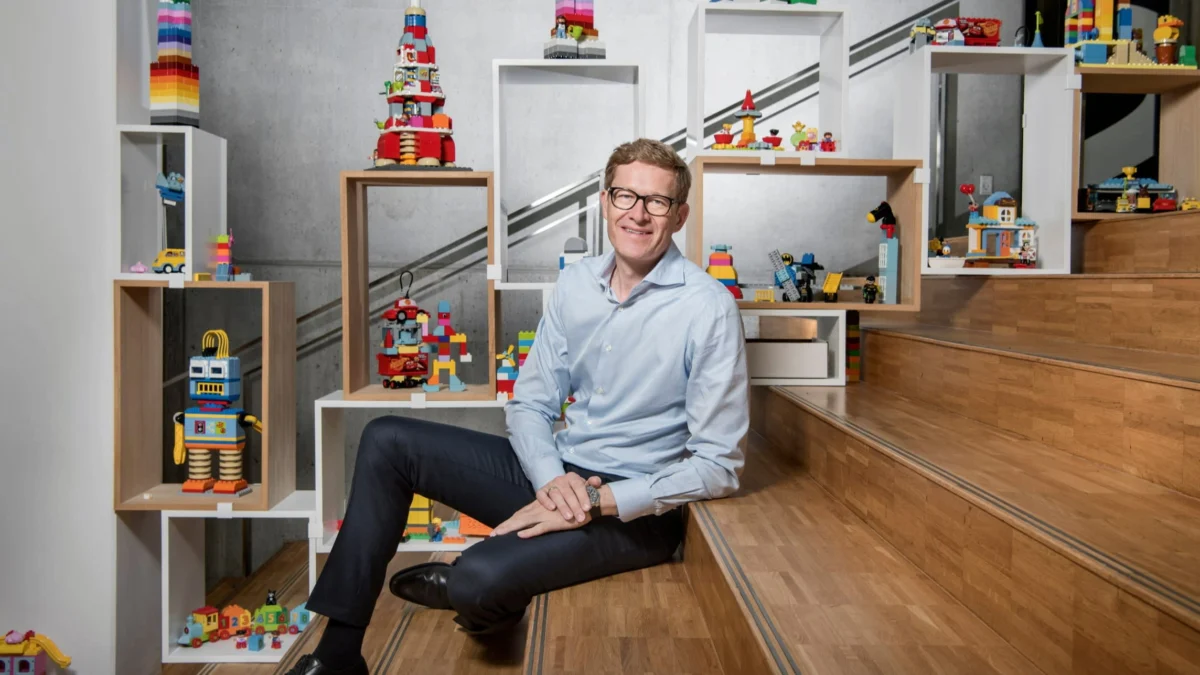
Lego’s Chief Executive Officer, Niels B. Christiansen, along with representatives from Kirkbi A/S—the family’s holding and investment company—argue that the tax is not merely a levy on personal luxury, but a direct drain on the capital required for long-term industrial investment. Unlike publicly traded companies that can tap into global equity markets for expansion, family-owned firms often rely on the reinvestment of their own post-tax profits. By imposing a tax on the estimated value of these holdings, the government risks siphoning off the liquidity needed for research and development, green transitions, and international expansion.
The Danish proposal comes at a time when wealth taxes are experiencing a resurgence in European political discourse, yet their practical implementation remains fraught with economic risk. To understand the gravity of Lego’s warning, one must look across the Skagerrak strait to Norway. In 2023, the Norwegian government increased its wealth tax to 1.1%, a move that triggered an unprecedented exodus of the country’s wealthiest entrepreneurs. More than 30 billionaires and multi-millionaires relocated to Switzerland and other low-tax jurisdictions, taking with them billions in potential investment capital and future tax revenue. Lego’s leadership is essentially warning Copenhagen that Denmark is not immune to this "Norway Effect."
The mechanics of a wealth tax are particularly punishing for "asset-rich but cash-poor" enterprises. For a company like Lego, which is valued in the tens of billions of dollars, a 1% annual tax on the value of the family’s stake would require the liquidation of significant assets or the issuance of massive dividends just to cover the tax bill. This "forced dividend" scenario can weaken a company’s balance sheet, making it more vulnerable during economic downturns and less capable of funding the massive capital expenditures required to stay competitive against rivals like Mattel or Hasbro.
Furthermore, the critique from Billund touches upon the issue of generational succession. Denmark has historically been a fertile ground for "dynastic" companies that plan in terms of decades rather than fiscal quarters. These firms provide a stabilizing force in the Danish labor market, offering high-quality employment and maintaining deep roots in local communities. Critics of the wealth tax argue that the financial burden of such a levy, combined with existing inheritance taxes, could make it impossible for the next generation of the Kirk Kristiansen family to retain control of the company. This could eventually lead to the "hollowing out" of the Danish economy, where national icons are sold to foreign private equity firms or sovereign wealth funds that may not share the same commitment to Danish social values or local employment.
From a broader economic perspective, the debate in Denmark serves as a microcosm for the global struggle to define "fair share" in the 21st century. Proponents of the tax, including several left-leaning parties in the Danish coalition, point to the widening gap between the ultra-wealthy and the middle class. They argue that in an age of automation and digitalization, capital is capturing an ever-increasing share of national income compared to labor. A wealth tax, in their view, is the only way to ensure that the beneficiaries of the Danish system—which provides free education and infrastructure that businesses rely on—contribute proportionally to its upkeep.
However, economists specializing in capital flight suggest that the "fairness" of a tax is irrelevant if it results in a net loss of revenue. The mobility of the modern billionaire is a reality that 20th-century tax codes were not designed to handle. If the owners of Denmark’s largest companies feel that the fiscal environment has become predatory, they have the means to move their tax residency, their holding companies, and eventually their headquarters. This would not only result in the loss of the wealth tax revenue itself but also the loss of corporate income taxes, payroll taxes from high-earning executives, and the philanthropic contributions that families like the Kirk Kristiansens provide through foundations.
Lego is not just a toy manufacturer; through the Lego Foundation, the family owns 25% of the company and funds initiatives globally to promote learning through play. The foundation’s ability to operate is directly tied to the financial health and ownership structure of the Lego Group. By threatening that structure with a wealth tax, the Danish government may inadvertently undermine the very social initiatives it seeks to protect.
The market data reflects a precarious moment for the Danish economy. While Denmark’s GDP growth has remained resilient, largely bolstered by the pharmaceutical success of Novo Nordisk and the industrial strength of Lego and Maersk, the concentration of economic power in a few "super-star" companies makes the country uniquely vulnerable to policy errors that alienate these firms. If even one of these giants were to significantly shift its operations or ownership structure abroad, the impact on the Danish treasury would be catastrophic.
As the legislative debate continues, expert insights suggest a possible middle ground: the implementation of "reinvestment credits" or exemptions for assets that are actively used in industrial production. Such a system would distinguish between "unproductive" wealth, such as luxury real estate or art collections, and "productive" wealth, such as factories, patents, and employee-generating capital. Whether the Danish government is willing to embrace such complexity remains to be seen.
In conclusion, the warning from Lego’s chief is a significant signal to the international business community. It suggests that even in the world’s most stable and socially conscious democracies, there is a limit to the tax burden that private enterprise can bear before the incentives for innovation and national loyalty begin to erode. As Denmark weighs the short-term political gains of a wealth tax against the long-term risk of industrial decline, the world will be watching to see if the "bricks" of the Danish model can withstand this new fiscal pressure, or if the foundation of one of Europe’s most successful economies is beginning to crack. The outcome of this dispute will likely set a precedent for how other European nations approach the taxation of their own industrial champions in the years to come.