The geopolitical tremors radiating from the Persian Gulf have long been measured in the price per barrel of crude oil, yet a far more volatile and less resilient energy market is currently standing on the precipice of a historic crisis. While global attention remains fixated on the fluctuating price of Brent and West Texas Intermediate, the paralysis of traffic through the Strait of Hormuz is exposing a profound and systemic vulnerability in the liquefied natural gas (LNG) sector. Unlike the global oil trade, which benefits from a diverse array of transport infrastructures and a relatively fragmented production base, the international gas market is inextricably tethered to a handful of high-tech facilities and a single, narrow maritime chokepoint. The recent cessation of Qatari production following targeted drone strikes has not merely raised prices; it has signaled a potential paradigm shift in energy security that could leave the global economy reeling for years.
The Strait of Hormuz, a 21-mile-wide waterway separating the Arabian Peninsula from Iran, serves as the artery for approximately 20% of the world’s LNG supply. The overwhelming majority of this volume originates from Qatar, the world’s most significant exporter of the super-chilled fuel. When Iranian-linked drone attacks targeted Qatari energy infrastructure, the resulting halt in production sent immediate shockwaves through international exchanges. In Europe, natural gas futures surged by a staggering 63% within a single week, a level of volatility reminiscent of the chaos that followed the Russian invasion of Ukraine in early 2022. In Asia, where the reliance on Qatari molecules is even more acute, prices have ascended to $23.40 per million British thermal units (MMBtu). This price spike is not merely a reflection of current scarcity but a "fear premium" based on the realization that the LNG market lacks the safety valves available to the petroleum industry.
The fundamental distinction between the oil and gas markets lies in the flexibility of their respective logistics. During periods of heightened tension in the Strait, major oil producers like Saudi Arabia and the United Arab Emirates can pivot to overland pipelines. The East-West Pipeline in Saudi Arabia, for instance, allows for the transport of millions of barrels of crude to the Red Sea, effectively bypassing the Hormuz chokepoint. No such alternative exists for the Qatari gas industry. To reach the global market, natural gas must be cooled to -162 degrees Celsius, transformed into a liquid state, and loaded onto specialized, billion-dollar cryogenic tankers. There are no transcontinental pipelines connecting the North Field—the world’s largest non-associated gas field shared by Qatar and Iran—to the thirsty markets of Tokyo, Seoul, or Berlin. If the ships cannot sail through the Strait, the gas simply cannot move.
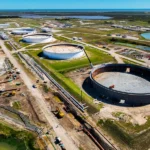
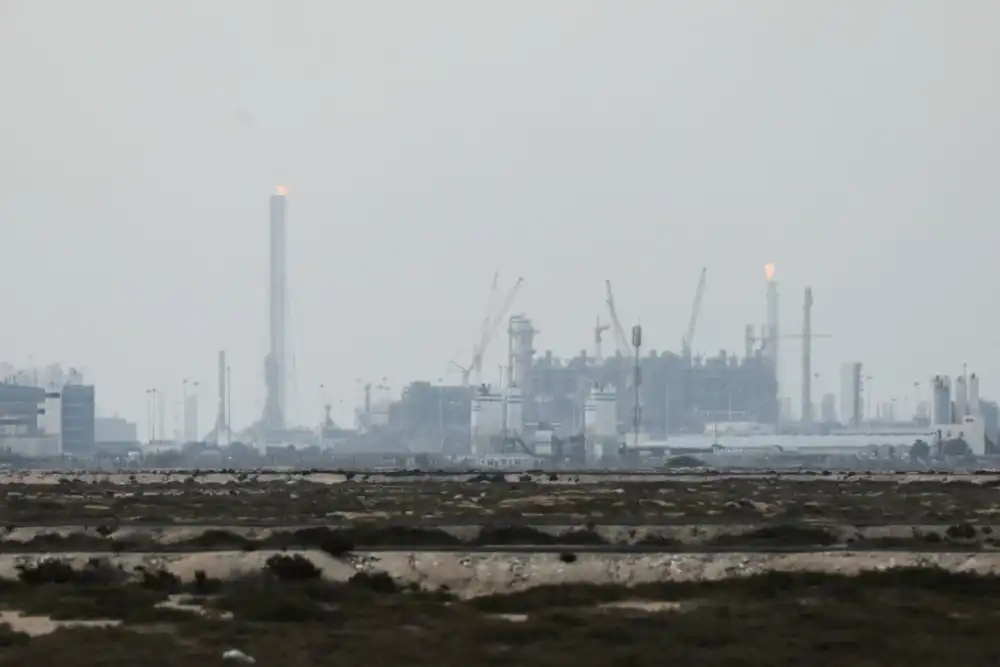
This physical constraint is exacerbated by the extreme concentration of production facilities. While oil is extracted from thousands of wells across various Middle Eastern nations, Qatari LNG production is centralized within a single, massive industrial complex: Ras Laffan Industrial City. Analysts have described the facility as a "sitting duck" in the context of modern drone and missile warfare. The concentration of so much of the world’s energy wealth in one geographic coordinate creates a "single point of failure" that does not exist in the more decentralized oil markets. If a kinetic conflict were to inflict structural damage on the liquefaction trains at Ras Laffan, the impact would be permanent and catastrophic for global energy stability.
Furthermore, the technical complexity of LNG production introduces a "restart lag" that market participants are only beginning to quantify. Unlike an oil well, which can often be throttled up or down with relative ease, an LNG plant is a sophisticated industrial laboratory operating at the edge of physical possibility. The process of cooling gas to a liquid state requires immense energy and precise thermal management. If a plant is forced into an emergency shutdown—especially one as massive as the Ras Laffan complex, which has never been completely offline in its history—the process of warming the systems back up and then re-cooling them to operational temperatures can take weeks, if not months. This technical inertia means that even if the Strait of Hormuz were to reopen tomorrow, the global supply of gas would not recover for a significant period.
The insurance industry adds another layer of paralysis. A modern LNG carrier is a technological marvel costing upwards of $250 million. Underwriters are notoriously risk-averse regarding such high-value assets in active conflict zones. Even if the Qatari government were ready to resume exports, the lack of affordable maritime insurance could keep tankers anchored indefinitely. The precedent for this was set during the "Tanker War" of the 1980s, but the stakes are significantly higher today given the world’s increased reliance on gas as a "bridge fuel" for the energy transition.
The regional crisis is already triggering a massive reallocation of global energy flows, often at the expense of the most vulnerable. As the price spread between the Dutch Title Transfer Facility (TTF) and the Japan-Korea Marker (JKM) widens, the market is witnessing dramatic logistical maneuvers. LNG tankers originally destined for European terminals are performing mid-ocean U-turns, redirected toward Asian buyers willing to pay a premium to keep their power grids operational. This "bidding war" between the East and West threatens to leave Europe in a precarious position as it continues to decouple from Russian pipeline gas. The continent’s newfound reliance on the seaborne LNG market has effectively tied its economic fate to the stability of a waterway thousands of miles away.
While the United States has ascended to the rank of the world’s largest LNG exporter, it offers little relief in the current environment. American liquefaction terminals are already operating at their "nameplate" capacity, pushing the limits of their mechanical design to meet global demand. There is no significant spare capacity in the U.S. or Australia that can be brought online quickly enough to compensate for the loss of Qatari volumes. This lack of a "swing producer"—a role Saudi Arabia traditionally plays in the oil market—means that the only mechanism left to balance the market is demand destruction.
Demand destruction in the context of natural gas has grim economic implications. For heavy industry, particularly in sectors like fertilizer production, steel manufacturing, and chemicals, gas is not just an energy source but a primary feedstock. Sustained prices above $20/MMBtu force these industries to shutter operations, leading to supply chain disruptions and inflationary pressures that ripple through the global economy. In developing nations, the crisis may force a regressive shift back to coal, as the relatively inexpensive but carbon-intensive fuel becomes the only viable alternative for electricity generation. This pivot not only undermines global climate goals but also highlights the fragility of an international energy policy built on a foundation of "just-in-time" maritime delivery.
The long-term ramifications of the current standoff are already manifesting in corporate strategy. QatarEnergy, the state-owned behemoth, has reportedly begun delaying its ambitious expansion projects. Plans to increase the nation’s production capacity from 77 million tons per annum (mtpa) to 126 mtpa by the end of the decade were seen as the cornerstone of global energy security. With these projects now pushed back to 2027 or later due to the security climate, the projected "supply glut" that analysts expected to lower prices in the late 2020s has vanished. Instead, the world is facing a prolonged period of structural deficit.
The crisis in the Strait of Hormuz has laid bare the "LNG Paradox." In the pursuit of a cleaner-burning alternative to coal and a more flexible alternative to Russian pipelines, the global community has funneled its energy security into a narrow, geopolitically volatile corridor. The current paralysis is a stark reminder that while the world may be moving away from the era of oil, it has entered an era of gas that is, in many ways, more precarious. If the "warning shots" currently being fired in the Gulf escalate into a full-scale disruption of the Ras Laffan complex, the resulting economic shock will be measured not just in dollars and cents, but in the structural deindustrialization of entire regions and a fundamental reordering of global trade priorities.