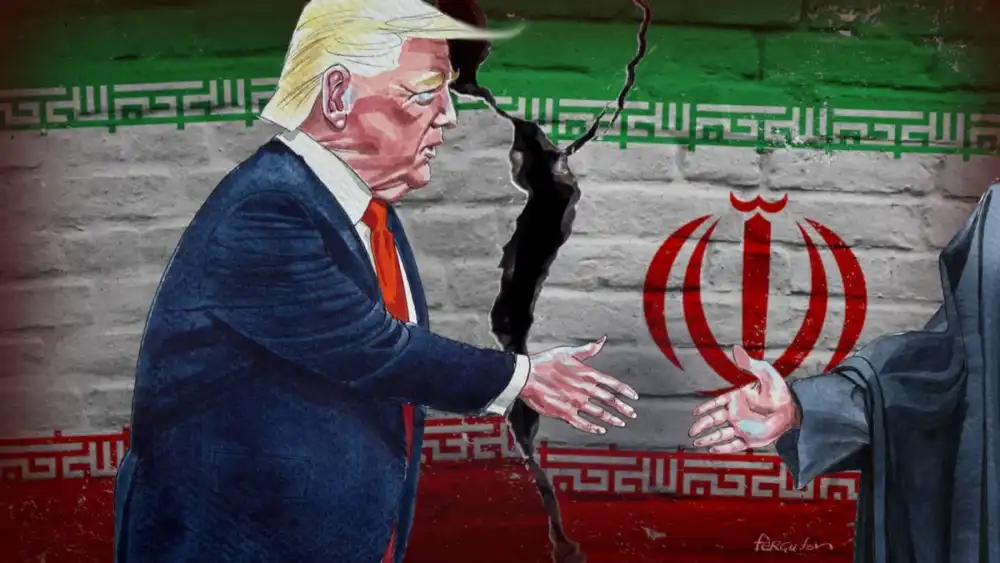
The geopolitical strategy known as "Maximum Pressure," once envisioned as a decisive tool to reshape the Middle East and Latin America through economic strangulation, is facing a rigorous historical audit. Originally formulated during the Trump administration, the policy aimed to leverage the dominance of the U.S. financial system to force systemic behavior changes—or outright regime collapse—in adversarial nations. However, as the dust settles on nearly a decade of intensified sanctions, a sobering reality has emerged: the tactical template applied to Venezuela has not only failed to achieve its objectives in Iran but has arguably accelerated the formation of a resilient, parallel global economy that operates beyond the reach of Western oversight.
The premise of the Maximum Pressure campaign was rooted in a specific brand of economic determinism. By cutting off a nation’s primary revenue streams—predominantly oil and gas—and severing its access to the SWIFT international payment system, the U.S. Treasury intended to induce a level of domestic hardship that would compel the ruling elite to negotiate on Washington’s terms. In Venezuela, this meant the recognition of an alternative government and the total embargo of the state-owned oil giant, PDVSA. When this same logic was applied to the Islamic Republic of Iran following the 2018 withdrawal from the Joint Comprehensive Plan of Action (JCPOA), the expectation was that Tehran would buckle under the weight of a 40% contraction in its oil exports and skyrocketing inflation.
Yet, years later, the leadership in both Caracas and Tehran remains entrenched. The failure of the Venezuelan model to translate into an Iranian success story reveals a fundamental misunderstanding of national resilience, the limits of financial hegemony, and the adaptive capabilities of state actors under duress. While the economic pain inflicted on the Iranian populace has been undeniable, the political objectives of the campaign—ending Iran’s nuclear ambitions, curbing its ballistic missile program, and halting its regional proxy activities—remain more elusive than ever.
To understand why the strategy faltered, one must first look at the unintended consequences of the "Venezuelan experiment." In Caracas, the Maduro government survived not by conceding, but by ceding economic sovereignty to a network of informal actors and foreign patrons. This created a "sanctions-evasion toolkit" that Iran was uniquely positioned to refine and expand. Iran, unlike Venezuela, possesses a sophisticated, diversified domestic economy with a century of experience in navigating international isolation. While Venezuela’s economy was a monolithic entity tied to crude oil, Iran’s industrial base, though battered, retained a level of self-sufficiency in manufacturing, agriculture, and technology that allowed it to absorb shocks more effectively than the South American petro-state.
The economic data paints a picture of a nation that has learned to live in the shadows of the global financial system. Following the 2018 "snapback" of sanctions, Iran’s oil exports plummeted from a peak of roughly 2.5 million barrels per day (bpd) to fewer than 400,000 bpd in 2019. However, by 2023 and into 2024, Iranian exports have rebounded significantly, frequently exceeding 1.5 million bpd. This recovery was not driven by a softening of U.S. policy, but by the perfection of the "ghost fleet"—a clandestine network of aging tankers that use AIS-spoofing, ship-to-ship transfers, and complex shell company structures to deliver oil to its primary destination: China.
The role of Beijing cannot be overstated in the failure of the Maximum Pressure doctrine. China has emerged as the "buyer of last resort" for sanctioned regimes, viewing the purchase of discounted Iranian and Venezuelan crude as both an economic boon and a strategic lever against U.S. influence. By settling these trades in renminbi rather than the U.S. dollar, China and Iran are actively de-risking their economies from future Treasury interventions. This "de-dollarization" of energy markets is perhaps the most significant long-term economic casualty of the sanctions-heavy approach. What was intended to be a temporary tool for diplomacy has instead become a catalyst for a bifurcated global financial order.
Furthermore, the internal political dynamics of Iran differed sharply from the Venezuelan precedent. In Venezuela, the U.S. attempted to foster a "government-in-waiting" under Juan Guaidó, a move that relied on the hope of high-level military defections. In Iran, no such credible alternative existed within the country’s borders, and the security apparatus—specifically the Islamic Revolutionary Guard Corps (IRGC)—is not merely a military entity but a massive economic conglomerate. Sanctions actually consolidated the IRGC’s grip on the domestic economy, as legitimate private enterprises collapsed under the weight of inflation, leaving the state-aligned entities as the only actors capable of managing the complex logistics of smuggling and black-market trade.
The humanitarian and social costs of this policy have also created a paradox of "diminishing returns." While the Iranian Rial has lost over 90% of its value since 2018 and annual inflation has hovered between 40% and 50%, the resulting social unrest has not led to the collapse of the state. Instead, it has often resulted in the hollowing out of the middle class—the very segment of society most likely to favor democratic reforms and engagement with the West. By impoverishing the pro-reform constituency, the Maximum Pressure campaign inadvertently strengthened the hardline factions who argue that Western promises of economic prosperity are illusory and that "resistance" is the only viable path.
From a security perspective, the failure of the strategy is even more pronounced. Since the U.S. exit from the nuclear deal, Iran has accelerated its enrichment of uranium to 60% purity, a technical stone’s throw from weapons-grade levels. Its regional influence, channeled through the "Axis of Resistance"—including Hezbollah in Lebanon, the Houthis in Yemen, and various militias in Iraq—has only expanded. The economic deprivation did not lead to a "guns vs. butter" trade-off; rather, the Iranian state prioritized its strategic depth and proxy networks over domestic welfare, viewing these assets as essential deterrents against perceived existential threats.
The global context has also shifted in ways that render the Venezuelan-style isolation obsolete. The conflict in Ukraine has forced Russia into the same sanctioned orbit as Iran and Venezuela, creating a powerful "bloc of the sanctioned." These nations are now sharing intelligence, military technology, and financial workarounds. Iran’s provision of Shahed drones to Russia is a testament to this new reality—a sanctioned state providing high-tech military solutions to a global superpower. This synergy has created a feedback loop where the more these nations are excluded from the Western order, the more they invest in an alternative one.
Looking forward, the persistence of the Maximum Pressure framework without a clear diplomatic off-ramp presents a strategic dilemma for international policymakers. The assumption that more pressure will eventually lead to a "better deal" ignores the structural changes that have occurred within the Iranian economy and its foreign relations over the last six years. Tehran has demonstrated that it can sustain a "resistance economy" indefinitely, provided it has a market for its energy in Asia and a functional, albeit expensive, network for circumventing financial controls.
To move beyond this stalemate, economic analysts suggest a shift from "punitive" to "transactional" diplomacy. The Venezuelan case eventually saw a slight pivot when the U.S. issued limited licenses to Chevron to resume some operations, recognizing that total isolation was neither toppling the regime nor stabilizing global energy markets. A similar realization may be necessary regarding Iran. The current trajectory suggests that while sanctions can degrade a nation’s growth potential and impoverish its citizens, they are increasingly ineffective at forcing political capitulation in states that have integrated themselves into a non-Western economic axis.
In conclusion, the application of the Venezuelan strategy to Iran represents a significant miscalculation in the efficacy of modern economic warfare. It underestimated the resilience of the Iranian state, the strategic patience of its leadership, and the willingness of other global powers to facilitate its survival. As the international community grapples with a more fragmented global economy, the legacy of Maximum Pressure will likely be viewed as the moment when the "weaponization of the dollar" reached its natural limit, forcing the world to find new ways of conducting trade and diplomacy in an era of multi-polarity. The goal of a more stable Middle East remains as vital as ever, but the path toward it will require tools far more nuanced than the blunt instrument of financial exclusion.