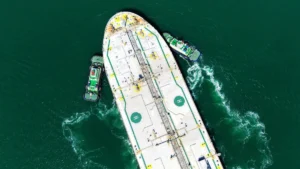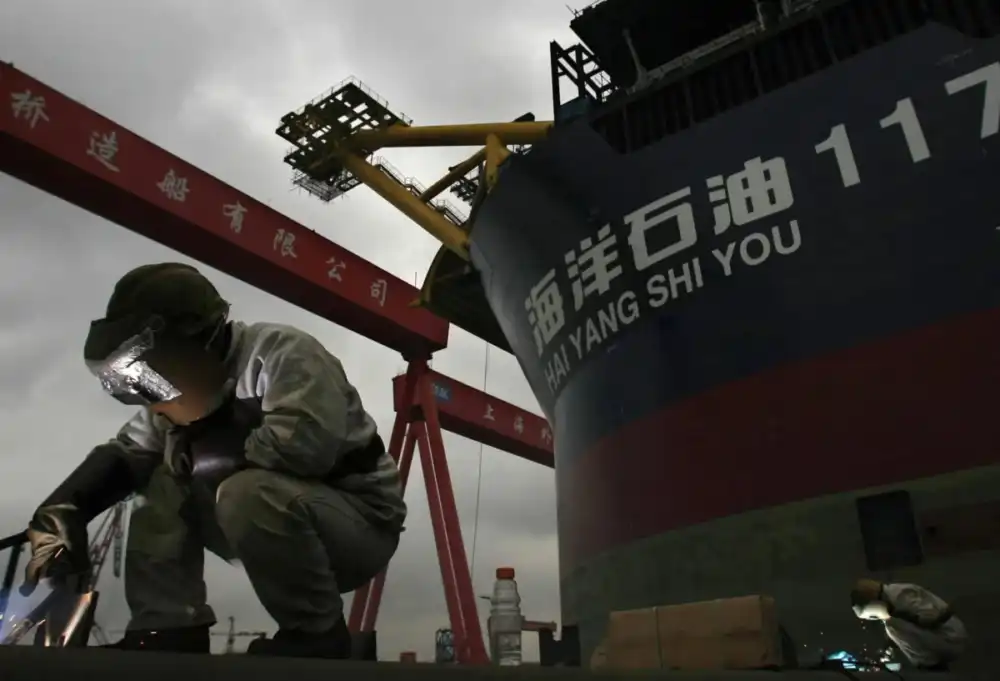
The ascent of global crude prices beyond the $100-per-barrel threshold, catalyzed by escalating geopolitical tensions in the Middle East, has sent shockwaves through international markets, yet one of the world’s largest consumers appears remarkably insulated. While previous eras of triple-digit oil would have signaled a period of acute economic distress for Beijing, a decade of aggressive strategic maneuvering has fundamentally altered China’s energy architecture. Through a combination of unprecedented stockpiling, the rapid electrification of its transport sector, and a calculated diversification of import routes, China has developed a structural hedge that its regional peers and Western counterparts may struggle to replicate.
The current volatility, spurred by conflict in the Persian Gulf, serves as a stress test for global energy security. For decades, the "Malacca Dilemma"—China’s reliance on narrow maritime chokepoints for its energy needs—was viewed as its greatest strategic vulnerability. However, recent data suggests that the world’s second-largest economy is no longer the captive of maritime disruptions it once was. As oil prices sustain levels not seen in years, the narrative is shifting from China’s vulnerability to its resilience, underpinned by a massive "buffer" of crude that few nations can match.
At the heart of this resilience is a monumental onshore storage strategy. Analysts estimate that China has amassed a strategic and commercial crude reserve totaling approximately 1.2 billion barrels. To put this into perspective, this volume represents nearly four months of total import requirements, providing a massive fiscal and physical cushion. While the United States has historically utilized its Strategic Petroleum Reserve (SPR) to manage price spikes, China’s reserves are now among the largest in the world, allowing the state to delay the pass-through of global price increases to its domestic industry and consumers. This "inventory insulation" acts as a shock absorber, granting Beijing the luxury of time to navigate supply disruptions without immediate inflationary panic.
Beyond the sheer volume of oil in tanks, China has spent twenty years systematically reducing its dependence on the Strait of Hormuz. While the strait remains the world’s most important oil transit chokepoint—handling roughly 13 million barrels of crude per day, or 31% of all seaborne trade—China’s exposure has been diluted. Through the development of overland pipelines from Russia and Central Asia, China now relies on the Strait of Hormuz for only an estimated 40% to 50% of its seaborne imports. When measured against China’s total primary energy consumption, shipments through this volatile passage account for a mere 6.6%. This diversification is not accidental; it is the result of long-term bilateral agreements, such as the Power of Siberia pipelines and expanded rail links with Moscow, which bypass maritime vulnerabilities entirely.

The most transformative element of China’s energy defense, however, is the "Green Hedge." The nation’s aggressive pivot toward electric vehicles (EVs) and renewable energy is no longer just an environmental policy; it is a core component of national security. In the transport sector, the displacement of oil demand is already measurable and significant. The rapid adoption of electric trucks and passenger vehicles has already removed an estimated 1 million barrels per day of implied oil demand from the Chinese market. With new-energy vehicles (NEVs) now accounting for more than half of all passenger car sales in the country, the link between global oil prices and domestic mobility is being severed.
Unlike many of its Asian neighbors, such as Japan or South Korea, where oil and natural gas play a dominant role in the power generation mix, China’s electricity grid is largely decoupled from the petroleum market. Oil and gas represent only about 4% of China’s power generation profile. Instead, the country relies on a combination of domestic coal and a burgeoning renewable sector that provided nearly 80% of all new electricity demand in the past year. This means that while a surge in oil prices might raise the cost of logistics, it does not necessarily lead to a spike in electricity bills or industrial power costs, protecting the manufacturing core of the economy from the "stagflationary" pressures that often accompany energy crises.
When compared to other major importers, China’s position appears even more robust. India, for instance, remains highly susceptible to price fluctuations, with petroleum imports accounting for nearly a quarter of its total energy consumption. Lacking the massive strategic reserves and the high EV penetration rate seen in China, India faces a direct and immediate correlation between Middle Eastern instability and domestic inflation. Similarly, while the United States is a major producer of oil, it remains the world’s largest consumer, and its economy remains sensitive to the global "Brent" benchmark, which dictates prices at American pumps regardless of domestic production levels.
The geopolitical dimension of China’s energy strategy also involves a pragmatic, if controversial, approach to sanctioned suppliers. By maintaining trade relationships with nations like Iran and Russia, often using non-dollar settlement systems, Beijing has secured access to "discounted" barrels that are shielded from the traditional Western market mechanisms. While U.S. sanctions have sought to isolate Tehran, China has remained a consistent buyer, often absorbing volumes that would otherwise have no outlet. In the event of a total blockade of Iranian exports, analysts suggest China could pivot its demand toward Russian Urals, further cementing a "Eurasian energy bloc" that operates independently of Middle Eastern maritime stability.
Despite these strengths, China is not entirely immune. The country remains the world’s largest importer of crude, buying nearly twice as much as the United States on the open market. A prolonged period of $100+ oil would eventually weigh on the profit margins of its state-owned enterprises (SOEs) and could dampen global demand for Chinese exports as other nations fall into recession. Furthermore, the transition away from fossil fuels is a monumental task; coal still provides the baseline for Chinese industry, and the transition of the heavy industrial sector—steel, cement, and chemicals—away from oil-derived products remains in its early stages.

However, the trend lines suggest that China’s sensitivity to oil shocks is on a permanent downward trajectory. The government has set a target for non-fossil fuels to reach 25% of total energy consumption by 2030, a goal that many analysts believe will be met ahead of schedule. As renewable capacity expands and the electrification of the logistics fleet continues, the "energy intensity" of the Chinese GDP—the amount of oil required to produce a unit of economic growth—is falling.
In the short term, the primary risk for Beijing is not a lack of supply, but the potential for a wider regional war that could disrupt all forms of trade. Yet, even in this worst-case scenario, China’s "flexibility" is its greatest asset. The ability to draw down 1.2 billion barrels of oil gives the central government the power to subsidize domestic fuel prices and maintain social stability while the rest of the world grapples with supply-chain chaos.
The current energy crisis may well be remembered as the moment when China’s long-term energy planning finally paid off. By treating energy transition as a matter of hard-nosed national security rather than just a climate obligation, Beijing has built a fortress that is proving difficult for the volatility of the Middle East to breach. As oil prices hover in the triple digits, the global economy is witnessing a divergence: while many nations are forced to react to the whims of the oil market, China is increasingly in a position to ignore them. This shift marks a significant reordering of global economic power, where the control of technology and storage capacity has become just as vital as the control of the oil wells themselves.