The Islamic Revolutionary Guard Corps (IRGC), once a ragtag militia formed in the wake of the 1979 revolution to protect the fledgling theocracy, has evolved into a multi-dimensional entity that defies conventional categorization. Today, it stands as the most potent political, military, and economic force in the Islamic Republic, functioning effectively as a "state within a state." Its influence permeates every layer of Iranian society, from the highest echelons of strategic decision-making in Tehran to the vast industrial complexes that drive the nation’s output. Understanding the modern Iranian state is impossible without first decoding the intricate web of the IRGC, an organization that manages a sprawling commercial empire while simultaneously projecting Iranian power across the Middle East through its elite Quds Force.
The economic footprint of the IRGC is perhaps its most significant lever of domestic control. While official figures are notoriously difficult to verify due to the opaque nature of the organization’s accounting, international economists and Iranian analysts estimate that the Guard controls between 20% and 40% of the country’s total economy. This dominance is primarily channeled through Khatam al-Anbiya, the IRGC’s massive engineering and construction conglomerate. Originally established to help rebuild the country after the devastating Iran-Iraq War in the 1980s, Khatam al-Anbiya has transformed into a behemoth that holds thousands of contracts across the energy, mining, transportation, and telecommunications sectors. By utilizing its political leverage to bypass competitive bidding processes, the IRGC has systematically crowded out the private sector, ensuring that major national projects are funneled into its own coffers.
This economic entrenchment has created a self-sustaining cycle of power. The profits generated from these commercial ventures provide the IRGC with a level of financial autonomy that insulates it from the fluctuations of the national budget and, to some extent, the direct oversight of the Iranian parliament. This "resistance economy," a term frequently used by Supreme Leader Ayatollah Ali Khamenei, is underpinned by the Guard’s ability to manage critical infrastructure. In the oil and gas sector—the lifeblood of Iran’s economy—the IRGC has filled the vacuum left by Western firms like Total and Shell, which exited the market due to international sanctions. By taking over major projects in the South Pars gas field and other strategic energy hubs, the Guard has positioned itself as the indispensable guardian of Iran’s primary revenue stream.
Beyond heavy industry, the IRGC’s financial tendrils extend into the everyday lives of Iranians through its control of telecommunications and banking. In 2009, a consortium linked to the Guard purchased a majority stake in the Telecommunication Company of Iran (TCI), a move that not only provided a massive revenue stream but also consolidated the organization’s ability to monitor domestic communications and suppress dissent. Similarly, the Guard operates its own financial institutions and credit unions, which have been used to fund its regional operations and provide low-interest loans to its members, fostering a loyal base of millions of Basij militia members and their families who are economically dependent on the IRGC’s survival.
The IRGC’s role in Iran’s foreign policy is equally transformative, characterized by the doctrine of "forward defense." Through the Quds Force, the Guard’s expeditionary wing, Iran has successfully exported its influence across the "Axis of Resistance," a network of proxies and allies stretching from the Mediterranean to the Persian Gulf. This strategy has allowed Tehran to engage in asymmetric warfare against its regional rivals and the United States without triggering a direct, full-scale military confrontation on Iranian soil. From supporting Hezbollah in Lebanon and the Assad regime in Syria to providing sophisticated weaponry to the Houthi rebels in Yemen and Shiite militias in Iraq, the IRGC has rewritten the geopolitical map of the Middle East.
However, this regional expansionism comes at a significant cost, both diplomatically and economically. The IRGC’s activities have led to its designation as a Foreign Terrorist Organization (FTO) by the United States, a move that has further isolated the Iranian economy and deterred foreign direct investment. For many international investors, the risk of inadvertently engaging with a Guard-linked entity is too high, leading to a "chilling effect" that has hampered Iran’s attempts to modernize its aging infrastructure. The sanctions regime, while aimed at curbing the Guard’s influence, has paradoxically strengthened its hand domestically. As legitimate trade becomes more difficult, the IRGC has utilized its control over borders and ports to dominate the country’s shadow economy, profiting from the smuggling of fuel, consumer goods, and electronics.
The political ascent of the IRGC is also reflected in the changing demographics of Iran’s leadership. A growing number of former Guard commanders now occupy seats in the Majlis (parliament), hold provincial governorships, and lead key ministries. This "Gardaization" of the Iranian state has led to a more hardline approach to both domestic governance and international relations. The IRGC’s intelligence wing has become increasingly active in targeting dual nationals, activists, and journalists, often operating independently of the Ministry of Intelligence. This crackdown is seen by many analysts as a preemptive measure to ensure stability during the eventual transition of power that will follow the death of the 85-year-old Supreme Leader.
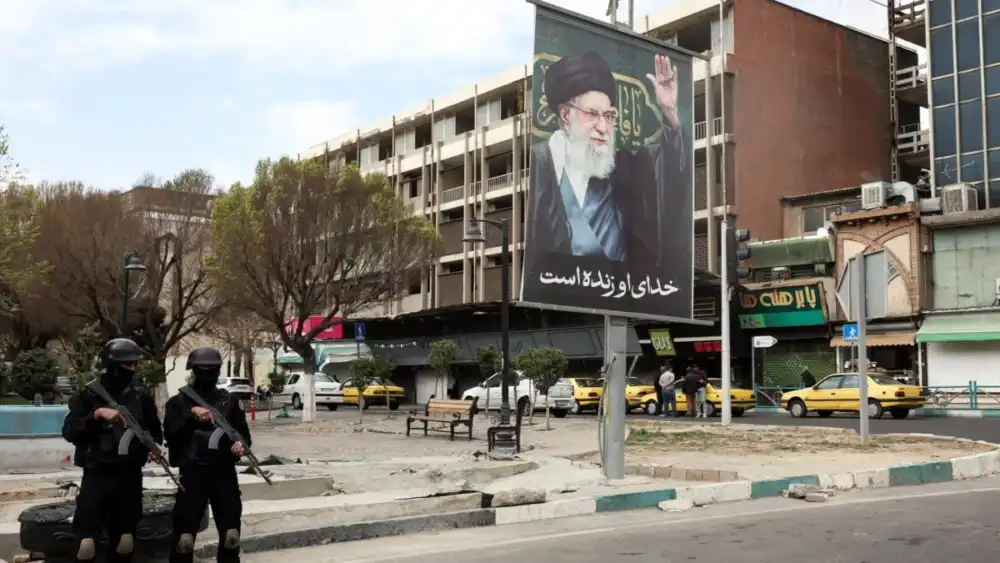
The IRGC’s relationship with the Office of the Supreme Leader is the cornerstone of its power. Ayatollah Khamenei, who serves as the commander-in-chief of all armed forces, has increasingly relied on the Guard as his most loyal praetorian guard. In return for their unwavering ideological commitment, the Guard is granted the aforementioned economic privileges and a wide berth in conducting regional operations. This symbiotic relationship has marginalized the traditional military (the Artesh) and weakened the influence of pragmatic or reformist factions within the government who argue that the Guard’s dominance is an obstacle to economic growth and diplomatic normalization.
As Iran navigates a period of profound internal and external pressure, the IRGC’s role is likely to expand further. Domestic unrest, such as the widespread protests following the death of Mahsa Amini in 2022, has seen the Guard take a lead role in security operations, reinforcing its image as the ultimate guarantor of the Islamic Republic’s survival. Simultaneously, the escalating tensions with Israel and the uncertainty surrounding the future of the Joint Comprehensive Plan of Action (JCPOA) have allowed the IRGC to argue that its ballistic missile program and regional alliances are the only effective deterrents against foreign aggression.
The long-term economic implications of the IRGC’s dominance are sobering. By prioritizing ideological purity and security over market efficiency and transparency, the Guard has created a rigid economic structure that is ill-equipped to address the grievances of a young, tech-savvy population facing high inflation and unemployment. The brain drain of Iran’s most talented professionals is a direct consequence of an environment where political loyalty and IRGC connections often matter more than merit. Furthermore, the Guard’s control over the "commanding heights" of the economy makes any future attempts at privatization or structural reform nearly impossible without dismantling the very foundations of the current power structure.
In the global context, the IRGC represents a unique challenge for international policymakers. Unlike a traditional military or a standard commercial entity, it is a hybrid actor that utilizes the tools of both statecraft and militancy. Efforts to contain the Guard through sanctions have shown limited success in altering its strategic calculus, as the organization has proven remarkably adept at navigating the "gray zones" of global finance and trade. As the IRGC continues to consolidate its grip on the Iranian state, the line between the government of Iran and the Revolutionary Guard becomes increasingly blurred, suggesting that any future engagement with Tehran will, by necessity, be an engagement with the Guards themselves.
The rise of the IRGC from a revolutionary militia to a global economic and military powerhouse is a testament to its adaptability and the unique political architecture of the Islamic Republic. However, its continued dominance poses a fundamental question for the future of Iran: can a modern nation-state thrive when its economic and political destiny is tethered to a secretive, ideologically-driven military elite? As the IRGC prepares to play the role of kingmaker in the eventual succession of the Supreme Leader, the answer to that question will determine not only the fate of the Iranian people but also the stability of the entire Middle East for decades to come. The guards have indeed risen, and in doing so, they have become the indispensable, yet deeply controversial, architects of the modern Iranian state.