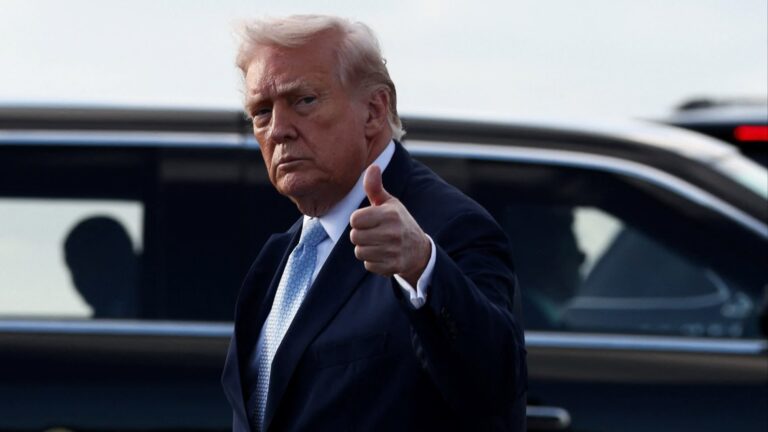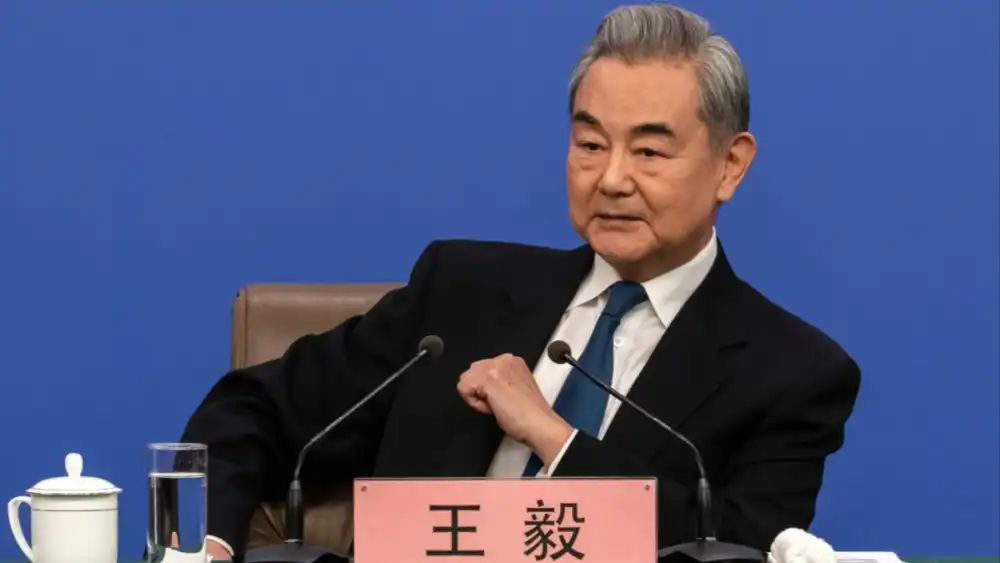
The diplomatic landscape between Washington and Beijing is undergoing a profound recalibration as China signals a surprising openness to a high-level summit with Donald Trump, even as the specter of a broader conflict involving Iran looms over the global stage. This strategic overture comes at a critical juncture for the world’s two largest economies, which remain locked in a complex web of trade disputes, technological competition, and divergent security interests. By extending what amounts to a diplomatic olive branch, Beijing is attempting to manage a relationship that has become increasingly volatile, seeking to establish a floor for bilateral ties while navigating the fallout of an escalating regional war in the Middle East that threatens to disrupt global energy markets and maritime trade routes.
The rationale behind China’s apparent desire for a renewed personal dialogue with the Trump administration is rooted in a pragmatic, if cynical, assessment of geopolitical realities. For the leadership in Zhongnanhai, the transactional nature of the Trump presidency offers a different set of opportunities and risks compared to the more ideologically driven, multilateral approach of the Biden administration. While the Biden era has been defined by the "small yard, high fence" strategy—characterized by targeted export controls on high-end semiconductors and the strengthening of regional alliances like AUKUS—Beijing perceives Trump as a leader who might be willing to trade security concessions for economic wins. In the eyes of Chinese strategists, a direct line to the Oval Office is the most effective way to bypass the hawkish bureaucracy of the U.S. State Department and the Pentagon.
This diplomatic maneuvering is unfolding against the backdrop of a significant escalation in the Middle East. As tensions between Iran and Israel reach a boiling point, China finds itself in a precarious position. Beijing has spent years cultivating a "comprehensive strategic partnership" with Tehran, culminating in a 25-year cooperation agreement signed in 2021. China is the primary buyer of Iranian crude oil, often purchasing it through "teapot" refineries in Shandong province using non-dollar currencies to circumvent U.S. sanctions. A full-scale war involving Iran would not only jeopardize these energy supplies but also destabilize the broader Persian Gulf, from which China draws roughly 40% of its total oil imports.
Despite these risks, Beijing appears to believe that its relationship with the United States must take precedence over regional entanglements. The calculation is that a stable, even if competitive, relationship with Washington is the only way to safeguard China’s domestic economic recovery. Currently, the Chinese economy is grappling with a protracted property sector crisis, sluggish consumer demand, and a deflationary environment that has led the International Monetary Fund (IMF) to temper its growth projections for the country. Ensuring that trade tensions do not spiral into a full-scale economic decoupling is paramount for the Chinese Communist Party’s (CCP) goal of maintaining social stability through continued prosperity.
The prospect of a Trump visit to Beijing, or a high-level summit in a neutral location, carries immense weight for global markets. Investors are closely watching for any signs of a "Phase Two" trade deal or a de-escalation of the tariff war. During his first term, Trump imposed tariffs on more than $360 billion worth of Chinese goods, a move that fundamentally altered global supply chains and forced many multinational corporations to adopt a "China plus one" strategy. However, the threat of a 60% flat tariff on all Chinese imports, which has been floated in recent political rhetoric, represents an existential threat to China’s export-led growth model. By signaling a desire for engagement, Beijing is attempting to preempt such draconian measures through high-stakes personal diplomacy.
Market data underscores the stakes of this engagement. In 2023, the U.S. trade deficit with China narrowed to its lowest level in over a decade, totaling approximately $279 billion. While this suggests some success in Washington’s efforts to reduce reliance on Chinese manufacturing, the two economies remain deeply integrated. China holds roughly $770 billion in U.S. Treasury securities, making it one of the largest foreign creditors to the United States. Any significant disruption in the diplomatic relationship could lead to volatility in the bond markets and upward pressure on U.S. interest rates, further complicating the global economic outlook.
Expert insights suggest that Beijing’s outreach is also a response to the shifting alliances in the Indo-Pacific. The U.S. has successfully deepened its security ties with Japan, South Korea, and the Philippines, creating what China views as a policy of "containment." By engaging directly with Trump, who has occasionally expressed skepticism about the cost and value of traditional U.S. alliances, Beijing may hope to drive a wedge between Washington and its regional partners. The Chinese leadership is keenly aware of Trump’s "America First" philosophy and may seek to offer economic incentives—such as increased purchases of American agricultural products or energy—in exchange for a reduction in U.S. military activity in the South China Sea or a softening of support for Taiwan.
The Iran factor, however, remains the ultimate wild card. China has positioned itself as a "pro-peace" mediator in the region, most notably by brokering the historic normalization of ties between Saudi Arabia and Iran in early 2023. Yet, as the conflict intensifies, China’s influence appears limited. It lacks the military power projection of the United States and has shown little appetite for intervening in a way that would require significant political capital. Instead, Beijing has focused on rhetorical support for Palestinian statehood and calls for "restraint," a stance that often puts it at odds with U.S. policy but resonates with the Global South. A Trump visit would force China to reconcile its support for Tehran with the need to cooperate with a U.S. administration that has historically favored a "maximum pressure" campaign against the Islamic Republic.
Economic impact analysis reveals that the ripple effects of a U.S.-China summit would be felt far beyond the two nations. For Southeast Asian economies like Vietnam and Thailand, which have benefited from the diversion of trade, a potential "grand bargain" between Washington and Beijing could lead to a repatriation of manufacturing capacity. Conversely, for European nations, a bilateral deal that excludes their interests could exacerbate the "fragmentation" of the global trading system, a trend the World Trade Organization (WTO) has warned could reduce global GDP by up to 7% in the long term.
Furthermore, the technological race remains a central pillar of the discord. The "chip war" has seen the U.S. implement sweeping restrictions on the export of advanced AI chips and semiconductor manufacturing equipment to China. Beijing has responded with its own export controls on critical minerals like gallium and germanium, which are essential for high-tech industries. A high-level visit would likely include discussions on these "dual-use" technologies. While a full reversal of these security-minded policies is unlikely, a "managed competition" framework could provide the predictability that tech giants on both sides of the Pacific are desperate for.
As the geopolitical clock ticks, the significance of Beijing’s signal cannot be overstated. It is a recognition that, despite the ideological chasm and the drums of war in the Middle East, the Washington-Beijing axis remains the most consequential relationship of the 21st century. The willingness to host a leader who initiated the trade war suggests that China is prioritizing long-term strategic stability over short-term grievances. Whether such a visit can actually bridge the gap between two superpowers with fundamentally different visions for the global order remains to be seen. However, in an era defined by polycrisis—from regional wars to climate change and economic uncertainty—the simple act of high-level dialogue is viewed by many in the international community as a necessary, if fragile, safety valve.
In conclusion, China’s strategic pivot toward renewed engagement with Trump reflects a calculated attempt to navigate a world in transition. By balancing its complex ties with Iran against the necessity of a stable U.S. relationship, Beijing is playing a high-stakes game of diplomatic chess. The outcome will determine not only the future of U.S.-China relations but also the stability of the global economy and the architecture of international security for decades to come. As the world watches, the prospect of a summit serves as a reminder that in the realm of realpolitik, today’s adversary can become tomorrow’s essential interlocutor, provided the price is right and the stakes are sufficiently high.